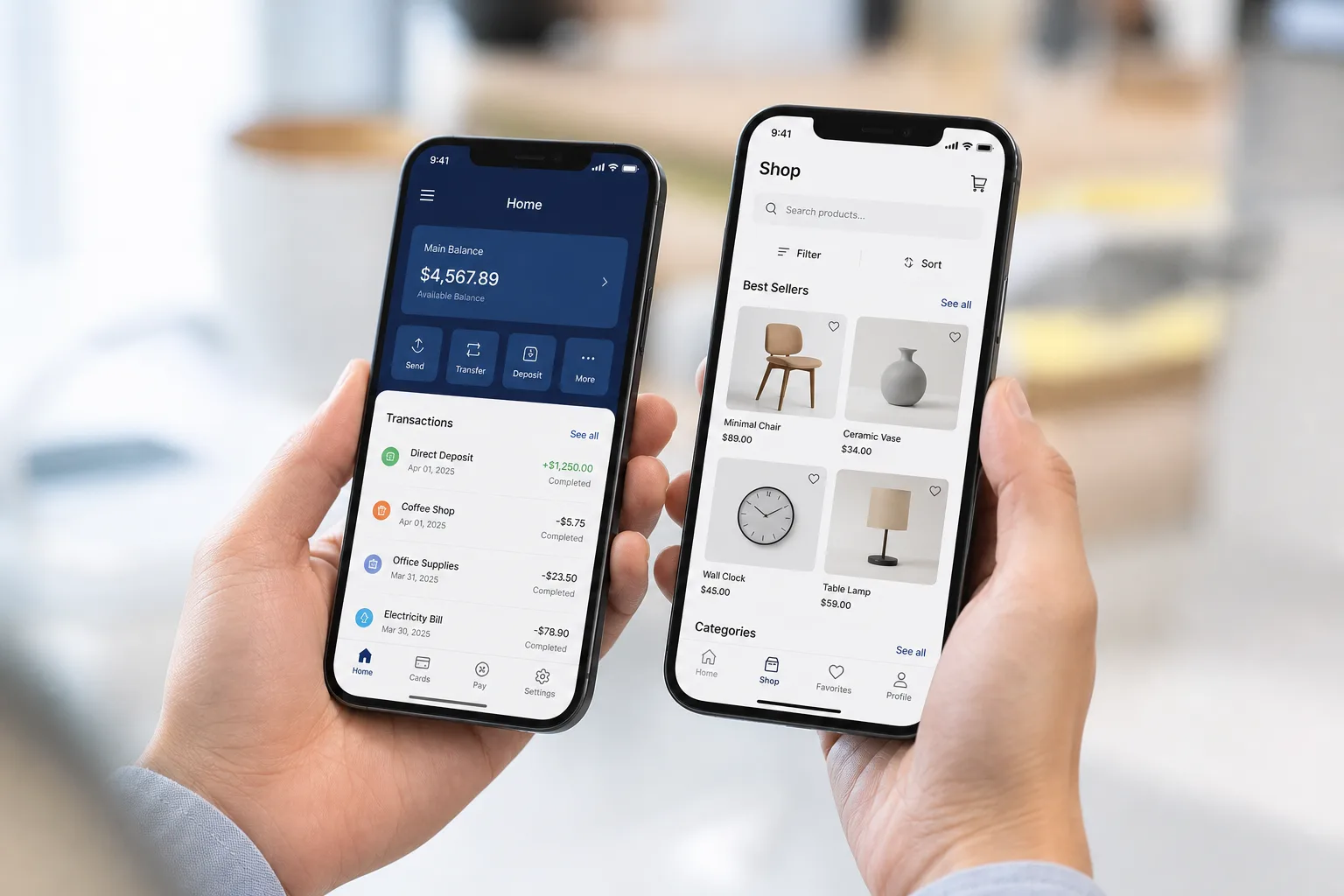
You have an idea for an app. Maybe it came to you at 2am, or while you were stuck in traffic in Joburg thinking there has to be a better way to do this.
You can already picture the screens. The login page. The dashboard. The payments. All of it.
Then one question stops you cold. What if nobody actually wants it?
That single doubt is exactly why MVP mobile app development in South Africa has become such a common search for founders and small business owners right now. It is not about building something cheap. It is about building something smart enough to test before you spend your whole budget on a full product.
In this guide, I will walk you through what an MVP actually is, whether you even need one, how to validate your idea before spending a single rand, what it costs here in South Africa, how long it takes, and how to build, test and launch it properly. I have worked with founders across this journey, and I will share what I have seen go right, and what usually goes wrong.

What Is MVP Mobile App Development?
MVP stands for minimum viable product. In mobile terms, it means the simplest version of your app that still does one thing properly.
Not a broken app. Not a demo. A real, working product that solves a real problem.
People often confuse an MVP with a prototype. They are not the same thing.
A prototype is usually a clickable mockup. It looks like an app but does not really work behind the scenes. It exists to test ideas and gather early opinions.
An MVP is different. Real users can actually use it. It runs on a real backend, has a real database, and produces real behaviour you can measure.
| MVP | Prototype |
|---|---|
| Fully functional | Usually not functional |
| Tests with real users | Tests concepts and screens |
| Measures real behaviour | Measures first impressions |
| Can be launched publicly | Rarely released publicly |
| Grows through user feedback | Often thrown away after testing |
Do You Actually Need an MVP?
This is the question most articles skip. They jump straight into development steps and assume everyone needs one.
You do not always need one.
When an MVP makes sense
- You are testing a brand new idea nobody has tried before.
- Your business model is unproven.
- You are entering a market you do not fully understand yet.
- You want proof for investors before raising more money.
- You are testing a new feature inside an existing product.
When an MVP might not be the right move
- You already have a proven product with clear demand.
- Your app operates in a heavily regulated space that needs full compliance from day one.
- Safety is critical, and a minimum version could put users at risk.
- The core value of your app cannot exist in a stripped down form.
I have seen founders insist on an MVP simply because it sounds like the smart, lean thing to do. Sometimes it is not. Sometimes you already know enough, and the smarter move is to build with intent.
| Situation | Best approach |
|---|---|
| Untested idea | MVP is a strong fit |
| Proven demand already exists | Consider building directly |
| Complex regulated product | Controlled, careful MVP |
| Simple internal business tool | Small, lightweight MVP |
| High risk new technology | Start with a prototype first |
How to Validate Your App Idea Before Building the MVP
This part gets skipped far too often, and honestly, it is the part that saves the most money.
Before you write a single line of code, ask yourself something simple. Do people actually have this problem, and do they care enough to change what they are doing right now?
Customer interviews
Talk to real people who might use your app. Not friends who will just be nice to you. Actual strangers who match your target user.
Competitor research
Look at what already exists. If competitors exist, that is not always bad news. It can mean the market is real.
Landing page testing
Build one simple page describing your idea. Add a signup button. See if people actually click it.
Prototype testing
Show a basic clickable version to real users before any real development starts. Watch how they react, not just what they say.
Waitlist or early signups
A waitlist tells you something powerful. Would someone hand over their email for this, before it even exists?
Pricing validation
Ask people what they would actually pay. Their answer often changes the whole plan.
Manual or concierge testing
Sometimes you can deliver the core value manually, by hand, before building any technology at all. It sounds strange, but it works.
My opinion. I have watched founders spend six months building before asking a single real user a single real question. Please do not do this. A few honest conversations can save you months of wasted development.
Why Build an MVP in South Africa
South Africa is not a small side market anymore. Mobile usage here keeps climbing every year, and most people access the internet through their phones first, sometimes only.
According to StatCounter, as of July 2026, Android holds 75.53% of the mobile operating system market share in South Africa, while iOS sits at 24.46%. That gap matters a lot when you are deciding where to launch your MVP first.
South African MVP considerations worth knowing
- Mobile connectivity. Data speeds and reliability vary a lot between areas. Your MVP should stay light and load fast even on slower connections.
- Android device diversity. Since Android dominates locally, your MVP needs to work well across many different device types and screen sizes, not just the newest phones.
- Data usage. Many South African users are still careful about data costs. A heavy, bloated app can quietly push people away before they even try your core feature.
- Local payment methods. Options like PayFast, Ozow, SnapScan, and card based mobile payments are common here. International only payment options can quietly block local users.
- Load shedding and unreliable connectivity. Your MVP should handle interruptions gracefully, with proper offline states, rather than simply crashing or freezing.
- Pricing sensitivity. South African users often compare value carefully before committing. Free trials or freemium entry points can help early adoption.
- Local customer support. Even a basic MVP benefits from a simple support channel, since trust builds slowly with a brand new local app.
- WhatsApp driven behaviour. For many South African users, WhatsApp is already part of daily digital habits, so integrations or simple WhatsApp based flows can sometimes lower the barrier to entry.
- Urban versus regional differences. User behaviour in Johannesburg or Cape Town can look quite different from smaller towns, especially around data access and payment habits.
My experience. One mistake I keep seeing is founders assuming that an idea validated in another country will simply work the same way here. The problem might be identical. But pricing, payments, onboarding and trust behave differently once you are dealing with South African users specifically.
Building your MVP with this market in mind from day one saves you painful rework later. For broader market context, see our guide to mobile app development in South Africa.
What Features Should a Mobile App MVP Include
Instead of a generic checklist, think about each feature through your product hypothesis. Ask what you are actually trying to prove.
| Feature | MVP decision |
|---|---|
| Core service | Build |
| User authentication | Build if required for the core action |
| Payment | Build only if monetisation is part of the test |
| Push notifications | Build if retention genuinely depends on them |
| Chat or messaging | Build only if communication is core to the product |
| AI features | Build only if AI is the actual core value |
| Advanced analytics | Delay until later |
| Loyalty programs | Delay until later |
| Social features | Delay until later |
Supporting technical foundations
Alongside these, most MVPs still need a few technical basics working properly behind the scenes.
- A secure database
- A working API layer
- Basic authentication
- Cloud infrastructure to host everything
- Simple analytics tracking from day one
Here is something I tell every client. A payment feature only belongs in your MVP if payment behaviour is part of what you are actually testing. If you are testing whether people want the service at all, payments can often wait.
How to Build an MVP Mobile App in South Africa
This is the heart of the process. If you are searching for MVP Mobile App Development in South Africa specifically to understand the steps, this is the part that matters most. I have broken this down into twelve stages, because rushing or merging these steps is where most projects lose control of scope and budget.
Step 1. Validate the problem
Before anything technical happens, confirm the problem is real. Talk to potential users. Look for evidence people are already trying to solve this in some clumsy way, even manually.
Step 2. Define your target user
Get specific. Not everyone. A clear group of people who feel this problem often enough to want a solution.
Step 3. Define the MVP goal
Write down, in one sentence, exactly what this MVP needs to prove. This becomes your decision filter for every feature discussion afterward.
Step 4. Prioritise the core features
Use the Core, Supporting, Nice to Have method. Only core features move forward into this build.
Step 5. Map the user journey
Show, step by step, how a user moves from opening the app to getting real value from it. This becomes the backbone of your UX design. Our South Africa mobile app design guide covers this thinking in more depth.
Step 6. Build the prototype
Create a simple clickable version before real development begins. This is where you catch confusing flows and awkward screens cheaply, before development money is spent.
Step 7. Choose the technology stack
Pick your platform approach, backend, and database based on your validation goal, not on trends. More detail on this in the next section.
Step 8. Develop the MVP
This is where frontend, backend, API, database, authentication and basic analytics all come together into a working product.
Step 9. Test the MVP
Cover functional testing, usability testing, and device testing as part of your mobile app testing process before anyone outside your team touches the product.
Step 10. Run a beta
Release to a small group of real users first. Watch what they actually do, not just what they tell you they think.
Step 11. Launch
Submit to the App Store and Google Play, with your analytics, crash monitoring, and support process already in place.
Step 12. Measure and improve
Once real users are active, study activation, retention, and feedback. This tells you what to build next, and what to quietly drop.
This structured, twelve step process is what separates a properly built MVP from a rushed one. Skipping steps to save time almost always costs more time later, usually during testing or right after launch when problems surface with real users. For timeline planning, see our mobile app development timeline guide.
How to Choose the Right Technology Stack for an MVP
Your technology decision should support the MVP goal rather than dictate the entire mobile app development strategy. This is one of the most misunderstood parts of the whole process, so let us slow down here.
| Approach | Best suited for | Typical use case |
|---|---|---|
| Native iOS | Apple focused audiences needing top performance | Apps relying on deep iOS specific features |
| Native Android | Android focused audiences needing top performance | Apps needing tight hardware integration |
| Flutter | Teams wanting one codebase for both platforms | Fast, budget conscious MVPs targeting Android and iOS together |
| React Native | Teams already skilled in the React ecosystem | Cross platform MVPs with a JavaScript heavy team |
| Backend as a service, such as Firebase | MVPs needing common backend features quickly | Authentication, databases and hosting without building from scratch |
| Custom backend, such as Node.js on AWS | MVPs with complex logic or heavy scaling needs | Products expecting rapid growth or unusual technical requirements |
My opinion. Do not choose Flutter, React Native, Firebase or any other technology simply because it is popular right now. Choose based on your validation goal, expected scale, team capability, and the integrations your MVP actually needs. I have seen teams pick a trendy stack, only to struggle later because it did not match what the product actually required.
If you are comparing cross-platform options, review our guides on Flutter app development cost and React Native app development cost.
How Much Does MVP Mobile App Development Cost in South Africa
This is usually the very first question I get asked. Fair enough, budgets are real.
Here are rough planning ranges based on typical South African development pricing. Treat these as starting points for budgeting, not fixed market rates, since every project is different.
| MVP type | Estimated South African cost |
|---|---|
| Basic MVP | R50,000 to R150,000 |
| Mid complexity MVP | R150,000 to R400,000 |
| Advanced MVP | R400,000 to R800,000 or more |
A basic MVP usually means one core feature, simple design, and a light backend. A mid complexity MVP often adds user accounts, a proper admin panel, and a few integrations. An advanced MVP can include payments, real time features, complex logic, or heavy security requirements.
For a fuller pricing picture across project types, see our mobile app development cost in South Africa guide.
What South African Privacy Rules Apply to an MVP
If your app collects any personal information, POPIA applies to you. This is not optional and it is not just a legal formality, even for an early MVP.
Here are the basics worth understanding early.
- Personal information. Any data that identifies a person, including names, contact details, and device information, falls under POPIA protection.
- Consent. Users generally need to understand and agree to how their data will be used.
- Data collection. Only collect what your MVP genuinely needs to function.
- Purpose limitation. Use the data only for the reason you collected it in the first place.
- Security. Reasonable steps must be taken to protect user data from loss or unauthorised access.
- User rights. Users generally have the right to know what data you hold and to request corrections or deletion.
I am not a lawyer, and this is general information, not legal advice. I would strongly recommend reading the official guidance from South Africa's Information Regulator before you launch, and getting proper legal advice if your app handles sensitive data.
Common MVP App Development Mistakes to Avoid
These come from real projects, not theory.
- Building too many features at once.
- Confusing a minimum viable product with a poorly made product.
- Skipping user interviews because they feel slow.
- Building before the actual problem is validated.
- Choosing technology before the product is even defined.
- Ignoring onboarding completely.
- Measuring downloads instead of retention.
- Launching without analytics in place.
- Treating every piece of feedback as automatically correct.
- Planning the entire future product instead of just the next test.
- Building for investors instead of building for actual users.
- Treating every single feature request as an urgent priority.
My take. The most expensive MVP mistake is rarely a technical one. It is usually building something nobody urgently needed in the first place.
How to Choose an MVP Development Partner in South Africa
Picking the right partner matters more than most people realise going in.
Check their relevant MVP experience specifically, not just general app work. Ask about their product discovery process. Look at their technical and UX capability. Understand their testing process. Watch how they communicate early on, since that pattern rarely changes later.
Also ask about post launch support, who owns the source code, their security practices, and whether their pricing is actually transparent.
Questions worth asking before you hire anyone
- Who owns the source code once the project is done?
- How do you handle scope changes along the way?
- How will you validate features before building them fully?
- What support happens after launch?
- How will you actually measure whether the MVP succeeded?
- How is security handled throughout the project?
- What exactly is included in your quote?
A good mobile app development company should be able to explain how it will validate your idea before committing your budget to development. If they cannot answer that clearly, treat it as a warning sign.
For a fuller hiring checklist, read our guide on how to choose a mobile app development company in South Africa.
Final Thoughts
MVP Mobile App Development in South Africa is not about cutting corners. It is about being deliberate with your first version, so you learn fast without risking everything on an unproven idea.
Build the smallest version that can genuinely prove your idea works. Test it with real South African users. Measure what actually matters, not just downloads. Then, and only then, decide whether to scale.
If you are exploring MVP Mobile App Development in South Africa right now, start with clarity on the problem you are solving, not the features you want to build. That single shift changes almost everything about how your first version turns out.
Frequently Asked Questions
What is an MVP mobile app?
It is the smallest working version of your app that solves one real problem and can be tested with actual users before you build the full product.
How much does MVP app development cost in South Africa?
As a rough planning guide, basic MVPs often range from R50,000 to R150,000, mid complexity MVPs from R150,000 to R400,000, and advanced MVPs from R400,000 upward, depending on features, platforms and integrations.
How long does it take to build an MVP app?
Basic MVPs typically take 6 to 10 weeks, moderate ones 10 to 16 weeks, and complex MVPs can take 16 to 24 weeks or more.
What features should an MVP mobile app have?
Only the core features that support your main user action and directly test your product hypothesis. Everything else can usually wait.
Should I build an MVP for iOS, Android, or both?
In South Africa, Android currently holds a much larger share of the mobile market, so many founders start there, though your specific audience should guide the final decision.
Is Flutter good for MVP development?
Yes, especially when you want one codebase covering both iOS and Android quickly without doubling your development effort, though the right choice always depends on your team and goals.
How do I know if my MVP is successful?
Look at activation, retention, your North Star metric, and real user feedback, not just download numbers.
When should I turn an MVP into a full mobile app?
When retention is healthy, users keep asking for more, and your core problem has been clearly proven through real behaviour.