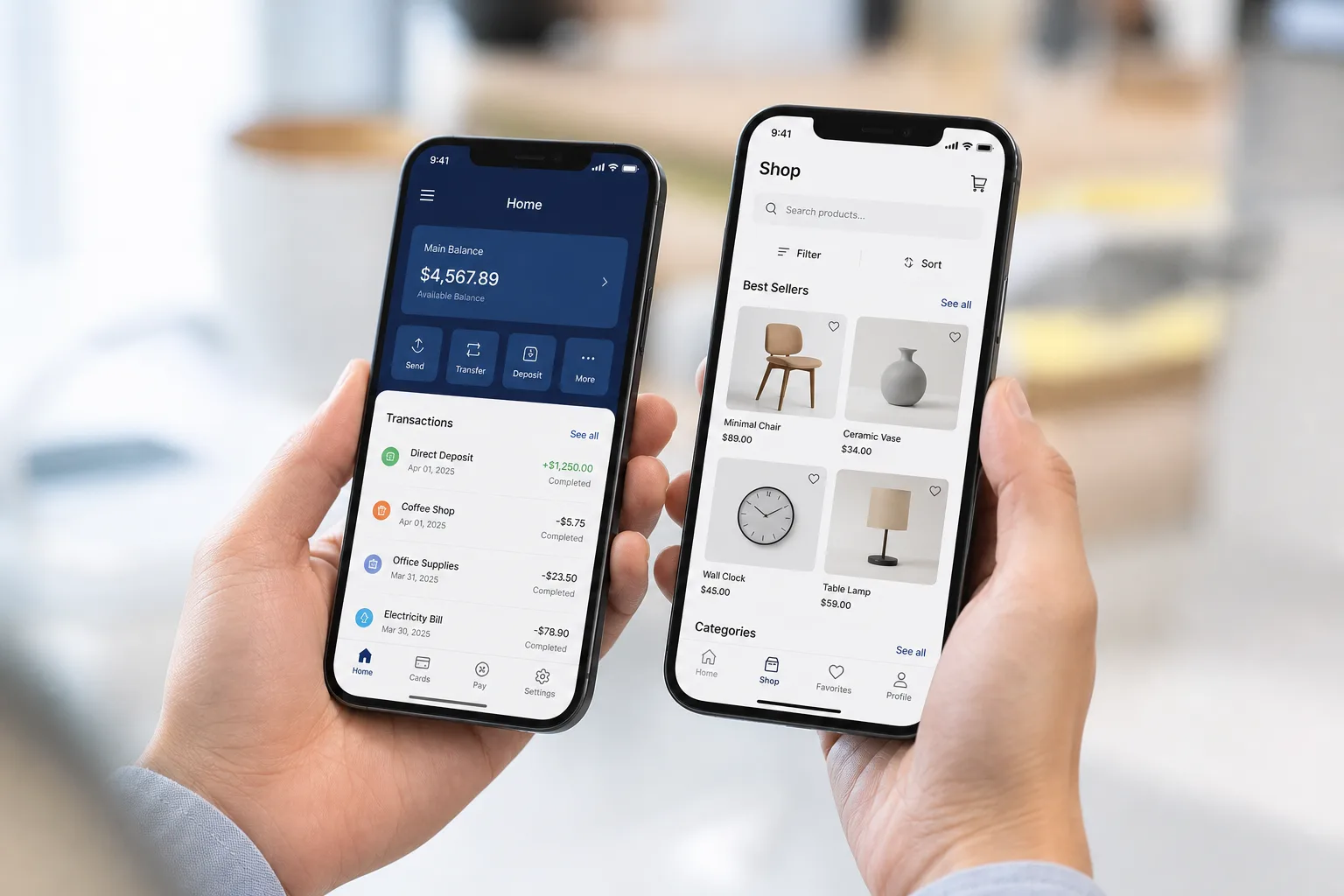

South Africa has become one of Africa's fastest-growing digital markets. More people are using smartphones than ever before, businesses are moving online, and customers expect services to be available with just a few taps. From banking and shopping to healthcare and education, mobile apps have become an important part of everyday life.
For businesses, this creates a huge opportunity. A well-designed mobile app helps companies connect with customers, improve services, increase sales, and stay ahead of competitors. Whether you're a startup with a new idea or an established company planning to expand digitally, investing in mobile app development can help you reach your goals faster.
However, building a successful mobile app involves much more than writing code. You need to understand your target audience, choose the right platform, define the right features, select the appropriate technology stack, and plan your budget carefully.
This guide covers everything you need to know about mobile app development in South Africa, including the current market, development process, technologies, costs, challenges, and tips for choosing the right development partner.
Mobile App Market in South Africa
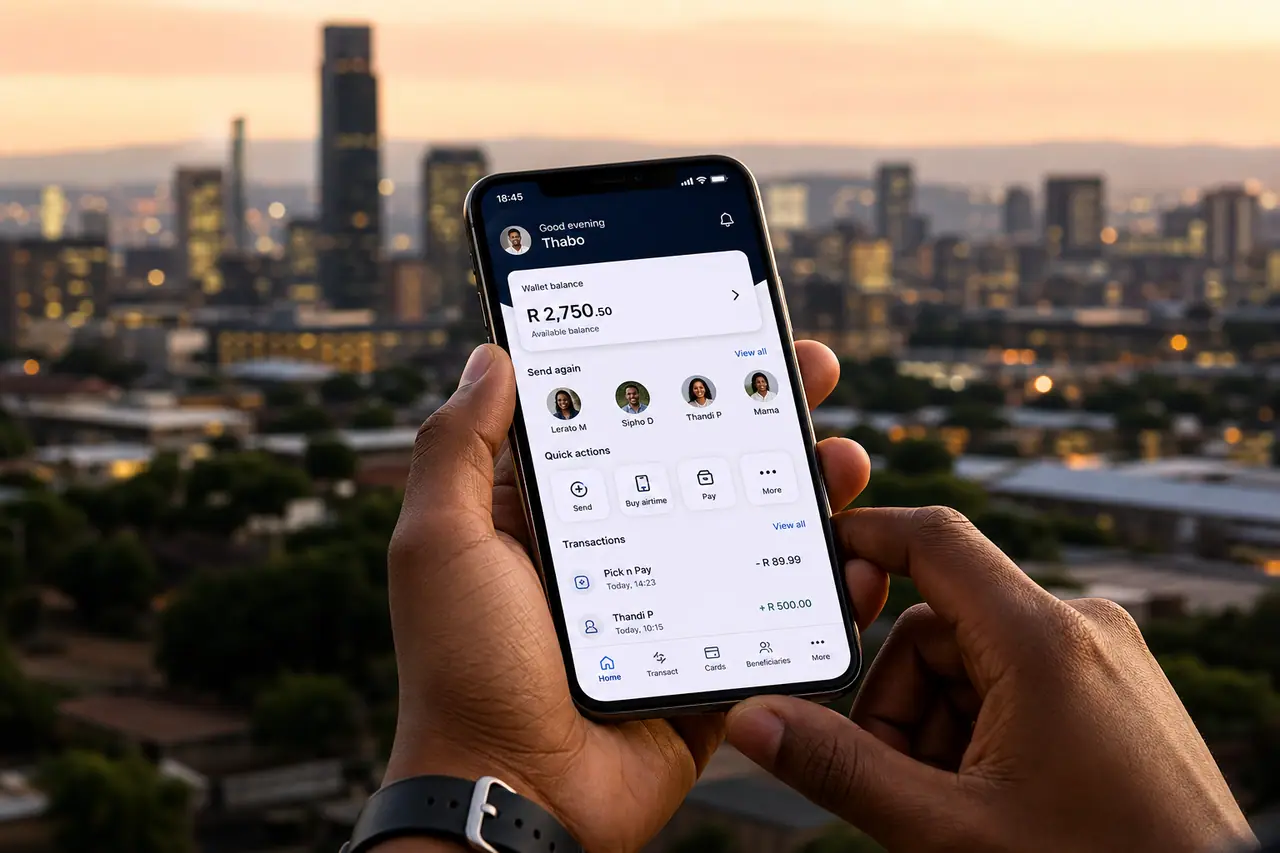
South Africa is one of the leading technology hubs in Africa. The country has seen rapid growth in internet connectivity, smartphone adoption, and digital payments over the past few years.
Several factors are driving this growth:
- Increasing smartphone ownership
- Better mobile internet coverage
- Growing eCommerce industry
- Rise of digital banking
- Expansion of fintech startups
- Government support for digital transformation
- Growing demand for online services
Consumers are becoming more comfortable using apps for almost every daily activity. Whether it's ordering food, booking transportation, making online payments, consulting doctors remotely, or learning new skills, mobile applications are now part of everyday life.
This shift has encouraged businesses across industries to invest in custom mobile applications instead of relying only on websites.
Why South Africa Is a Growing Hub for Mobile App Development
Several reasons make South Africa an attractive destination for mobile app development.
Strong Digital Economy
The country's digital economy continues to expand as businesses adopt modern technologies to improve customer experiences and streamline operations.
Growing Startup Ecosystem
Cities like Cape Town, Johannesburg, and Durban have become home to innovative startups working in fintech, healthtech, logistics, education, and eCommerce. Many of these businesses rely on mobile apps as their primary platform.
High Smartphone Penetration
Millions of South Africans access the internet mainly through smartphones rather than desktop computers. This mobile-first behavior encourages businesses to prioritize app development.
Increasing Digital Payments
Digital wallets, online banking, QR code payments, and mobile payment solutions continue to grow, making mobile commerce easier than ever.
Demand Across Industries
Businesses from various industries are investing in mobile applications, including:
- Healthcare
- Finance
- Retail
- Education
- Logistics
- Real Estate
- Hospitality
- Food Delivery
- Travel
- Entertainment
Why Businesses Need Mobile App Development in South Africa
Many companies initially believe that having a website is enough. While websites remain important, mobile apps provide additional benefits that improve customer engagement and business growth.
Better Customer Experience
Mobile apps are designed specifically for smartphones, making navigation faster and smoother than traditional websites. Users can browse products quickly, save preferences, receive personalized recommendations, and complete purchases with fewer steps.
Higher Customer Engagement
Apps allow businesses to stay connected with customers through push notifications, in-app messaging, loyalty rewards, personalized offers, and exclusive discounts — encouraging customers to return regularly.
Faster Performance
Unlike websites that load information from browsers, mobile apps can store certain data locally on the device. This results in faster loading, better responsiveness, improved navigation, and higher customer satisfaction.
Increased Sales
Businesses with mobile apps often experience higher conversion rates because purchasing becomes easier. Features such as one-click checkout, saved payment methods, personalized offers, and product recommendations can significantly increase revenue.
Stronger Brand Presence
Every time customers unlock their phones, your app icon reminds them about your business. This continuous visibility strengthens brand recognition over time.
Better Customer Insights
Apps collect valuable data that helps businesses understand customer behavior, popular products, purchase history, user preferences, session duration, and retention rate — insights that improve marketing strategies and business decisions.
Industries Investing in Mobile App Development
Almost every industry can benefit from mobile applications. Here are some of the fastest-growing sectors in South Africa.
| Industry | Common Mobile App Solutions |
|---|---|
| Healthcare | Telemedicine, appointment booking, patient portals |
| Banking & Finance | Digital banking, wallets, investment apps |
| Retail | Shopping apps, loyalty programs, online stores |
| Education | E-learning, virtual classrooms, student portals |
| Logistics | Fleet tracking, delivery management, warehouse apps |
| Food Delivery | Restaurant ordering, delivery tracking |
| Real Estate | Property listings, virtual tours |
| Travel | Hotel booking, ticket reservations |
| Fitness | Workout tracking, nutrition planning |
| Entertainment | Video streaming, music apps, gaming |
Types of Mobile Apps You Can Develop
Choosing the right type of mobile app is one of the first decisions businesses need to make. The right choice depends on your business goals, budget, target audience, and required features.
Native Apps
Native apps are built specifically for one operating system — for example Swift for iOS or Kotlin for Android.
Advantages: Best performance, excellent user experience, strong security, full device integration, and better responsiveness.
Best for: Banking apps, healthcare apps, gaming apps, and enterprise applications.
Cross-Platform Apps
Cross-platform development allows developers to build one codebase that works on both Android and iOS. Popular frameworks include Flutter and React Native.
Advantages: Lower development cost, faster development, easier maintenance, and a consistent user experience.
Best for: Startups, MVP development, small businesses, and medium-sized businesses.
Progressive Web Apps (PWAs)
Progressive Web Apps combine the features of websites and mobile apps. Users can access them directly through a browser without downloading from an app store.
Advantages: Lower development costs, fast loading, offline functionality, and no installation required.
Best for: News websites, online stores, business portals, and educational platforms.
Hybrid Apps
Hybrid apps use web technologies wrapped inside a native container. Although less common than Flutter or React Native today, they remain suitable for some business applications.
Advantages: Single codebase, lower maintenance, and faster deployment.
Best for: Internal business applications, enterprise solutions, and budget-conscious projects.
Popular Mobile Apps Used in South Africa
Several industries have experienced significant digital transformation through mobile applications. Some of the most popular app categories include banking apps, mobile payment apps, food delivery apps, ride-hailing apps, shopping apps, grocery delivery apps, healthcare apps, insurance apps, learning platforms, entertainment apps, and travel booking apps.
The success of these applications demonstrates the growing demand for convenient digital experiences among South African consumers.
Key Features Every Successful Mobile App Should Have
A mobile app's success depends on more than just its appearance. Users expect apps to be fast, secure, and easy to use. If an app is slow or difficult to navigate, people are likely to uninstall it within a few days.
Simple and User-Friendly Interface
A clean interface with easy navigation helps users quickly understand how to use the app. Include simple navigation menus, clear buttons and icons, readable fonts, consistent colors, well-organized content, and easy access to important features.
Fast Performance
Optimize images and media files, reduce unnecessary API calls, use efficient coding practices, enable caching, and optimize database queries to keep the experience snappy.
Secure User Authentication
Common authentication methods include email and password login, phone number verification, social media login, biometric authentication (Face ID or Fingerprint), and two-factor authentication (2FA).
Push Notifications
Use notifications for promotional offers, order updates, payment reminders, appointment notifications, product launches, and personalized recommendations — without oversending.
Offline Functionality
Provide limited offline experiences such as viewing previously loaded content, draft saving, offline reading, and cached product catalogs.
Multiple Payment Options
Offer credit cards, debit cards, digital wallets, instant bank transfers, and local mobile payment services with a simple, secure checkout.
Search and Filter Options
Support keyword search, category filters, price filters, location-based search, and optional voice search — especially for eCommerce, food delivery, travel, and real estate apps.
Analytics Integration
Track daily active users, session duration, screen views, conversion rate, retention rate, user behavior, and purchase history to guide updates and marketing.
Mobile App Development Process
Developing a mobile app involves several stages. Following a structured development process helps reduce errors, control costs, and deliver a better product.
1. Requirement Analysis
Identify business objectives, target audience, core features, competitor analysis, project scope, budget, and timeline. Skipping this phase often leads to expensive changes later.
2. Market Research
Research competitors, user expectations, industry trends, customer pain points, and monetization opportunities so the product solves real problems.
3. UI/UX Design
Create user flows, wireframes, interactive prototypes, visual design, and design testing. A well-designed app improves satisfaction and reduces drop-off.
4. App Development
Frontend development covers the screens users interact with — home screen, profiles, navigation, forms, dashboards, and product pages.
Backend development powers authentication, databases, APIs, payment processing, notifications, business logic, and cloud storage so the product scales with your user base.
5. Testing and Quality Assurance
Run functional, performance, security, compatibility, UI, device, and user acceptance testing before launch to reduce negative reviews.
6. App Store Deployment
Submit to the Apple App Store and Google Play Store, each with its own review guidelines and approval process.
7. Ongoing Maintenance
Plan for bug fixes, security updates, performance improvements, feature enhancements, OS compatibility updates, and feedback-driven iteration.
Technologies Used for Mobile App Development
Choosing the right technology stack plays a major role in app performance, scalability, and long-term maintenance.
| Category | Popular Technologies |
|---|---|
| Android Development | Kotlin, Java |
| iOS Development | Swift, Objective-C |
| Cross-platform | Flutter, React Native |
| Backend | Node.js, Laravel, Django, Spring Boot |
| Database | PostgreSQL, MySQL, MongoDB, Firebase |
| Cloud | AWS, Microsoft Azure, Google Cloud |
| APIs | REST API, GraphQL |
| Authentication | Firebase Auth, OAuth, JWT |
The ideal technology stack depends on your project's complexity, target audience, and budget.
Android vs iOS vs Cross-Platform Development
Android Development
Advantages: Largest global user base, wide variety of devices, flexible development options, and strong presence in South Africa.
Best for: Consumer apps, eCommerce, education, food delivery, and healthcare.
iOS Development
Advantages: Premium user base, better app monetization, strong security, and faster software updates.
Best for: Enterprise apps, finance, healthcare, and premium consumer products.
Cross-Platform Development
Frameworks like Flutter and React Native allow developers to build Android and iOS apps using a single codebase — faster development, lower cost, easier maintenance, and consistent UI across platforms. Ideal for startups, MVPs, limited budgets, and dual-store launches.
UI/UX Best Practices for Mobile Apps
- Keep navigation simple.
- Minimize the number of steps needed to complete an action.
- Use readable fonts and consistent colors.
- Design with accessibility in mind.
- Optimize touch targets for mobile devices.
- Provide clear feedback after every action.
- Maintain consistency across all screens.
- Ensure the app performs well on different screen sizes.
Investing in quality UI/UX design often leads to higher customer satisfaction, better reviews, and improved retention rates.
Importance of Mobile App Security
Security should be a priority throughout the development process, not an afterthought. Essential measures include end-to-end encryption, secure API integration, data encryption, role-based access control, multi-factor authentication, secure payment gateways, regular security audits, and compliance with data protection regulations such as POPIA.
Strong security protects both businesses and users from cyber threats and builds long-term trust.
How Much Does Mobile App Development Cost in South Africa?
One of the first questions businesses ask before starting a project is, "How much will it cost to develop a mobile app?" The answer depends on several factors, including the app's complexity, design requirements, platform, features, third-party integrations, and the development team's expertise.
A simple app with basic functionality typically costs much less than a feature-rich enterprise application that includes AI, real-time tracking, payment gateways, cloud infrastructure, or advanced security.
On average, mobile app development in South Africa costs between R50,000 and R1,500,000+ (approximately USD $3,000–$100,000+), depending on the project's scope and complexity.
| App Complexity | Estimated Development Time | Estimated Cost (ZAR) | Estimated Cost (USD) |
|---|---|---|---|
| Basic App | 2–4 Months | R50,000 – R200,000 | $3,000 – $12,000 |
| Medium Complexity App | 4–7 Months | R200,000 – R700,000 | $12,000 – $45,000 |
| Advanced App | 7–12+ Months | R700,000 – R1,500,000+ | $45,000 – $100,000+ |
Note: These are estimated price ranges. The final development cost depends on your app's features, UI/UX design, technology stack, integrations, security requirements, and ongoing maintenance needs. A detailed project consultation is the best way to receive an accurate estimate.
Factors That Affect Mobile App Development Cost
App Complexity
Basic apps may include login, profiles, a simple dashboard, and static content. Medium apps often add payments, chat, push notifications, GPS, and an admin panel. Advanced apps can include AI recommendations, video streaming, real-time messaging, IoT, blockchain, or AR/VR.
Platform Selection
Android-only or iOS-only builds have a lower initial cost than dual native development. Cross-platform is often the most cost-effective path to launch on both stores simultaneously.
UI/UX Design
Custom animations, interactive elements, and premium designs require more design hours — but usually improve satisfaction and retention.
Third-Party Integrations
Payment gateways, maps, analytics, CRM, Twilio, social login, and cloud storage all add development time and cost.
Backend Infrastructure
Database complexity, API development, cloud hosting, security, and scalability needs all influence budget.
Maintenance and Updates
Many businesses allocate 15–20% of the initial development cost annually for bug fixes, security patches, performance work, feature enhancements, monitoring, and store updates.
Common Challenges in Mobile App Development
Changing Requirements
Adding new features mid-build increases timeline and budget. Finalize requirements early and prioritize later enhancements.
Poor User Experience
Invest in professional UI/UX design and usability testing before launch.
Device Compatibility
Test across multiple devices and OS versions — especially for Android's broad hardware range.
Security Risks
Use encryption, secure authentication, regular updates, and secure coding practices.
Performance Issues
Optimize code, minimize unnecessary background processes, and run performance testing throughout development.
Tips for Choosing the Right Mobile App Development Company
- Review their portfolio for design quality and technical depth.
- Check industry experience relevant to your sector and local market.
- Read client reviews on communication, delivery, and satisfaction.
- Evaluate technical expertise in Flutter, React Native, Swift, Kotlin, Node.js, Firebase, AWS, and AI integration.
- Discuss the development process across discovery, planning, design, development, testing, deployment, and post-launch support.
- Understand pricing with a clear proposal covering scope, timeline, deliverables, payment schedule, and maintenance.
Future Trends in Mobile App Development
- Artificial Intelligence (AI) — personalized recommendations, chatbots, predictive analytics, and automation.
- Internet of Things (IoT) — connected apps for healthcare, manufacturing, logistics, and home automation.
- 5G Technology — support for AR/VR, cloud gaming, and real-time collaboration.
- Blockchain — stronger security and transparency for finance, healthcare, and supply chain.
- Wearable Apps — companion experiences for health, fitness, and productivity.
- AR and VR — immersive retail, real estate, education, and gaming experiences.
- Low-Code and No-Code — faster delivery for simpler internal and informational apps.
Why Choose Techanic Infotech SA for Mobile App Development?
Choosing the right technology partner is just as important as choosing the right app idea. At Techanic Infotech SA, we help startups, SMEs, and enterprises turn innovative ideas into scalable mobile applications tailored to their business goals.
Our experienced team specializes in building custom Android, iOS, and cross-platform applications using modern technologies such as Flutter, React Native, Swift, Kotlin, Node.js, and cloud platforms. From initial consultation and UI/UX design to development, testing, deployment, and ongoing maintenance, we provide end-to-end mobile app development services.
Whether you're launching an MVP, creating an enterprise solution, or modernizing an existing application, we focus on delivering secure, high-performing, and user-friendly apps that support long-term business growth.
Conclusion
South Africa's growing digital economy presents exciting opportunities for businesses looking to invest in mobile applications. With increasing smartphone usage, improved internet connectivity, and a growing demand for digital services, mobile apps have become an essential tool for reaching customers and staying competitive.
Building a successful app requires careful planning, the right technology stack, user-focused design, robust security, and a reliable development partner. By understanding the development process, estimated costs, potential challenges, and future industry trends, businesses can make informed decisions and maximize their return on investment.
Whether you're developing a simple business app or a feature-rich enterprise platform, investing in high-quality mobile app development today can create lasting value for your business in the years ahead.
Frequently Asked Questions
1. How long does it take to develop a mobile app?
A basic app typically takes 2–4 months, while medium and advanced applications can take 4–12 months or more, depending on features and complexity.
2. Should I build an Android app, an iOS app, or both?
It depends on your target audience and budget. If you want to reach users on both platforms efficiently, cross-platform development using Flutter or React Native is often a practical choice.
3. What is the average cost of mobile app development in South Africa?
Costs vary based on complexity, but most projects range from about R50,000 to well over R1,500,000 (roughly $3,000 to $100,000+), depending on scope and integrations.
4. Can I update my app after it's launched?
Yes. Regular updates are recommended to fix bugs, improve performance, introduce new features, and maintain compatibility with the latest operating systems.
5. What industries benefit the most from mobile apps?
Industries such as healthcare, fintech, retail, education, logistics, travel, real estate, food delivery, entertainment, and eCommerce have seen significant growth through mobile applications.
6. Why is UI/UX design important in mobile app development?
A well-designed user interface and smooth user experience improve customer satisfaction, increase engagement, and encourage users to keep using the app over time.