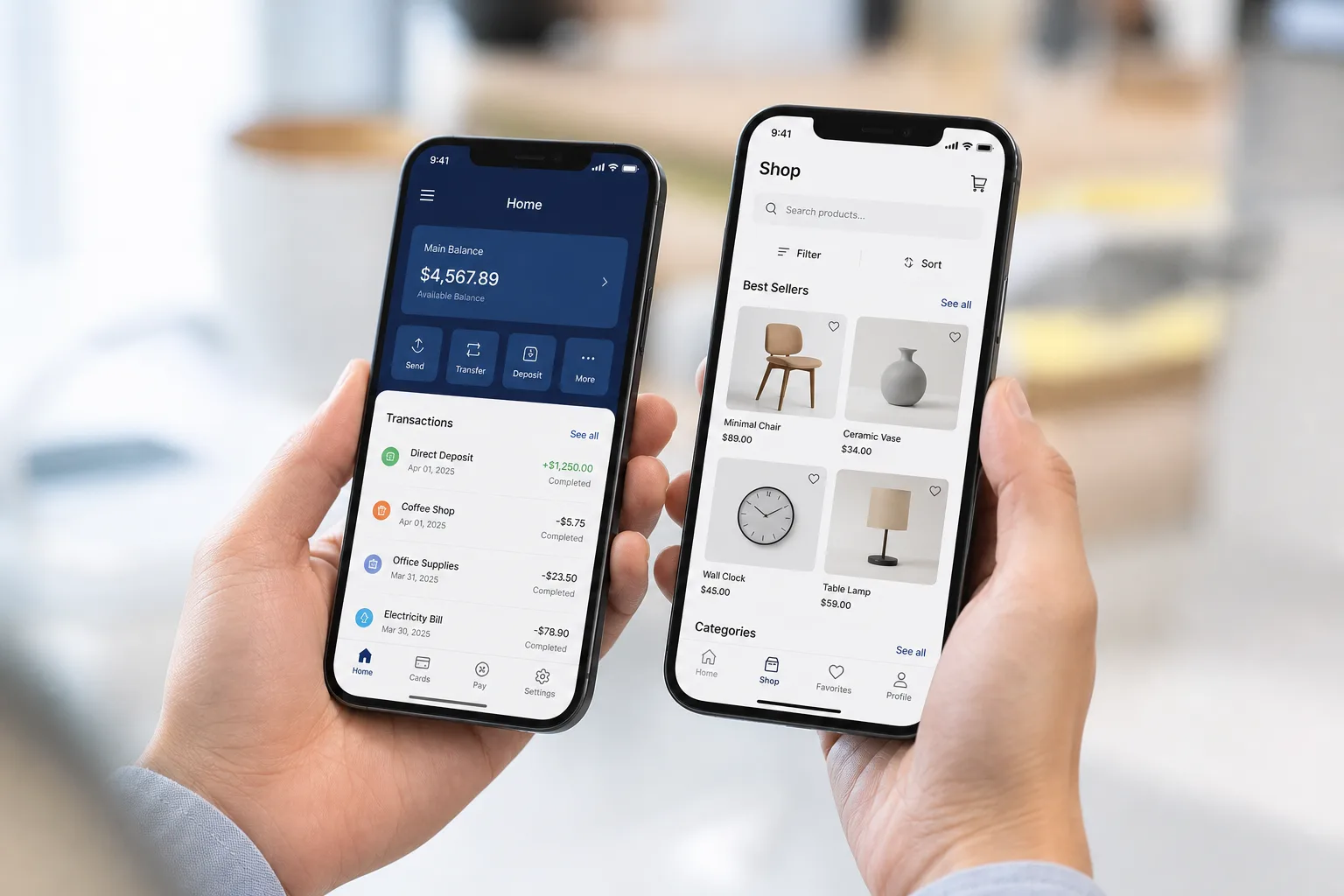

- Flutter app development costs range from ZAR 50,000 to ZAR 1,500,000+, based on project complexity.
- Backend systems, custom features, security, and integrations have the biggest impact on your budget.
- Flutter reduces costs with a single codebase for Android and iOS, speeding up development.
- Plan for ongoing expenses like hosting, maintenance, updates, licenses, and app store fees.
- Starting with an MVP helps validate ideas, control spending, and support long-term business growth.
Flutter App Development Cost in South Africa: A Complete Pricing Guide
Flutter app development cost in South Africa is the first question most business owners ask before building an app. There's no fixed number since price depends on features, complexity, and team choice.
Costs typically range from ZAR 50,000 for a basic app to ZAR 1,500,000 or more for enterprise-level builds.
This guide breaks down exactly what shapes that number, covering developer rates, hidden costs, and practical ways to plan your budget. By the end, you'll have a realistic picture of what your project should actually cost.

How Much Does Flutter App Development Cost in South Africa?
Cost depends on size, features, and how deep the backend goes. A small app costs less. A big enterprise app costs a lot more. Simple as that.
Basic Apps
These are simple apps. Think login, a few screens, maybe a contact form. No heavy backend work needed. Teams often use these to test an idea fast before spending more.
- Simple screens, basic navigation
- Minimal backend or none
- Fast turnaround, usually weeks not months
Cost: ZAR 50,000 – ZAR 250,000
Medium-Complexity Apps
These apps do more. They might have user accounts, payments, or some custom features. This is where most business apps land.
- User authentication and profiles
- Payment gateway integration
- API integrations with third-party tools
Cost: ZAR 250,000 – ZAR 700,000
Enterprise Apps
Big apps with heavy backend logic, custom architecture, and strict security needs. Enterprise mobile applications usually need dedicated teams and longer timelines.
- Complex backend and database systems
- Advanced security and compliance
- Scalable app architecture for high user loads
Cost: ZAR 700,000 – ZAR 1,500,000+
Quick Cost Breakdown Table
| App Type | Features | Estimated Cost (ZAR) |
|---|---|---|
| Basic App | Simple UI, few screens | 50,000 – 250,000 |
| Medium App | Auth, payments, APIs | 250,000 – 700,000 |
| Enterprise App | Custom backend, security, scale | 700,000 – 1,500,000+ |
If you're trying to estimate app development costs before talking to any agency, this table is a fair starting point. It won't be exact. But it gives you a real range to plan around.
Major Cost Drivers in Flutter App Development
Flutter itself isn't what drives the price up. It's everything wrapped around it. One factor businesses often underestimate is how much backend complexity adds to the final bill.
App Complexity
More screens, more logic, more testing. App complexity is the biggest driver behind Flutter development cost. A simple booking app costs far less than a marketplace app with multiple user roles and live updates.
Cost: Adds 15% to 40% depending on feature depth
UI/UX Design Requirements
Custom UI/UX design takes real design hours. Material Design templates cost less. Fully custom animations, branded interfaces, and unique user journeys raise the price fast, especially for consumer apps competing for attention.
Cost: ZAR 40,000 – ZAR 150,000
Backend Development
Backend development covers databases, servers, and business logic. Apps using Firebase or Supabase launch faster and cheaper. Custom backend architecture with Node.js or Django costs more but supports better long-term scalability.
Cost: ZAR 80,000 – ZAR 300,000
Third-Party API Integrations
API integrations connect your app to outside services. Maps, payment gateways, and chat tools all rely on REST API calls. Each integration adds development time, testing effort, and sometimes ongoing provider subscription fees.
Cost: ZAR 20,000 – ZAR 90,000 per integration
Cross-Platform Requirements
Flutter builds Android and iOS apps from one codebase. Still, platform-specific tweaks for Cupertino widgets or Material Design guidelines take extra hours. Supporting web or desktop targets adds further development cost too.
Cost: Adds 10% to 25% for multi-platform support
Security & Compliance
Security testing, data encryption, and multi-factor authentication protect user data. Fintech and healthcare apps face stricter compliance rules. Meeting these standards takes specialized skill, which raises the overall development budget noticeably.
Cost: ZAR 50,000 – ZAR 200,000
Testing & QA
Unit testing, widget testing, and integration testing catch bugs before launch. Skipping proper QA feels cheaper upfront. It usually costs more later through emergency fixes, poor reviews, and lost user trust after launch.
Cost: 10% to 15% of total development budget
App Store Deployment
Publishing to the Apple App Store and Google Play Store involves setup, compliance checks, and review time. Developer account fees, app store optimization, and metadata prep all add small but real costs before launch.
Cost: ZAR 5,000 – ZAR 20,000
Businesses looking at custom Flutter app solutions should know upfront: the framework is cheap. It's the features layered on top that decide your final number.
Cost Considerations for Different Types of Flutter Apps
Different industries need different features. A food delivery app and a fintech app don't share the same cost sheet.
| App Type | Key Features | Estimated Cost (ZAR) |
|---|---|---|
| eCommerce App | Product catalog, cart, payments | 300,000 – 900,000 |
| Healthcare App | Appointments, records, video calls | 400,000 – 1,000,000 |
| Food Delivery App | Live tracking, payments, ratings | 350,000 – 900,000 |
| Taxi Booking App | GPS, driver app, payments | 450,000 – 1,200,000 |
| Fintech App | Security, transactions, compliance | 600,000 – 1,500,000+ |
| Social Media App | Chat, feeds, media upload | 400,000 – 1,100,000 |
| Real Estate App | Listings, maps, filters | 300,000 – 800,000 |
| Education App | Video, quizzes, progress tracking | 300,000 – 750,000 |
Flutter Developer Rates in South Africa
Who builds your app changes your budget just as much as what you're building. Mobile app development services vary a lot depending on the team size and experience level.
Freelancers
Freelancers usually charge lower hourly rates. Good for small, simple projects. Riskier for big, long-term builds.
- Lower cost per hour
- Limited support after launch
- Best for MVPs and small features
Cost: ZAR 300 – ZAR 800 per hour
Development Agencies
Agencies bring full teams: designers, developers, testers, project managers. More structure, more accountability.
- Full project management included
- Dedicated QA and design teams
- Better for medium to large apps
Cost: ZAR 800 – ZAR 2,000 per hour (project-based pricing common)
Dedicated Flutter Developers
Hiring one or two dedicated developers long-term. Good middle ground between freelancer and full agency.
- Consistent single point of contact
- Lower overhead than full agency
- Works well for ongoing app growth
Cost: ZAR 40,000 – ZAR 90,000 per month, per developer
Flutter App Development Timeline
Time and cost move together. A rushed app usually costs more per hour of work squeezed in.
| Phase | Duration |
|---|---|
| Discovery & Planning | 1 – 2 weeks |
| UI/UX Design | 2 – 4 weeks |
| Development | 6 – 16 weeks |
| Testing | 2 – 3 weeks |
| Launch | 1 week |
Flutter vs Native App Development Cost
This is where a lot of businesses get stuck. Native means separate codebases for Android application development and iOS. Flutter means one codebase, two platforms.
| Factor | Flutter | Native (Android + iOS) |
|---|---|---|
| Codebase | Single | Separate for each platform |
| Development Cost | Lower | Higher (two teams needed) |
| Time to Market | Faster | Slower |
| Performance | Near-native | Native |
| Maintenance | Easier, one codebase | Harder, two codebases |
Which Offers Better ROI?
For most South African startups, Flutter wins on ROI. One codebase means one team, one budget, and faster launches. Native app development needs separate Android and iOS teams, which usually doubles design and QA effort.
Here's a simple example. A grocery delivery startup building with Flutter might spend around ZAR 500,000 to launch on both platforms in 12 weeks. Building the same app natively often means two parallel builds, pushing the cost past ZAR 800,000 and the timeline past 18 weeks.
Native still makes sense in specific cases. Apps leaning heavily on device-specific performance, like high-end gaming apps or apps needing deep hardware access, benefit from native code. For most business apps, though, Flutter delivers similar quality at a lower total cost of ownership.
Flutter vs React Native Development Costs
Both are cross-platform. Both save money over native. But they're not identical. See also our guide on React Native app development cost in South Africa.
| Factor | Flutter | React Native |
|---|---|---|
| Cost | Slightly lower long-term | Comparable, more third-party libraries needed |
| Performance | Closer to native | Good, but bridge-dependent |
| Maintenance | Lower, stable widget system | Moderate, frequent library updates |
| Best For | Custom UI-heavy apps | Apps reusing web (React) code |
Cost: Maintenance costs for React Native apps can run 10-15% higher over three years due to dependency updates.
Businesses planning long-term growth should prioritize a framework that matches their team's existing skills, not just the cheaper upfront quote.
Flutter App Features and Their Cost Impact
Feature choice shapes your app's final budget more than the Flutter framework itself. Push notifications, payment gateway integration, and chat & messaging each add backend work, API calls, and testing time, raising total mobile app development pricing.
User Login
User login uses Firebase Authentication or a custom OAuth setup to verify users safely. Basic auth with email and password keeps cost low. Adding Google Login, Apple Sign-In, or JWT-based sessions raises both cost and security level.
Cost: ZAR 15,000 – ZAR 40,000
Payment Gateway
Payment gateway integration connects your app to Stripe, PayFast, Ozow, or Peach Payments through secure API calls. Local payment providers usually integrate faster than global ones, though PCI compliance and encryption add real development time.
Cost: ZAR 30,000 – ZAR 80,000
Maps & GPS
Maps and GPS features rely on Google Maps SDK and location APIs for real-time tracking. Delivery, taxi, and real estate apps use this feature heavily. Background location tracking and route optimization add extra backend complexity.
Cost: ZAR 25,000 – ZAR 60,000
Push Notifications
Push notifications use Firebase Cloud Messaging to re-engage users after they leave the app. Setup is fairly quick compared to other features. Segmented notifications and rich media alerts increase cost and development effort slightly.
Cost: ZAR 10,000 – ZAR 25,000
Chat & Messaging
Real-time chat and messaging need WebSocket connections or Firebase Realtime Database for instant delivery. Group chats, media sharing, and read receipts all add backend load. This feature ranks among the costlier additions in most builds.
Cost: ZAR 50,000 – ZAR 120,000
AI Features
AI features like chatbots, recommendation engines, and predictive search rely on machine learning models and third-party AI APIs. These features boost user retention and app monetization but demand specialized backend integration and ongoing training costs.
Cost: ZAR 80,000 – ZAR 200,000+
Video Streaming
Video streaming needs a content delivery network, video compression, and adaptive bitrate support for smooth playback. Live streaming adds even more backend infrastructure. This feature ranks among the most expensive additions to any app.
Cost: ZAR 100,000 – ZAR 250,000
Admin Panel
An admin panel gives businesses a backend dashboard to manage users, content, and analytics without touching the source code. Built on frameworks like Laravel or Django, it supports scalability as the app's user base grows.
Cost: ZAR 60,000 – ZAR 150,000
Hidden Costs of Flutter App Development
Cloud hosting, app maintenance, and third-party licenses often surprise business owners after launch. These recurring costs sit outside the initial build price but shape the real total cost of ownership over each app's lifecycle.
Cloud Hosting
Cloud hosting on AWS, Google Cloud, or Microsoft Azure keeps your app's backend running around the clock. Cloud infrastructure costs scale with user traffic and data storage. Enterprise apps with heavy database use pay noticeably more monthly.
Cost: ZAR 2,000 – ZAR 15,000 per month
Maintenance
App maintenance covers bug fixes, performance optimization, and compatibility updates as Android and iOS release new versions. Skipping this maintenance lifecycle often leads to technical debt, slower apps, and frustrated users over time.
Cost: 15-20% of build cost yearly
App Updates
App updates keep pace with new OS releases, security patches, and Flutter SDK upgrades. Regression testing after each update protects existing features from breaking. Ignoring updates for too long risks app store removal eventually.
Cost: Varies by update frequency and scope
Third-Party Licenses
Third-party licenses cover paid APIs, premium widget libraries, and specialized SDKs used inside the app. Some providers charge flat monthly fees. Others charge per API call, which can scale unpredictably as your user base grows.
Cost: Varies by provider and usage volume
Marketing
Marketing costs cover app store optimization, social media promotion, and paid user acquisition campaigns. A polished app with zero marketing budget rarely gets discovered. Visibility in a crowded app store takes ongoing investment beyond development.
Cost: Budget varies by growth targets
App Store Fees
App store fees include Apple's $99 yearly developer account and Google's one-time $25 registration fee. Beyond these base fees, in-app purchases and subscriptions carry a revenue share of 15-30% under each platform's policy.
Cost: $25 – $99+ per year
How to Reduce Flutter App Development Cost
Smart teams cut cost without cutting quality. Starting with an MVP, reusing Flutter widgets, and choosing a transparent development partner all lower initial spend while keeping room for feature prioritization and future scalability.
Build an MVP First
An MVP, or minimum viable product, launches with only the core features users actually need. This approach supports product validation before investing in a full-scale build. Enterprise mobile applications especially benefit from this staged rollout strategy.
Prioritize Essential Features
Feature prioritization means ranking must-have features above nice-to-have ones during product planning. Teams often discover that half the requested features barely get used. Cutting these early saves real budget without hurting the user experience.
Reuse Flutter Widgets
Flutter's widget tree includes pre-built Material Design and Cupertino widgets ready to use. Reusing these components instead of building custom UI from scratch saves development hours across the whole app architecture, especially in early sprints.
Choose the Right Development Partner
A development partner with proven technical expertise avoids costly rework down the line. Poor communication or weak testing during early sprint planning often leads to technical debt that costs more to fix than to prevent.
Plan Future Scalability
Scalable applications handle growth without needing a full rebuild. Choosing the right backend and cloud infrastructure early, even if slightly pricier upfront, protects the business from expensive redevelopment costs once the user base expands.
Why Flutter Is Gaining Popularity Among South African Businesses
South African businesses pick Flutter for practical reasons. One codebase means faster development, lower maintenance, and quicker time to market across the local tech industry, from Cape Town startups to Johannesburg enterprise teams.
Faster Development
Flutter's Hot Reload feature lets developers see code changes instantly without restarting the whole app. This speeds up the development lifecycle noticeably. Faster iteration means quicker fixes and a shorter path from idea to working prototype.
One Codebase
A single codebase written in Dart runs on both Android and iOS without separate builds. This cross-platform framework approach cuts development hours nearly in half compared to maintaining two native codebases for the same product.
Lower Maintenance
With one codebase, bug fixes and feature updates only need writing once. Native apps require the same fix twice, once per platform. This lower maintenance lifecycle saves real money for South African businesses over multiple years.
Better Time to Market
Flutter's faster build cycle means businesses reach app stores sooner than with native development. For startups chasing product validation and early user feedback, this speed advantage often decides whether Flutter or native fits the timeline better.
Flutter App Development Process
A clear process protects your budget. Requirement analysis, wireframing, agile development, and structured QA testing keep the project on track, reducing technical debt and avoiding expensive rework during the deployment pipeline.
Requirement Analysis
Requirement analysis maps out business goals, target users, and must-have features before writing a single line of code during technical discovery. Skipping this stage is a common reason projects run past both budget and timeline.
Wireframing
Wireframing sketches out the app's screens and user journey before development begins. This step catches design and product architecture problems early, well before development time gets spent building the wrong layout or navigation flow.
Development
Actual coding happens here, using Dart and the Flutter SDK inside tools like Android Studio or Visual Studio Code. Agile methodology and sprint planning break the build into manageable two-week cycles for steady progress.
Testing
Unit testing, widget testing, and integration testing run alongside development through CI/CD pipelines, not just at the end. Catching bugs early through this testing lifecycle keeps fixes cheap and prevents costly regression later.
Deployment
Deployment submits the finished app to the Apple App Store and Google Play Store for review. Version control through GitHub and a solid deployment pipeline make this step smoother, reducing last-minute technical surprises.
Ongoing Support
Ongoing support covers bug fixes, OS compatibility updates, and small feature additions after launch. This stage is where long-term maintenance lifecycle costs live, often overlooked during initial product planning and budget discussions. See also mobile app maintenance and support costs.
How to Choose a Flutter App Development Company in South Africa
Picking the right partner protects both budget and timeline. Look beyond price alone. Portfolio quality, technical expertise in Dart and the Flutter SDK, and clear pricing transparency all signal a reliable long-term partner.
Portfolio
A strong portfolio shows real, shipped apps across different industries, not just polished mockups or wireframes. Look for enterprise mobile applications and consumer apps alike to judge whether the team handles varied project complexity well.
Technical Expertise
Technical expertise means deep, hands-on knowledge of Dart, the Flutter SDK, and backend tools like Firebase or Node.js. A team without this depth often struggles with custom app architecture and complex API integrations.
Communication
Clear communication during product planning and sprint reviews keeps everyone aligned on scope, timeline, and budget. Teams that avoid regular updates often hide scope creep or technical debt building up quietly behind the scenes.
Post-Launch Support
Post-launch support means the development partner sticks around after deployment for bug fixes, OS updates, and small feature requests. Apps without this support often break silently when Android or iOS release new versions.
Pricing Transparency
Pricing transparency means the development partner explains cost per feature, per sprint, or per milestone upfront. Vague quotations without a clear breakdown often lead to unexpected charges once the project moves past discovery and planning.
Cost: Choosing the wrong partner often costs more in rework than the original project budget.
When comparing options, look for teams that can clearly show past work and explain their pricing model. Some of the best mobile app developers will walk you through their process before asking for a single rand.
Is Flutter a Good Investment for Your Business?
For most South African startups and enterprise teams, yes, Flutter is worth it. The framework delivers real ROI through faster builds, lower maintenance, and solid scalability as your user base grows.
Take a real-world example. A fintech startup launching an MVP on Flutter might spend ZAR 600,000 upfront. Over three years, maintaining one codebase instead of two separate native apps often saves ZAR 300,000 or more in developer hours, bug fixes, and feature updates.
Scalability matters just as much as upfront cost. A well-planned app architecture lets a business add features, handle more users, and expand into new markets without a costly rebuild. Long-term maintenance stays simpler too, since one team manages one codebase instead of juggling two.
- ROI – Lower build cost, faster time to market
- Scalability – Handles growth well with the right architecture
- Long-term maintenance – One codebase means fewer ongoing headaches
- Business benefits – Faster iteration, lower total cost of ownership
The bottom line: Flutter rarely disappoints businesses that plan properly from day one. The framework itself isn't the risk. Skipping proper technical discovery and requirement analysis is what usually causes budget overruns, not the choice of Flutter.
Conclusion
Flutter app development cost in South Africa depends on far more than just the framework. Features, backend complexity, team choice, and ongoing maintenance all shape the final number.
Basic apps start around ZAR 50,000, while enterprise builds can reach ZAR 1,500,000 or beyond.
Planning with an MVP-first approach, choosing a transparent development partner, and budgeting for hidden costs like hosting and updates all lead to smarter spending. Building an app is a big decision, but once the numbers make sense, it becomes a lot less overwhelming. Start small, plan well, and grow your app step by step.
Frequently Asked Questions
1. How much does a basic Flutter app cost in South Africa?
Basic apps usually cost between ZAR 50,000 and ZAR 250,000.
2. What's the most expensive part of Flutter app development?
Backend development and complex features like AI or real-time chat usually cost the most.
3. Is Flutter cheaper than native app development?
Yes. Flutter typically costs 30-50% less than building separate Android and iOS apps.
4. How long does it take to build a Flutter app?
Most apps take between 3 and 6 months, depending on complexity.
5. Do freelancers or agencies cost less?
Freelancers cost less upfront. Agencies cost more but offer better structure and support.
6. What ongoing costs should I plan for after launch?
Budget for hosting, maintenance, and app store fees — usually 15-25% of build cost yearly.
7. Can Flutter handle enterprise-level apps?
Yes. Flutter scales well for enterprise apps with proper architecture planning.
8. Is Flutter good for fintech apps?
Yes, though fintech apps need extra security work, which raises the cost.
9. What's cheaper: Flutter or React Native?
Both are similar upfront. Flutter often costs less to maintain long-term.
10. How can I lower my Flutter app development cost?
Start with an MVP, prioritize core features, and pick a transparent development partner.