
Building a logistics app is not cheap. Guess wrong, and your budget breaks fast.
Many South African founders ask about the logistics app development cost in South Africa before they draw a single screen. Without a clear number, teams overspend on the wrong features and underspend on the boring ones that actually keep an app running.
I have watched projects stall for months because nobody explained where the money really goes.
This blog breaks it all down. Real cost ranges, feature pricing, hidden fees, and honest advice on where to save and where not to cut corners.
Understanding Logistics Apps and Market Potential
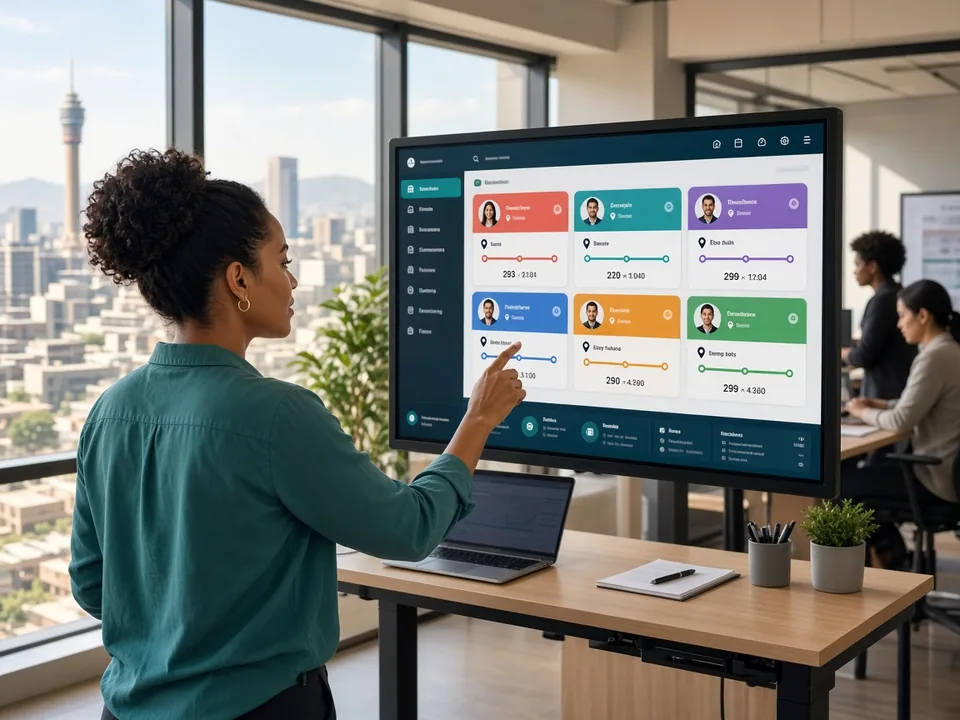
A logistics app is a mobile or web application that helps businesses manage deliveries, shipments, drivers, vehicles, routes, tracking, and other logistics operations from one connected platform.
The South Africa logistics software market was valued at USD 176.24 million in 2024 and is projected to reach USD 614.41 million by 2033, growing at a 14.8% CAGR. Fleet management software held the largest segment in 2024, showing strong demand for digital logistics solutions.
A specialist logistics app development company in South Africa can help you decide whether you need a lean delivery MVP or a full multi-role transportation platform.
How Does Logistics App Development Benefit Your Business?
A good logistics app cuts delays, saves fuel, and gives you visibility you simply cannot get from spreadsheets.
Faster Dispatch and Order Allocation
Dispatch management inside a logistics app removes manual phone calls. Orders are assigned to the nearest driver automatically, reducing delivery delays and improving fleet utilization across the operation.
Real-Time Shipment Visibility
Customers and fleet managers both want live tracking. Real-time GPS tracking and geolocation provide shipment visibility that builds trust and reduces customer complaints about late deliveries.
Lower Operational Costs Over Time
Route optimization and fuel monitoring reduce fuel expenses. A well-built transportation management system pays for itself through operational efficiency and fewer wasted kilometers on the road.
Better Proof of Delivery
Digital proof of delivery, photo confirmation, and OTP verification remove paperwork. This lowers disputes and speeds up the payment cycle between businesses and their clients.
Improved Fleet and Driver Accountability
Fleet tracking, driver behavior data, and vehicle diagnostics give managers real numbers instead of guesses. This supports better maintenance scheduling and less unplanned vehicle downtime.
Scalable Business Growth
A logistics platform built with cloud infrastructure and microservices can grow with your order volume. You are not stuck rebuilding the whole system when your business scales into new provinces.
How Much Does It Cost to Develop a Logistics App in South Africa?
Logistics mobile app development costs shift a lot depending on features, platforms, and how many user roles your app needs.
Here is the honest breakdown most agencies will not give you upfront.
| App Type | Timeline | Cost Range (ZAR) | Best For |
|---|---|---|---|
| MVP | 6 to 10 weeks | ZAR50,000 to ZAR250,000 | Startups testing an idea |
| Standard App | 3 to 5 months | ZAR250,000 to ZAR600,000 | Growing delivery or courier businesses |
| Advanced App | 5 to 8 months | ZAR600,000 to ZAR1,000,000 | Multi-role platforms with dispatch and fleet tools |
| Enterprise App | 8 to 14 months | ZAR1,000,000 to ZAR1,500,000+ | Large fleet operators and enterprise logistics companies |
If you want to test demand before spending your full budget, looking into MVP mobile app development in South Africa is a smart first step for early-stage logistics founders.
How Much Does Each Logistics App Feature Cost?
Each feature adds a different amount of work, and some cost far more than they look like on paper.
| Feature | What It Covers | Cost Impact (ZAR) |
|---|---|---|
| User registration and login | Customer and driver onboarding, OTP verification | ZAR15,000 to ZAR40,000 |
| Real-time GPS tracking | Live location, geofencing, route tracking | ZAR60,000 to ZAR150,000 |
| Route optimization | Dynamic routing, ETA prediction, dispatch logic | ZAR70,000 to ZAR180,000 |
| Push notifications | Delivery status, order alerts, driver assignment | ZAR15,000 to ZAR35,000 |
| Payment gateway integration | Local payment ecosystem, invoicing | ZAR40,000 to ZAR90,000 |
| Admin dashboard | Order allocation, user management, reporting | ZAR80,000 to ZAR200,000 |
| Multi-role support | Customer, driver, dispatcher, and fleet manager access | ZAR100,000 to ZAR250,000 |
| Barcode and QR scanning | Shipment identification, GTIN, and SSCC support | ZAR30,000 to ZAR70,000 |
| Offline mode | Data sync for poor connectivity areas | ZAR40,000 to ZAR90,000 |
| Analytics and reporting | Delivery analytics, operational dashboards | ZAR50,000 to ZAR120,000 |
9 Factors That Shape Your Logistics App Development Budget
Nine of these come up in almost every quote I have reviewed, and each one moves the price in a different direction.
App Complexity
A basic delivery tracker costs far less than a full transportation management system with dispatch logic, fleet visibility, and multi-role permissions layered on top of each other.
Cost around ZAR50,000 to ZAR400,000 depending on scope.
Platform Choice
Cross-platform development using Flutter or React Native usually costs less than building separate native apps for Android and iOS.
| Platform | Cost Impact (ZAR) |
|---|---|
| Android only | ZAR80,000 to ZAR200,000 |
| iOS only | ZAR90,000 to ZAR220,000 |
| Cross-platform (both) | ZAR120,000 to ZAR280,000 |
| Native Android and iOS separately | ZAR200,000 to ZAR450,000 |
If you are comparing frameworks, also review our guides on Flutter app development cost and React Native app development cost in South Africa.
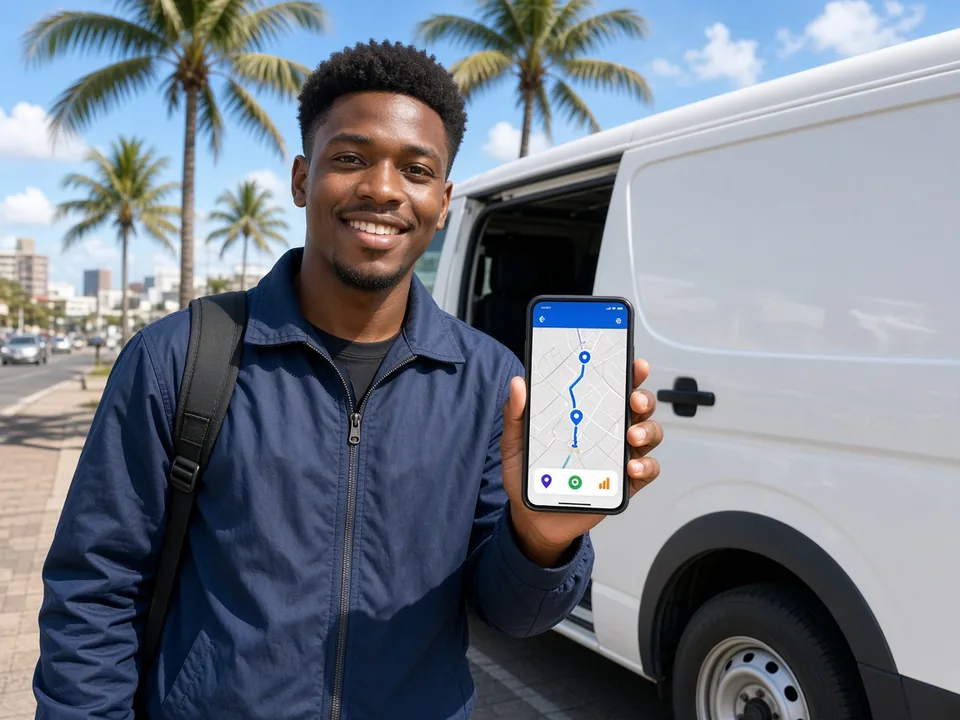
Real-time GPS Tracking
This is where I have seen the most underestimation. Location permissions, background tracking, and location frequency settings all affect battery drain and user trust.
Map APIs like Google Maps Platform or Mapbox add licensing costs. Geofencing and route calculation add server load. Live driver location needs real-time communication through WebSockets or Firebase. Location data storage grows fast once you have hundreds of active drivers, and battery optimization has to be tuned carefully, or drivers will simply turn tracking off.
Cost around ZAR60,000 to ZAR150,000. A GPS tracking app development company can help plan this architecture before coding begins.
Route Optimization
Dynamic routing that reacts to traffic and multiple stops needs more than a simple maps API call. It needs an actual routing engine or algorithm layer.
Cost around ZAR70,000 to ZAR180,000.
Third-Party Integrations
Payment gateways, SMS providers, mapping services, and accounting software all need separate integration work, testing, and ongoing maintenance as their APIs change.
Cost around ZAR40,000 to ZAR120,000.
Backend Architecture
A weak backend is the number one reason logistics apps fail under real load. Microservices and proper database design cost more upfront but scale far better later.
Cost around ZAR100,000 to ZAR300,000.
Security
Encryption, secure APIs, role-based access control, and audit logs are non-negotiable when you are handling customer and driver personal information.
Cost around ZAR40,000 to ZAR100,000.
Testing
Quality assurance, security testing, and performance testing across multiple devices and network conditions take real time, especially for apps with live tracking.
Cost around ZAR30,000 to ZAR90,000. This is why mobile app testing in South Africa deserves a real line in the budget, not a leftover afterthought.
Maintenance and Scaling
Server scaling, bug fixing, and post-launch support are ongoing costs, not one-time fees. Budget for this every single month after launch.
Cost around ZAR15,000 to ZAR60,000 per month.
How Do User Roles Impact South Africa Logistics App Development Cost?
A logistics app can have different users, and each user type needs specific features that can affect the overall development cost.
Customer Side
Order placement, shipment tracking, delivery notifications, and payment screens make up the customer app. It is usually the simplest role to build.
Cost around ZAR40,000 to ZAR90,000.
Driver Side
Driver assignment, navigation, proof of delivery, and earnings tracking add more screens and more background processes than the customer app needs.
Cost around ZAR50,000 to ZAR120,000.
Dispatcher Side
Order allocation, driver assignment logic, and real-time dashboards require heavier backend logic and more careful permission design than either customer or driver apps.
Cost around ZAR60,000 to ZAR150,000.
Fleet Manager Side
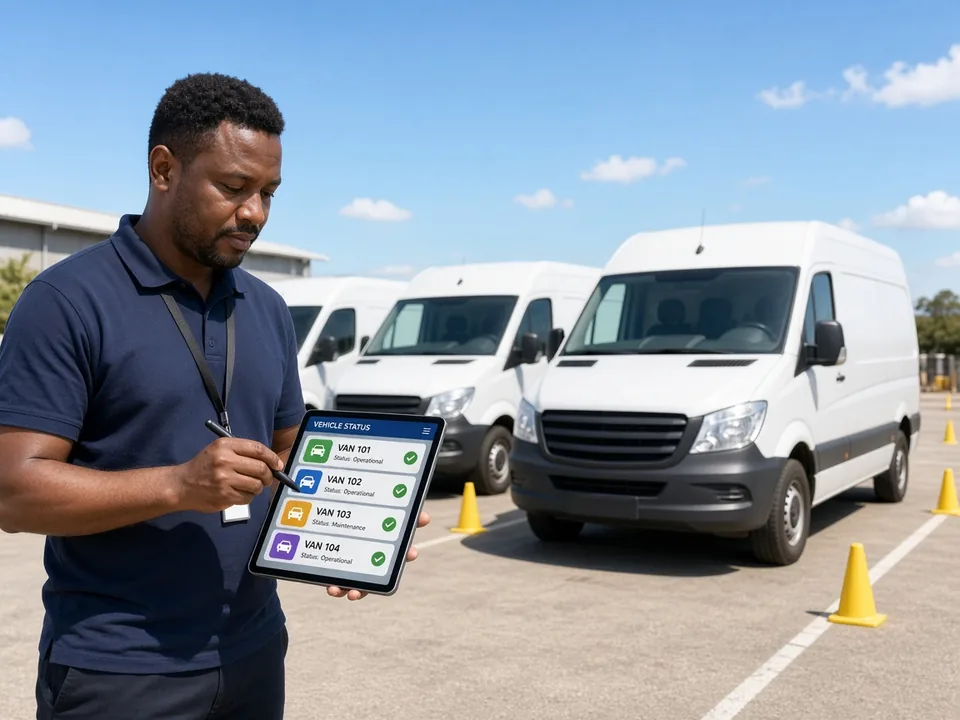
Fleet managers need analytics, vehicle tracking, maintenance scheduling, and driver reports. A fleet management app development service connects these functions to improve control and daily fleet operations.
Cost around ZAR70,000 to ZAR180,000.
Admin Side
User management, role-based access control, and operational reporting sit at the top of the whole system and touch nearly every database table you have built.
Cost around ZAR50,000 to ZAR130,000.
How Much Does the Tech Stack Add to Logistics App Cost?
The technology you pick changes both your upfront cost and what you pay every month after launch.
| Layer | Recommended Technologies | Cost Impact |
|---|---|---|
| Mobile | Flutter, React Native, Kotlin, Swift | Cross-platform lowers cost; native increases it |
| Frontend | React, Next.js | Moderate; mainly affects admin dashboard cost |
| Backend | Node.js, Python, Laravel | Affects development speed and long-term maintenance cost |
| Database | PostgreSQL, MySQL, MongoDB | Affects scalability and data storage cost |
| Maps | Google Maps Platform, Mapbox | Ongoing API usage fees, scales with active users |
| Cloud | AWS, Azure, Google Cloud | Monthly hosting cost, scales with traffic |
| Real time | WebSockets, Firebase | Needed for live tracking, adds infrastructure cost |
| Notifications | Firebase Cloud Messaging | Low cost, mostly free at moderate volume |
| Analytics | Firebase Analytics, custom dashboards | Custom dashboards cost more than standard analytics |
| DevOps | Docker, CI/CD, GitHub Actions | Reduces long-term bug-fixing cost |
South African Requirements That Can Increase Logistics App Costs
Building for South Africa specifically means dealing with local rules and local realities that a generic global guide will never mention.
POPIA Compliance
POPIA compliance protects customer, driver, shipment, and location information through lawful processing, consent, access control, data security, and breach protection under South Africa’s Protection of Personal Information Act. The Information Regulator publishes official guidance, and the government sets out the Protection of Personal Information Act itself.
Payment Ecosystem
South African users expect local payment options alongside card payments. Integrating local payment gateways adds development time but is essential for customer trust and adoption.
Mobile Connectivity
Not every area in South Africa has stable mobile connectivity. Logistics applications should be built with offline functionality so drivers can log deliveries even when signals drop out completely.
GPS and Location Privacy
Since location data counts as personal information under POPIA, your app needs clear permissions, secure storage, and limits on how long location history gets retained.
Local Courier and Fleet Workflows
Local courier operators often run mixed fleets and irregular routes. A rigid international template rarely fits South African delivery patterns without real customization. Related builds such as courier delivery app development usually need the same local workflow thinking.
Barcode and Shipment Identification
GS1 South Africa explains how identifiers such as GTIN, GLN, and SSCC support product, location, and logistics unit identification across the supply chain.
Using these standards makes your app compatible with existing warehouse and retail systems instead of forcing a custom identification scheme nobody else recognizes.
What Extra Costs Should You Expect When Building a Logistics App?
These are the costs that rarely show up in an initial quote but show up on your invoice a few months later.
| Hidden Cost | What It Covers |
|---|---|
| App store fees | Annual developer account fees for Apple and Google |
| Cloud hosting | Monthly server costs that grow with user traffic |
| Map API usage | Per-request charges for Google Maps or Mapbox calls |
| SMS costs | OTP verification and delivery alert messages |
| Push notification infrastructure | Backend services that send real-time alerts |
| GPS data storage | Growing database cost from constant location logging |
| Third-party API fees | Ongoing charges for payment or logistics integrations |
| Payment gateway fees | Per-transaction processing charges |
| Security testing | Periodic penetration testing and audits |
| Maintenance | Monthly fixes, updates, and framework upgrades |
| Bug fixing | Post-launch issues found by real users |
| Monitoring | Uptime and performance monitoring tools |
| Customer support | Staff or tools handling user issues |
| Server scaling | Extra infrastructure as your user base grows |
| Data backups | Automated backup storage and recovery testing |
| SSL and infrastructure | Certificates and network security upkeep |
Freelancer vs Agency vs In House Logistics App Development Cost
There is no single right answer here. It genuinely depends on your timeline, budget, and how long you plan to keep building on the platform.
| Option | Initial Cost | Control | Scalability | Best For |
|---|---|---|---|---|
| Freelancer | Low to medium | Medium | Limited | Small MVP builds |
| In-house team | High | High | High | Long-term product teams |
| Agency | Medium to high | High | High | Businesses needing complete development |
Common Mistakes That Increase Logistics App Development Cost
I have seen most of these mistakes happen more than once, sometimes on the same project.
Trying to Build Every Feature in Version One
Founders often want route optimization, AI predictions, and five user roles all at launch. This inflates the budget before the app has even proven it works with real users.
Start with the smallest version that solves one problem well. Add advanced features only after you have real usage data telling you what customers actually need.
Adding Live Tracking Without Planning Location Architecture
Real-time GPS tracking is not just a map pin. A reliable system needs background location tracking, battery optimization, location data storage, and real-time updates.
Plan this architecture before coding begins. This prevents costly rebuilds and performance issues later.
Ignoring the Admin Dashboard
Teams pour budget into the customer-facing app and treat the admin dashboard as an afterthought. That dashboard runs the entire business behind the scenes.
Budget proper time for admin tools from the start. Your operations team will thank you later.
Underestimating Backend Development
The visible app is maybe a third of the actual work. Backend architecture, APIs, and database design quietly eat most of the development timeline.
Get a technical partner to scope backend work honestly before you commit to a fixed budget.
Ignoring Offline Functionality
South African connectivity is not always reliable, especially outside major cities. An app that breaks without a signal frustrates drivers fast.
Design offline data sync early. Retrofitting it after launch is far more expensive than building it in from the start.
Choosing Technology Only Because It Is Cheap
A cheap tech stack today can create expensive rebuilding tomorrow if it cannot scale or becomes difficult to maintain.
A reliable logistics app development company will choose technologies based on scalability, developer availability, security, and long-term support.
Not Planning API Integrations Early
Payment gateways, SMS providers, and mapping APIs each have their own quirks and approval processes that can delay launch by weeks if left until the end.
Map out every third-party integration during the planning phase, not during final testing.
Treating Security as a Final Step
Security bolted on right before launch often means rushed encryption, weak access control, and gaps in POPIA compliance.
Build security into every phase, especially anywhere personal information or location data gets stored.
Not Defining User Roles Clearly
Vague role definitions lead to messy permission systems that need constant patching once real dispatchers and fleet managers start using the app daily.
Map out every role and every permission before development begins. It is far cheaper on paper than in code.
Getting a Quote Without a Detailed Feature Scope
A vague quote based on a two-line description almost always changes once real requirements surface, and change requests cost more than planning upfront ever would.
Write a detailed feature list before requesting quotes. It protects your budget and your timeline both.
How to Reduce Logistics App Development Cost Without Cutting Important Features
Cutting corners on core features is risky. Cutting smart on process is where real savings happen.
- Build an MVP first. Start with MVP mobile app development and launch with core features only. Prove your delivery model works before investing in advanced dashboards or AI-based tools that users may not need yet.
- Use cross-platform development. Flutter or React Native lets you support Android and iOS from one codebase, cutting development time nearly in half compared to native builds.
- Prioritize high-value features. Rank features by business impact. Real-time tracking and proof of delivery usually matter more early on than advanced analytics dashboards.
- Use existing APIs. Google Maps, payment gateways, and SMS providers already solve hard problems. Building these from scratch wastes the budget on things nobody will notice or thank you for.
- Avoid unnecessary custom integrations. Every custom integration is ongoing maintenance work. Stick to standard, well-supported APIs unless a custom build is genuinely unavoidable.
- Start with one geographic market. Launching in one city first reduces logistics complexity, testing scope, and support needs compared to a nationwide rollout from day one.
- Limit user roles initially. Fewer roles at launch means fewer permission rules, less testing, and a smaller admin dashboard to build and maintain in the early stages.
- Use phased development. Break the build into phases tied to business milestones. This spreads cost over time and lets you validate each phase before funding the next.
- Automate testing. Automated testing catches bugs earlier and reduces the manual QA hours needed before every release, which lowers long-term maintenance cost.
- Use cloud infrastructure. Cloud platforms like AWS or Google Cloud let you pay for what you use instead of investing in physical servers upfront.
- Avoid premature AI features. AI-based route optimization sounds impressive, but it adds data processing, model integration, and monitoring costs most early-stage logistics apps do not need yet. If you price that later phase, this AI development cost breakdown in South Africa is worth a look.
Should You Build Custom Logistics Software or Buy SaaS?
Sometimes the smartest cost decision is not building custom software at all.
| Approach | Best For | Main Advantage | Main Limitation |
|---|---|---|---|
| Custom | Unique operations | Full control | Higher initial cost |
| SaaS | Standard workflows | Faster launch | Limited customization |
| Hybrid | Growing businesses | Balance of control and speed | Integration complexity |
For a broader sense of how software pricing works across the country, also review mobile app development costs in South Africa.
Conclusion
Logistics app development cost in South Africa depends heavily on features, user roles, and technology choices, not a single fixed number. An MVP can start around ZAR50,000, while a full enterprise platform can climb past ZAR1,500,000.
Real-time tracking, POPIA compliance, backend architecture, and hidden maintenance costs all shape the final budget.
Understanding these cost drivers, from route optimization to fleet management complexity, helps you plan realistically instead of guessing. A phased, MVP-first approach remains the smartest way to control spending while still building a platform that can scale with your business.
Ready to scope the build? Explore logistics app development services in South Africa.
Frequently Asked Questions
How much does it cost to develop a logistics app in South Africa?
Costs range from around ZAR50,000 for a basic MVP to ZAR1,500,000 or more for a full enterprise platform with multiple user roles.
How long does it take to build a logistics app?
An MVP takes roughly 6 to 10 weeks, while advanced or enterprise platforms can take anywhere from 5 to 14 months to complete.
Does POPIA affect logistics app development cost?
Yes. POPIA compliance requires consent management, data protection, and secure storage for location and personal information, which adds development time.
How much does GPS tracking add to development cost?
Real-time GPS tracking usually adds around ZAR60,000 to ZAR150,000 due to location architecture, battery optimization, and real-time communication needs.
Should I choose a freelancer, agency, or in-house team?
Freelancers suit small MVPs, in-house teams suit long-term products, and agencies work well when you need a complete team without hiring overhead.
What is the cheapest way to reduce logistics app costs?
Building an MVP first, using cross-platform development, and relying on existing APIs are the fastest ways to cut costs without losing core functionality.
How much does route optimization cost to build?
Route optimization typically costs between ZAR70,000 and ZAR180,000, depending on how dynamic and traffic-aware the routing engine needs to be.
Is it better to build custom logistics software or use SaaS?
Custom software fits unique operations needing full control, while SaaS suits standard workflows where a faster, cheaper launch matters more than customization.