
You want a taxi app. Good. But the price tag is stressing you out already, right? One developer quotes R80,000. Another quotes R900,000. Same idea, wildly different numbers.
That gap only grows once you add GPS tracking, payment integration and a proper backend. Stop guessing.
This blog on taxi booking app development cost in South Africa breaks the real numbers down, from a simple MVP all the way to a full Uber-style platform, so you know exactly what you are paying for before you sign anything.

What Is the Benefit of Taxi Booking App Development?
Taxi apps generated $59.6B in revenue in 2024, up 27.6%. 425M people used taxi apps. Uber generated 42% of revenue and led the US (76%) and UK (70%).
A taxi app does more than book rides. It builds trust, saves time, and grows your transport business faster than old-fashioned taxi ranks ever could.
A specialist taxi booking app development company in South Africa can help you decide whether you need a lean city MVP or a full multi-city e-hailing platform.
Faster Ride Booking
Passengers open the app, tap once, and get a ride. No phone calls. No waiting on a corner. Instant booking beats the old system every single time.
Real-Time GPS Tracking
Live location tracking lets riders watch the car approach. Route optimisation helps drivers too. It builds passenger safety and removes the guesswork nobody enjoys.
Digital Payment Options
Card payment, digital wallet, and cash option, all in one place. Payment security matters here. It keeps your commission clean and your riders comfortable.
Driver Management Tools
Driver verification, onboarding, and earnings tracking all sit inside one dashboard. It saves you from messy paperwork and lost trip records at month-end.
Business Growth Through Analytics
Ride analytics and driver performance data show you what actually works. Demand forecasting helps you place cars where South African cities genuinely need them.
How Much Does It Cost to Develop a Taxi Booking App in South Africa?
Mobile app development cost for a taxi platform typically lands between R50,000 and R1,500,000, and scope decides where you fall in that range.
| App Type | Development Cost | Timeline | App Complexity |
|---|---|---|---|
| MVP | R50,000 to R250,000 | 6 to 10 weeks | Basic booking, one payment method, single city |
| Standard | R250,000 to R600,000 | 3 to 5 months | Passenger and driver app, GPS tracking, payment gateway |
| Advanced | R600,000 to R1,000,000 | 5 to 7 months | Admin dashboard, analytics, multiple payment methods |
| Enterprise (Uber style) | R1,000,000 to R1,500,000+ | 7 to 12 months | Multi-city rollout, AI dispatch, full compliance |
If you want to test demand before spending your full budget, looking into MVP mobile app development in South Africa is a smart first step for early-stage e-hailing founders.
What Does a Taxi Booking App Cost Based on Its Components?
A taxi app is really four smaller products stitched together, and each one carries its own cost and its own headaches.
Passenger App Cost
The passenger side covers registration, profile setup, location sharing, booking, fare estimate, driver tracking, payments, ratings, trip history, and notifications. This part of your mobile app development plan usually needs the most polish, since passengers judge your whole business on how smooth this single screen feels.
Driver App Cost
The driver side handles driver registration, document upload, availability toggle, ride requests, navigation, earnings, trip history, ratings, support, and emergency features. Many clients underestimate this app. A confused driver app means slow pickups, and slow pickups mean unhappy passengers within weeks.
Admin Dashboard Cost
Behind every taxi app sits a control room. Driver management, customer management, ride management, pricing, commission, payments, reports, complaints, promotions, and analytics all live here. Skip building this properly and you end up running an entire business through spreadsheets and panic.
Backend and API Cost
Taxi apps genuinely need heavier backend engineering than a normal booking app. Real-time APIs, WebSockets, and constant location updates run every second the app is open. Add dispatch logic, authentication, payment processing, databases, and cloud infrastructure on top, and it becomes clear why this invisible layer often costs more than both apps put together.
Taxi App Features and Their Development Cost
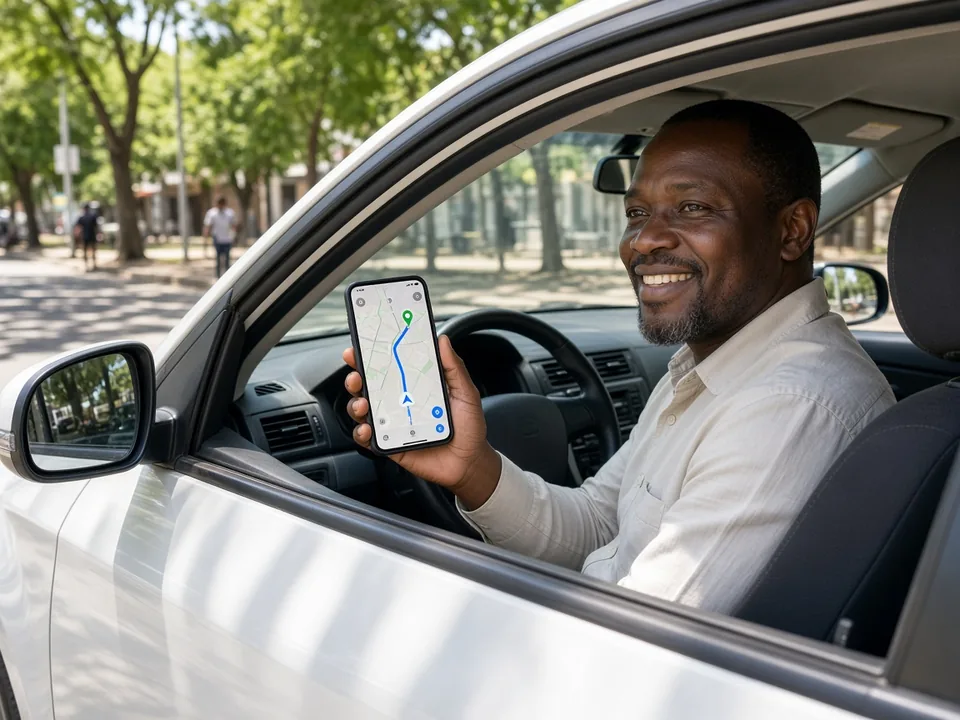
Each feature you add stacks directly onto your final bill, and some features cost far more than they look like they should.
| Feature | Explanation | Estimated Development Cost |
|---|---|---|
| User registration | Let users sign up with phone or email and verify fast | R15,000 to R35,000 |
| GPS and maps | Live maps, geolocation, and route planning power every ride | R40,000 to R90,000 |
| Ride booking | The core flow where a rider requests and confirms a trip | R35,000 to R80,000 |
| Real time driver tracking | Shows the exact driver location using live GPS tracking | R45,000 to R100,000 |
| Fare calculation | Works out a fare estimate using distance and time | R30,000 to R70,000 |
| Payment integration | Connects card payment, wallet, and cash options safely | R50,000 to R120,000 |
| Push notifications | Sends booking updates, offers, and driver alerts instantly | R15,000 to R35,000 |
| Ratings and reviews | Lets riders rate drivers and builds trust over time | R10,000 to R25,000 |
| Driver verification | Checks driver documents and vehicle registration properly | R20,000 to R45,000 |
| Admin dashboard | The central panel to manage rides, drivers, and reports | R80,000 to R180,000 |
| Analytics | Tracks ride analytics, revenue, and driver performance | R60,000 to R150,000 |
Taxi Booking App Development Cost According to Technology
Your tech stack quietly decides both your build cost today and your maintenance bill for years afterward.
| Technology | Use Case | Cost Impact |
|---|---|---|
| Flutter | Cross-platform app for Android and iOS together | Lower overall cost, faster launch |
| React Native | Cross-platform with strong community support | Moderate cost, solid performance |
| Kotlin and Swift | Fully native Android and iOS apps | Higher cost, best raw performance |
| Node.js | Real-time backend with WebSockets | Moderate cost, scales comfortably |
| Laravel | Backend APIs and the admin panel | Moderate cost, quick to build |
| Firebase | Notifications, authentication, early-stage backend | Lower cost for an MVP |
| AWS or Google Cloud | Cloud hosting and scalable infrastructure | Higher ongoing cost as you grow |
| PostgreSQL or MongoDB | Database for rides, users, and payments | Usually folded into backend cost |
If you are comparing frameworks, also review our guides on Flutter app development cost and React Native app development cost in South Africa.
What Makes Taxi Booking App Development More Expensive?
Some features look tiny on a slide deck and then eat your entire budget once someone actually starts building them.
Real-Time GPS Tracking
Live location tracking needs constant data flow between driver and passenger. It never really rests once the app is live.
Cost: R60,000 to R120,000
Driver Passenger Matching
Smart matching pulls in nearby drivers, availability, and distance to pick the right car fast. Getting this right takes real testing, not guesswork.
Cost: R50,000 to R100,000
Route and Distance Calculations
Route optimisation and distance calculation depend on Maps API and Routes API. Every wrong turn shown to a rider quietly damages trust.
Cost: R40,000 to R90,000
Dynamic Fare Calculation
Fare rules shift with distance, time, and demand. A pricing engine that stays fair and transparent needs more logic than most people expect.
Cost: R35,000 to R80,000
Payment Processing
Payment gateway work touches security, refunds, driver payout, and commission tracking all at once. One bug here can break trust overnight.
Cost: R50,000 to R130,000
Multiple User Roles
Passenger, driver, and admin each need their own permissions and views inside the same system. Role-based access adds real backend weight.
Cost: R30,000 to R70,000
Real-time Notifications
Push alerts for booking confirmation, arrival, and offers run constantly in the background, and that quietly adds server load.
Cost: R20,000 to R45,000
High Availability Backend
Your backend cannot fall over during peak hours. Load balancing, auto scaling, and fault tolerance all cost more when built properly from day one.
Cost: R80,000 to R180,000
Security
Data encryption, secure authentication, and fraud detection protect riders and drivers both. Skipping this early almost always costs more later.
Cost: R40,000 to R90,000
Third-Party APIs
Maps, SMS, OTP, and payment APIs all bill you based on usage. Each integration adds setup cost plus a bill that keeps arriving monthly.
Cost: R25,000 to R60,000
Regulatory Requirements
Compliance features like panic buttons and driver information checks are not optional anymore in South Africa. Building them in properly adds real cost.
Cost: R20,000 to R50,000
Development Cost by Platform
| Platform | Estimated Cost |
|---|---|
| Android only | R150,000 to R450,000 |
| iOS only | R180,000 to R500,000 |
| Android and iOS (native) | R350,000 to R900,000 |
| Cross-platform (Flutter or React Native) | R200,000 to R600,000 |
How Much Does an Uber-Like Taxi App Cost in South Africa?
A real Uber-style platform is not one app. It is closer to nine or ten systems working together, quietly, all at once.
Passenger app. Driver app. Admin dashboard. Backend. Dispatch engine. GPS. Payments. Notifications. Analytics. Support. Security. Compliance. That is the actual list.
A serious Uber-style platform should not be budgeted like a simple taxi app project, because real-time dispatch, location services, payment processing, and daily operational infrastructure all raise the complexity by a lot.
In my experience, clients who try building this for R200,000 come back six months later asking why nothing scales properly. A realistic enterprise budget for taxi booking app development cost in South Africa at this level sits between R900,000 and R1,500,000, sometimes higher once you add multi-city support.
Some operators grow sideways too. Once the core platform is stable, a few clients branch into a bike taxi app development service to capture short trips and beat traffic in dense city centers, which adds its own smaller build cost on top.
South African E-Hailing Regulations That Can Affect Your App Budget
The regulatory picture changed in a real way during September 2025, and this section is where most competitor articles simply stop trying.
E-hailing is now a recognised transport service category. Operators need an operating license before they can legally run. The amended framework also touches platform registration, driver and vehicle information, fare estimates, and safety requirements.
Here is what founders actually need to plan around.
Operating licenses and NPTR registration now sit at the centre of compliance. Platform registration, driver and vehicle compliance, and vehicle identification all follow close behind.
Panic button requirements and passenger safety features are no longer nice extras. Fare estimates, driver information, and ongoing compliance monitoring round out the list.
The Western Cape government has also confirmed that e-hailing platforms and applications must register with the NPTR under this newer framework, which tells you this is not a once-off checkbox.
A small but important note. None of this is legal advice. Please confirm current requirements with your relevant transport authority before launch, since rules do get updated.
Hidden Costs of Running a Taxi Booking App
The build cost is only half the story. Running the app quietly adds its own monthly bill.
| Factor | Explanation | Cost Impact |
|---|---|---|
| Cloud hosting | Servers need to run every day without stopping ever | R3,000 to R15,000 per month |
| Maps and API usage | Google Maps Platform bills you per request as usage grows | R2,000 to R20,000 per month |
| SMS and OTP | Every login and alert sends a message that costs money | R1,000 to R5,000 per month |
| App maintenance | Bug fixes and updates never really stop after launch day | 15 to 20 percent of build cost yearly |
| Payment gateway fees | Every transaction takes a small automatic cut | 1.5 to 3.5 percent per transaction |
| App store fees | Apple and Google both charge to keep your app listed | R1,500 to R2,000 per year |
For a deeper look at post-launch spend, also review mobile app maintenance and support costs in South Africa.
Taxi App Development Cost by Development Team
Who builds your app changes your cost curve just as much as what you actually build.
| Development Model | Cost | Control | Scalability |
|---|---|---|---|
| Freelancer | Lower | Medium | Limited |
| In house | High | High | High |
| Agency | Medium to high | High | High |
| Offshore team | Variable | Medium | High |
How to Reduce Taxi Booking App Development Cost
You do not need every feature on day one. You need the right ones, in the right order.
- Start with one city. Launching everywhere at once multiplies support, compliance, and marketing cost fast. Prove the model in one metro area before you expand further.
- Launch an MVP. A focused MVP mobile app development approach lets you test booking, GPS tracking, and one payment method before spending on extras nobody asked for yet.
- Choose the highest value features. Rank features by what riders actually use daily. Fare estimates and live tracking matter more early on than loyalty programmes or referral rewards.
- Use cross-platform development. Flutter or React Native lets one codebase serve both Android and iOS. It genuinely cuts development hours without hurting the user experience much.
- Avoid unnecessary custom integrations. Every custom integration adds setup time and ongoing maintenance. Use proven third-party APIs wherever a ready-made option already exists.
- Build scalable APIs from the start. Rebuilding a weak backend later costs more than building it right the first time. Scalable architecture saves real money down the road.
- Keep the first version operationally simple. Advanced analytics and AI-powered dispatch can wait. Ship something simple that works, then improve it once real ride data starts coming in.
Common Mistakes That Increase Taxi App Development Cost
I have watched the same mistakes repeat across different clients, different years, and the same painful outcome every time.
Starting development without a clear feature scope
Teams start coding before deciding what the app truly needs, and cost balloons arise midway through the project. To avoid it, write your full feature list first, then bring it to a taxi booking app development company for a proper, honest quote.
Copying the Uber feature for feature
Every extra Uber-style feature adds weeks of unnecessary work you may never actually need on day one. To avoid it, pick the features your South African market actually uses first, and add advanced ones only once demand proves itself.
Ignoring the driver side
Founders polish the passenger app and treat the driver app like an afterthought nobody wants to fund. To avoid it, give the driver app equal attention, since unhappy drivers quietly create unhappy passengers.
Underestimating backend complexity
Real-time tracking and dispatch logic need far more backend engineering than most founders expect going in. To avoid it, budget backend development like its own separate project, not a small add-on.
Forgetting API usage costs
Maps, SMS, and payment APIs all bill monthly, and that bill grows quietly as your ride volume scales up. To avoid it, track API usage from day one and set alerts before the bill becomes a surprise.
Treating compliance as an afterthought
Skipping operating licenses and NPTR registration early can delay your entire launch by months. To avoid it, sort regulatory requirements alongside development, never after the app is already finished.
Conclusion
Taxi booking app development cost in South Africa really comes down to scope, not guesswork.
A simple MVP can start near R50,000, while a full Uber-style platform with dispatch, GPS tracking, payment integration, and compliance can reach R1,500,000 or more. In my experience, businesses that plan their feature list, backend needs, and driver app early always spend smarter than the ones who rush in.
Whether you are building a passenger app, an admin dashboard, or a complete e-hailing platform, treat cost planning as part of your product, not an afterthought. Get your scope right, and your budget follows naturally after that.
Ready to scope the build? Explore taxi booking app development services in South Africa.
Frequently Asked Questions
How much does a taxi booking app cost in South Africa?
Cost ranges from R50,000 for a simple MVP to R1,500,000 or more for a full enterprise platform, based on features and complexity.
How long does it take to build a taxi app?
A basic MVP takes about 6 to 10 weeks. A full-featured platform usually needs 4 to 8 months to build and test properly.
What is the cheapest way to start a taxi booking app?
Start with an MVP covering basic booking, GPS tracking, and one payment method. Add extra features once real users arrive.
Is Flutter good for taxi apps?
Yes. Flutter builds one app for Android and iOS together, which lowers development costs and speeds up your launch timeline.
Do I need a license to run an e-hailing app in South Africa?
Yes. Under the newer transport rules, e-hailing platforms need an operating license and NPTR registration before launch.
What increases taxi app development costs the most?
Real-time GPS tracking, payment integration, and a strong backend usually add the most cost since they need constant testing.
Can I build an Uber-like app on a small budget?
Not really. A serious Uber-style platform needs dispatch, payments, and compliance built in from the start, so budget realistically.
How much does taxi app maintenance cost every month?
Maintenance and hosting usually run 15 to 20 percent of your original build cost yearly, plus ongoing API and server fees.