So you typed "how much does it cost to build a delivery app" into Google at midnight, right? We've been there too, on the other side of the screen, staring at a client brief with zero clue what number to write down.
Here's the honest problem. Most guides either hide the price at the bottom or throw one flat number like R500,000 and call it a day. That's not helpful. It's actually a bit lazy.
The truth is on-demand delivery app development cost in South Africa can sit anywhere between R50,000 for a very basic single vendor tool, up to R1,500,000 or more for a full platform with driver apps, live tracking, and payment systems working together.
In this guide, we're covering real cost ranges, what pushes the price up, hidden expenses most agencies skip, and how the type of delivery business you're running changes the final number.
What Is an On-Demand Delivery App?
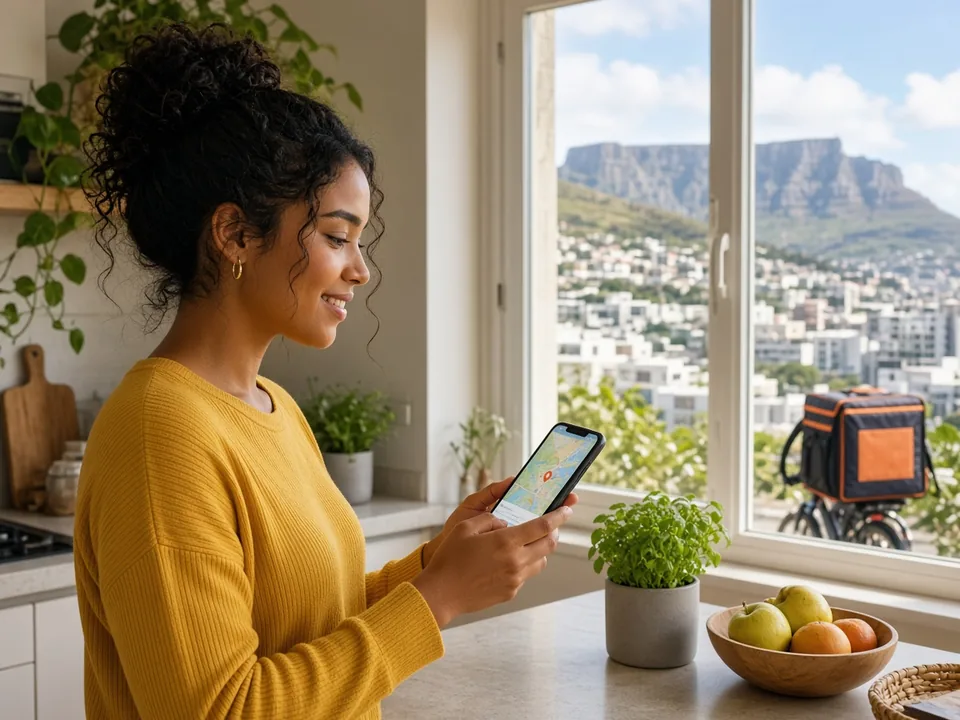
An on demand delivery app connects customers who need something delivered with a driver or courier who can get it there, usually within minutes or hours, tracked live from a phone.
Why bother building one? A few honest reasons, from what we've seen work.
The global on-demand delivery software market was worth USD 632.39M in 2026 and is expected to reach USD 1.39B by 2035, growing at a 9% CAGR.
- It cuts down phone orders and manual mistakes, since customers place orders themselves through the customer app.
- Real time tracking builds trust, people relax once they see the driver moving on the map.
- A vendor panel lets shop owners manage stock and orders without calling anyone for help.
- Automated dispatch means jobs go to the nearest available driver instead of someone guessing on WhatsApp.
- An admin dashboard gives you actual numbers, order volume, revenue, driver performance, all in one screen.
- It scales. A local shop today can become a multi vendor delivery marketplace next year without rebuilding everything.
A specialist on demand app development company in South Africa can help you decide whether you need a lean single-store MVP or a full multi-vendor platform.
How Much Does an On Demand Delivery App Cost in South Africa?
Before the details, here's the number range you actually came for, broken down by how complex the build is.
| App Type | Cost Range (ZAR) | Timeline |
|---|---|---|
| Basic MVP Delivery App | R150,000 to R350,000 | 6 to 10 weeks |
| Mid Range Delivery App | R350,000 to R700,000 | 3 to 5 months |
| Advanced Multi Vendor Platform | R700,000 to R1,200,000 | 5 to 8 months |
| Enterprise Grade Delivery Platform | R1,200,000 to R1,500,000+ | 8 to 12 months |
Basic MVP Delivery App
This is where most small businesses start, and honestly, it's the right call. One vendor, one delivery zone, manual dispatch, basic tracking.
For businesses trying to control their initial investment, MVP mobile app development can be a practical way to test the delivery model, understand real user behaviour, and decide which features are actually worth funding in the next release.
Mid Range Delivery App
Here you're adding a proper driver app, automated dispatch, in app payments, and a decent admin dashboard.
This is usually where a delivery business stops feeling like a side project and starts feeling like a real company.
Advanced Multi Vendor Platform
Think several restaurants or stores under one app, each with their own vendor panel. Commission handling, multiple pickup points, more complex backend logic.
Costs climb because you're basically running several small apps stitched into one.
Enterprise Grade Delivery Platform
This is the Uber Eats territory. High order volume, AI assisted dispatch, multi city management, heavy scalability work. Not many South African businesses need this on day one, and we'd honestly tell most clients to wait.
Does the Type of On Demand Delivery App Change the Cost?
Yes, quite a bit actually, since each delivery category carries its own technical baggage and compliance load.
| Delivery App Type | Cost Impact | Why |
|---|---|---|
| Food Delivery App | High | Menus, live order status, multiple restaurant panels, and tight delivery time windows add complexity. |
| Grocery Delivery App | High | Large product catalogues, inventory sync, and substitution logic push development time up. |
| Courier and Parcel App | Medium | Simpler catalogue needs, but route optimisation and proof of delivery features add work. |
| Healthcare or Medicine Delivery | High | Compliance, prescription verification, and data privacy rules raise both cost and testing effort. |
| B2B Delivery App | Medium | Fewer users but complex scheduling, invoicing, and bulk order handling. |
| Same Day or Hyperlocal Delivery | Medium to High | Depends heavily on real time tracking accuracy and dispatch speed. |
Worth mentioning, if food delivery is your actual focus, we've written a dedicated piece on food delivery app development cost in South Africa that goes much deeper into that specific model.
How Much Do Different Delivery App Models Cost?
The business model you pick shapes almost everything, from the number of dashboards you need to how commission gets calculated.
| Business Model | Estimated Cost (ZAR) |
|---|---|
| Single Store Delivery App | R150,000 to R300,000 |
| Multi Vendor Delivery Marketplace | R500,000 to R1,000,000 |
| Courier and Parcel Delivery App | R250,000 to R550,000 |
| Same Day or Hyperlocal Delivery App | R300,000 to R650,000 |
| B2B Delivery Management Platform | R400,000 to R800,000 |
| Scheduled Delivery Platform | R280,000 to R600,000 |
| Last Mile Delivery Platform | R350,000 to R750,000 |
Single Store Delivery App
One shop, one app, simple order flow. Cheapest to build because there's no vendor onboarding logic, no commission splitting, just a straight line from order to delivery. Good starting point for a store testing the waters.
Multi Vendor Delivery Marketplace
Multiple sellers, each with their own dashboard, orders routed based on location and stock. This model needs commission management, vendor payouts, and stronger admin control, which is exactly why costs jump here.
Courier and Parcel Delivery App
Focused on moving packages rather than food or groceries. Proof of delivery, signature capture, and multi stop routes matter more than product catalogues here.
Same Day or Hyperlocal Delivery App
Speed is the whole product. Dispatch logic needs to be near instant, and location accuracy becomes non negotiable, which adds engineering hours around geofencing and live GPS tracking.
B2B Delivery Management Platform
Fewer end users, but each order tends to be bulkier and needs scheduling, invoicing, and sometimes recurring delivery setup. Complexity hides in the backend, not the customer screen.
Scheduled Delivery Platform
Customers book a delivery slot in advance. Calendar logic, reminder notifications, and slot management drive the cost here rather than live tracking.
Last Mile Delivery Platform
Built for that final stretch between a warehouse and the customer's door. Route sequencing and multi order batching are the expensive parts, since one driver often carries several orders at once.
Feature Based Cost Factors in Delivery App Development
Some features are must haves, some are nice to have later. Knowing the difference saves real money.
Real Time GPS Tracking
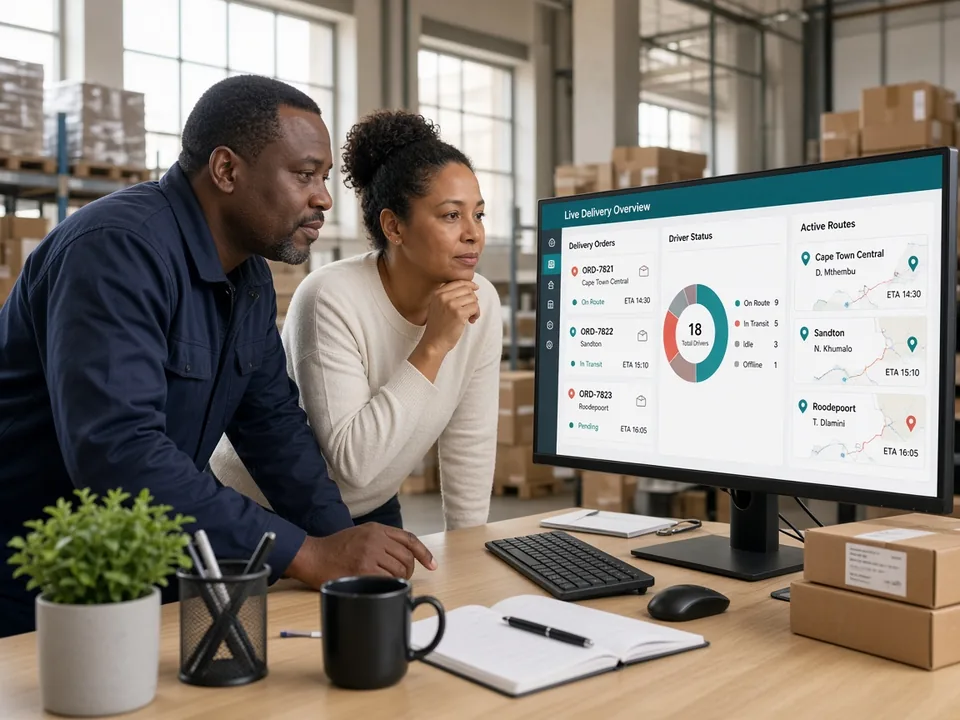
This sounds like one simple feature. It isn't. Real time tracking pulls together GPS hardware access, live location updates streaming to a server, mapping API costs, geofencing for delivery zones, and ETA calculation that actually adjusts when traffic changes.
We've seen a client budget for "just a map" and get surprised three weeks later when background location tracking and battery optimisation issues came up.
Is it important? Almost always yes, customers trust apps more when they can watch the driver move. Skipping it saves money short term but hurts retention long term.
Cost impact: R40,000 to R120,000
Multiple User Roles and Panels
Every extra panel, customer, driver, vendor, admin, means a separate interface, separate permissions, and separate testing. A basic app with just customer and admin is cheaper than one juggling four distinct roles talking to each other in real time.
Cost impact: R30,000 to R150,000 depending on role count
Payment Gateway Integration
Card payments, mobile wallets, cash on delivery, each payment method is its own mini project. Add refund handling and vendor payout splitting, and this becomes one of the pricier line items in the whole build.
Cost impact: R25,000 to R90,000
Push Notifications
Order confirmation, driver assigned, out for delivery, arrived. Simple to describe, but building a reliable notification service that fires correctly across Android and iOS takes proper engineering time, not just a plugin.
Cost impact: R10,000 to R30,000
Admin Dashboard and Reporting
This is where the business owner actually lives day to day. Order management, driver management, commission tracking, analytics. A basic dashboard is affordable, but detailed reporting with custom filters adds noticeable hours.
Cost impact: R35,000 to R100,000
Ratings and Reviews
Small feature, decent trust builder. Customers rate drivers and vendors, which feeds into your quality control later. Not expensive, but often forgotten in early quotes.
Cost impact: R8,000 to R20,000
Dispatch and Route Optimisation
Manual dispatch is cheap. The moment you want automatic driver matching based on distance, availability, and current load, you're paying for actual logic and possibly a third party routing API.
Cost impact: R50,000 to R180,000
How Tech Stack Influences On Demand Delivery App Pricing?
The tech stack you pick affects both the upfront cost and how expensive maintenance becomes down the line.
| Technology Layer | Common Choice | Estimated Cost (ZAR) |
|---|---|---|
| Mobile Frontend | Flutter or React Native | R60,000 to R250,000 |
| Backend Framework | Node.js or Laravel | R80,000 to R300,000 |
| Database | PostgreSQL or MongoDB | R20,000 to R70,000 |
| Cloud Hosting | AWS or Google Cloud | R5,000 to R25,000 monthly |
| Maps and Location API | Google Maps Platform | R3,000 to R15,000 monthly |
| Payment Gateway | PayFast, Ozow, Yoco | R0 setup, transaction fees apply |
How Much Does Each Stage of On-Demand Delivery Application Development Cost?
Development doesn't happen in one lump. It moves through stages, and each one carries its own price tag.
| Stage | What Happens | Estimated Cost (ZAR) |
|---|---|---|
| Discovery and Planning | Scope defined, features listed, timeline agreed | R15,000 to R40,000 |
| UI and UX Design | Wireframes and screens designed for all apps | R40,000 to R150,000 |
| Frontend Development | Customer, driver, and vendor apps built | R100,000 to R400,000 |
| Backend Development | APIs, database, dispatch logic built | R120,000 to R450,000 |
| Testing and QA | Bugs found, fixed, devices tested | R30,000 to R100,000 |
| Deployment and Launch | App store submission, server go live | R10,000 to R35,000 |
Factors That Influence On Demand Delivery App Development Price
Beyond features, a handful of decisions quietly move the final number up or down.
Number of User Roles
More roles mean more screens, more permissions, more testing paths. It adds up faster than people expect.
| Roles Included | Cost Impact (ZAR) |
|---|---|
| Customer and Admin only | R150,000 to R300,000 |
| Customer, Driver, Admin | R300,000 to R550,000 |
| Customer, Driver, Vendor, Admin | R500,000 to R900,000+ |
Android, iOS or Both
Building for one platform first is cheaper and honestly a smart move for testing demand before committing further.
| Platform Choice | Cost Impact (ZAR) |
|---|---|
| Android only | R80,000 to R250,000 |
| iOS only | R90,000 to R270,000 |
| Both, cross platform | R120,000 to R400,000 |
Backend Architecture
APIs, databases, authentication, and queues all sit here, quietly doing the heavy lifting. A poorly planned backend architecture becomes expensive to fix later, so it's worth getting right early rather than patching it after launch.
Real Time Location Tracking
GPS accuracy, maps, ETA calculations, geofencing, all of it depends on how tightly you need the tracking to work. Loose tracking is cheap. Precise, low latency tracking costs noticeably more.
Third Party Integrations
Maps, payment gateways, SMS providers, push notification services, analytics tools, sometimes logistics systems too. Each integration usually comes with its own setup fee and its own monthly running cost.
UI and UX Complexity
Design is another budget variable people often underestimate. Complex maps, multi-step checkout flows, driver interfaces and changing order states require considerably more design effort, making UI/UX design cost in South Africa an important part of the overall delivery app budget.
Security and Compliance Requirements
Encryption, secure authentication, and data protection measures all add engineering hours. Skipping these to save money is one of the riskier shortcuts I've watched businesses take.
Scalability and Expected Order Volume
An app built for fifty orders a day looks very different under the hood from one built for five thousand. Planning for growth early costs more upfront but saves a painful rebuild later.
Development Team Location and Engagement Model
Where your developers sit changes your rate significantly.
| Team Location | Cost Impact |
|---|---|
| Freelancers in South Africa | Low to Medium |
| Local South African Agency | Medium |
| Offshore Development Team | Low, but coordination risk is higher |
| Dedicated In House Team | High |
Hidden Cost to Develop On Demand Delivery App
Quotes rarely mention everything. Here's what tends to sneak up on people after launch.
API and Third Party Fees
Maps, SMS verification, and payment gateways all charge ongoing usage fees separate from the initial build cost. These recurring costs are easy to forget when you're only looking at the one time development quote.
Cloud Hosting and Infrastructure
Server costs scale with traffic. What felt cheap at fifty users a day can look very different once you're pushing five hundred concurrent orders.
App Store and Compliance Fees
Developer account fees, SSL certificates, and periodic compliance checks all add small but real annual costs that rarely appear in the original proposal.
Maintenance and Updates
OS updates, SDK changes, bug fixes, none of this stops after launch. Budgeting zero for maintenance is, in my experience, the single most common and most costly mistake business owners make.
South Africa Specific Costs Businesses Often Overlook
South African businesses should budget for local compliance, VAT, infrastructure, and recurring platform costs.
POPIA Compliance
On demand apps handle a fair bit of personal information, names, mobile numbers, addresses, precise location data, payment details, and driver or vendor information.
South Africa's Protection of Personal Information Act sets out clear requirements around how this data must be processed and protected, including rules around cross border data flows. The Information Regulator publishes official guidance, and the government sets out the Protection of Personal Information Act itself.
Building compliance in from day one costs less than retrofitting it after a client complaint.
VAT and Vendor Quotations
VAT can also change the actual amount a business pays for app development. South Africa's standard VAT rate is currently 15%, so businesses should check whether a development quotation is VAT inclusive or VAT exclusive.
For example, if a VAT registered supplier provides a development quote of R500,000 excluding VAT, the final payable amount could be higher once VAT is added. This is why VAT should be considered when comparing development proposals rather than looking only at the headline project price.
How Much Would a Delivery App Like Uber Eats, Mr D or Checkers Sixty60 Cost?
We'll be upfront here, their internal development expenditure is not publicly disclosed, so any specific figure floating around online for what Mr D or Checkers Sixty60 actually spent is speculation, plain and simple.
What we can talk about honestly is what it would take to build a platform with similar capability from scratch.
You'd be looking at a customer app, a driver app, merchant tools, an admin and operations platform, integrated payments, real time tracking, automated dispatch, high concurrency handling, analytics, and proper support infrastructure.
Our own grocery delivery app development cost in South Africa piece handles this same distinction, estimating what a comparable platform would need rather than guessing at a competitor's actual spend.
Realistically, a platform at that scale sits well past R1,200,000, often closer to R1,500,000 or beyond once you factor in ongoing scaling costs.
Build In-House, Hire Freelancers or Work With a Development Company?
Each route comes with its own trade off between cost, control, and risk.
| Option | Cost Impact | Best For |
|---|---|---|
| In House Team | High upfront, lower long term | Businesses planning multiple future apps |
| Freelancers | Low to Medium | Small budgets, simple MVP builds |
| Development Company | Medium to High | Businesses wanting structure, accountability, and support |
Freelancers can save money short term, but I've personally seen projects stall for months when a freelancer disappears mid build. A development company usually costs more but carries less risk of that happening.
Businesses that need discovery, UI/UX, backend engineering, mobile development, testing and post-launch support under one team may find working with an on demand app development company in South Africa easier to manage than coordinating several independent freelancers.
On Demand Delivery App Development Costly Mistakes We See Businesses Make
Small decisions early on tend to cause the biggest budget headaches later.
Trying to Build Every Feature in V1
Launching with everything at once delays your release and burns budget on features nobody's tested yet. Start smaller, add based on real user feedback.
Ignoring the Driver Workflow
Owners obsess over the customer app and forget drivers need a smooth, reliable experience too. A frustrated driver quits, and your delivery times suffer.
Treating Live Tracking as a Simple Map Feature
It's genuinely one of the most misunderstood features. It involves background location updates, mapping APIs, backend events, and ETA logic, not just a pin on a screen.
Forgetting Recurring API Costs
Maps and SMS providers charge monthly. Budgeting only for the one time build cost leaves businesses caught off guard within the first quarter.
Choosing Technology Only Because it Appears Cheaper
Cheap technology choices sometimes mean expensive rebuilds later. Pick a stack based on scalability, not just the initial quote.
Skipping Operational Edge Cases
What happens when a driver cancels mid delivery, or an item is out of stock? Planning for these scenarios early avoids painful patchwork fixes after launch.
Not Budgeting for Maintenance
Apps need constant upkeep, OS updates, bug fixes, security patches. Set aside a maintenance budget from day one rather than treating it as an afterthought.
Underestimating Admin Functionality
The admin dashboard often gets the least attention in planning, yet it's what the business owner uses every single day. Underbuilding it creates operational pain later.
Conclusion
Working out an honest on-demand delivery app development cost in South Africa really comes down to your business model, features, and technology choices, not a single fixed number some website promises you.
Whether it's a single store app or a full multi vendor delivery platform, costs shift with complexity, user roles, real time tracking needs, and compliance requirements like POPIA. Start with a clear MVP, plan for hidden and recurring costs, and grow the platform as real demand proves itself.
Ready to scope the build? Explore on demand app development services in South Africa.
Frequently Asked Questions
Is R150,000 enough to build a delivery app?
Yes, for a basic single vendor MVP with manual dispatch and simple tracking. Advanced features or multiple user roles will push that number higher fairly quickly.
Does On-Demand Delivery App Development Cost in South Africa include maintenance?
No, maintenance is usually billed separately, often as a monthly retainer covering bug fixes, updates, and server monitoring after launch.
Is Flutter cheaper than building native Android and iOS apps?
Generally yes, since one codebase serves both platforms, reducing development hours compared to building two fully separate native apps.
How long does a mid range delivery app take to build?
Typically three to five months, depending on feature count, number of user roles, and how many rounds of testing are needed.
Do I need POPIA compliance for a small delivery app?
Yes, any app collecting personal information like addresses or payment details falls under POPIA requirements, regardless of business size.
Can I launch with just an Android app first?
Absolutely, and it's often smarter. Test demand on one platform, then expand to iOS once you've validated the business model works.
Are payment gateway fees included in the development cost?
No, gateways like PayFast or Yoco charge separate transaction fees on top of the one time integration cost during development.
What increases delivery app cost the most?
Real time tracking, multiple user roles, and automated dispatch logic typically add the most development hours and therefore the most cost.