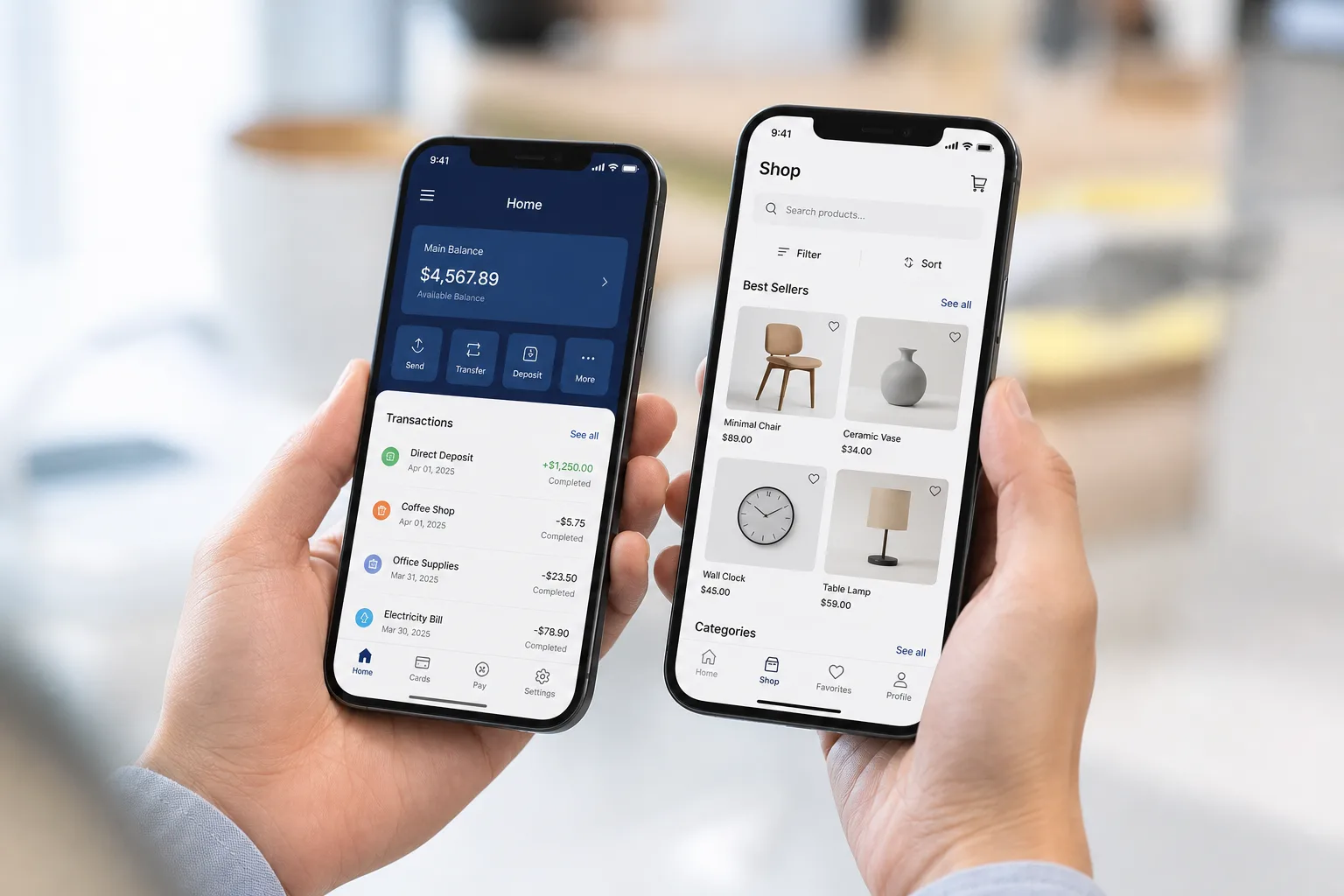
You want a mobile app for your business. But you are stuck. Should you build two apps or one? Every extra week of development costs you money and time. This confusion stops many South African businesses before they even start.
Flutter app development in South Africa has changed this problem. One codebase. Two platforms. Faster launch. In this guide, we will walk you through what Flutter really is, how it works, what it can build, and what to watch out for before you invest a single rand.

What Is Flutter App Development and How Does It Work
Let us keep this simple. No jargon overload.
Flutter is an open source framework made by Google. It lets developers write one set of code and use it to build apps for Android, iOS, and even the web.
The language behind Flutter is called Dart. Dart is what developers actually type. Flutter then takes that code and turns it into a real, working app.
How Flutter App Development Works
- Write code using Dart — Developers use Dart language to create app logic, features, and user interactions inside Flutter.
- Build interfaces with widgets — Flutter uses reusable widgets to create screens, buttons, layouts, and complete app experiences.
- Compile into native applications — Flutter converts the code into Android and iOS apps that run smoothly on real devices.
- Test, improve, and deploy apps — Developers test performance, fix issues, and publish the finished app on app stores.
Why Flutter App Development Is Growing Among South African Businesses
South Africa runs on mobile. Android phones fill most pockets here, from Johannesburg to Cape Town to Pretoria. So businesses cannot afford to think desktop first anymore. They have to think mobile first, and they have to think fast.
That is exactly where Flutter mobile app development fits in.
More startups are appearing every year. More small businesses want an app but do not have a huge budget. They need something affordable and quick, without giving up quality.
Flutter gives them that.
Businesses are choosing Flutter because it helps them do a few important things at once.
- Launch on Android and iOS at the same time
- Cut down development complexity
- Keep one single codebase instead of two separate ones
- Give users the same smooth experience on every screen
Google built Flutter, and Google keeps improving it. That alone gives businesses confidence. It is not some random tool that will disappear next year.
If you are exploring general options for mobile app development in South Africa, this growing shift toward cross platform tools like Flutter is part of a bigger digital transformation happening across the country right now.
Why Flutter Is a Smart Choice for South African Businesses
This is where things get interesting for you as a business owner. Not developers. You.
Faster development
A single codebase means developers are not rebuilding the same feature twice, once for Android and once for iOS. Flutter also has something called hot reload, which lets developers see changes on screen almost instantly. No waiting around. This alone can shave weeks off a normal project timeline.
Lower development complexity
One team. One codebase. One set of bugs to fix, not two. This makes managing the whole Flutter app development process a lot less stressful for everyone involved, including you.
Better user experience
Flutter apps can be fully customised. Animations, transitions, layouts that respond to different screen sizes. Users notice this, even if they cannot explain why an app just feels good to use.
Easier maintenance
Updates roll out faster because there is only one codebase to touch. You are not paying two developers to fix the same bug twice.
Scalable for growing businesses
Start small with an MVP. Grow it into a full enterprise application later. Flutter does not force you to rebuild from scratch when your business grows.
Native performance
Because Flutter compiles to native code, apps run smoothly. Scrolling feels natural. Screens load without that annoying lag some cross platform apps have.
Strong community support
Thousands of ready made packages exist on pub.dev. Developers do not always have to build everything from zero, which saves time and, honestly, saves your budget too.
Consistent branding
Your app looks and feels the same on every device. No weird inconsistency between the Android version and the iOS version.
From our experience working with mobile projects, businesses that choose Flutter usually want three things. Faster launch, easier maintenance, and one consistent experience across devices. Flutter checks all three boxes, most of the time.
Features You Can Add With Flutter Mobile Apps
People often ask what Flutter apps can actually do. Honestly, quite a lot.
Here is a simple breakdown by category.
| Feature | Business Use |
|---|---|
| User Registration and Login | Onboarding new customers |
| Push Notifications | Customer engagement and reminders |
| GPS Tracking | Delivery and logistics apps |
| Payment Gateway Integration | Online transactions and checkout |
| Admin Dashboards | Managing operations and staff |
| CRM Integration | Tracking customer relationships |
| AI Chatbot | Automated customer support |
| Real Time Messaging | In app communication |
User facing features usually include profiles, search, social login, and notifications. Business facing features include analytics, inventory management, and admin panels. Then there are the advanced features, like machine learning recommendations or IoT connectivity, which bigger businesses tend to add once the app has proven itself.
The point is, Flutter is not limited to simple apps. It can handle complex, feature rich applications too.
Flutter App Development Process From Idea To Launch
This is the part most business owners actually want to understand. So let us slow down here.
Step 1. Discovery and planning
This is where business goals get written down. What problem is the app solving? Who is it for? What features actually matter, and which ones can wait?
Skipping this step is one of the most common reasons projects run over budget later.
Step 2. UI and UX design
Before any code gets written, the app needs a design plan. Wireframes, prototypes, and a clear user journey. This stage decides whether the app feels easy to use or confusing.
Before coding begins, businesses should invest in proper mobile app design to create a smooth experience for users from the very first tap.
Step 3. Flutter development
Now developers start writing Dart code, building widgets, and connecting the front end of the app to whatever data it needs.
Step 4. Backend development
This is the engine room. Databases, APIs, authentication systems. Users never see this part, but nothing works without it.
Step 5. Testing
Functional testing checks if features work. Security testing checks if user data is safe. Device testing checks if the app behaves properly across different phones and screen sizes.
Skipping proper testing is how businesses end up with an app full of complaints in the first week.
Step 6. Deployment
The app gets submitted to the Google Play Store and, if needed, the Apple App Store. Each store has its own review process and guidelines, and Apple in particular can be strict, so it helps to check their App Store review guidelines early, not after rejection.
Step 7. Maintenance
Launch is not the finish line. Apps need updates, bug fixes, and improvements as user needs change.
After launch, businesses should plan ongoing improvements and understand mobile app maintenance and support cost before scaling their application further.
Flutter App Development Technology Stack
Here is a simple look at the tools and technologies that usually sit behind a Flutter project.
| Layer | Technologies |
|---|---|
| Framework | Flutter |
| Language | Dart |
| State Management | Provider, Riverpod, Bloc |
| Backend | Node.js, Laravel, Python |
| Database | Firebase, PostgreSQL, MongoDB |
| Cloud | AWS, Google Cloud, Microsoft Azure |
| APIs | REST API, GraphQL |
Each layer plays its own role. The framework and language build the app itself. The backend handles logic and data. The database stores information. The cloud keeps everything running and accessible from anywhere.
Flutter vs Native Apps vs React Native
A common question business owners ask. Which one should I actually pick?
| Factor | Flutter | Native | React Native |
|---|---|---|---|
| Codebase | Single | Separate for each platform | Single |
| Cost | Lower | Higher | Medium |
| Performance | Excellent | Highest | Excellent |
| Maintenance | Easier | Complex | Easier |
Native apps can offer the absolute highest performance, but they usually cost more because you are essentially paying for two separate builds. Flutter sits in a strong middle ground. Great performance, lower cost, one codebase to manage.
If you are comparing React Native specifically, see our React Native app development cost guide.
Industries That Benefit From Flutter App Development
Flutter is not limited to one type of business. It stretches across industries quite naturally.
- Healthcare — Appointment booking apps. Patient portals. Telemedicine tools that connect doctors and patients remotely.
- Fintech — Secure payment apps. Digital banking tools. In South Africa, this often means integrating local payment options like PayFast, Ozow, or Yoco, alongside strict compliance with POPIA regulations.
- Ecommerce — Product catalogs, shopping carts, checkout systems. Fast, smooth shopping experiences that keep customers coming back.
- Logistics — Delivery tracking. Driver apps. Route management tools that save fuel and time.
- Education — Learning platforms, course tracking, and student engagement tools.
If you are still deciding whether your business needs a broader look at mobile app development in South Africa before narrowing down to Flutter specifically, it is worth reading up on the general landscape first.
Common Flutter App Development Mistakes to Avoid
We have reviewed enough mobile projects to notice the same mistakes showing up again and again. Here they are, in plain terms.
Mistake 1. Building too many features initially
Businesses often want everything on day one. Login, chat, payments, notifications, loyalty points, all at once. This slows development and blows the budget.
Why does it happen? Excitement, mostly. And fear of missing something.
How to avoid it. Launch with a smaller, focused version. Add features once real users give real feedback.
Mistake 2. Ignoring UX research
Some businesses jump straight into design without asking what users actually need.
Why it happens. UX research feels like an extra step that delays the fun part, building the app.
How to avoid it. Spend a little time talking to real potential users before locking in the design.
Mistake 3. Choosing developers only based on price
The cheapest quote is not always the smartest choice.
Why it happens. Budgets are tight, especially for smaller businesses.
How to avoid it. Look at past work, ask questions, check communication style before signing anything.
Mistake 4. Not planning scalability
An app built only for a hundred users can break badly once ten thousand show up.
Why it happens. Businesses focus on launch, not growth.
How to avoid it. Ask your developers early how the app will handle more users, more data, more traffic.
Mistake 5. Ignoring security
User data, especially payment details, needs proper protection. Skipping this is risky and, frankly, careless.
Why it happens. Security testing takes time, and some teams rush to launch.
How to avoid it. Insist on proper security testing before the app goes live, not after something goes wrong.
From reviewing mobile projects over the years, one mistake we see repeatedly is businesses starting development without validating the actual user journey first. It costs more to fix later than to plan properly at the start.
How Businesses Can Select the Right Flutter Development Partner
Choosing who builds your app matters just as much as choosing the technology itself.
- Look at their portfolio. Real apps, real results, not just mockups on a website.
- Check their technical expertise. Can they explain their process clearly, without hiding behind buzzwords?
- Communication matters too. If a team is slow to respond during the sales process, that pattern usually continues after you sign the contract.
- Backend capability is often overlooked. A pretty app with a weak backend will struggle the moment real users start using it.
- And do not skip their testing approach. Ask directly how they test apps before launch.
Working with an experienced Flutter app development company helps businesses avoid technical problems that often show up later during scaling, not at launch.
How Flutter Impacts Mobile App Development Costs
Cost is usually the first question, and the last worry, for most business owners. Fair enough.
Here is the honest, simple part. Because Flutter uses one codebase for both Android and iOS, development is generally faster than building two separate native apps. Faster development often means lower overall cost.
Maintenance tends to be cheaper too, since updates only need to happen once, not twice.
| App Type | Estimated Cost | Suitable For |
|---|---|---|
| Basic Flutter App | ZAR 50,000 to ZAR 250,000 | Simple business apps, MVPs, internal tools, basic customer applications |
| Medium Complexity Flutter App | ZAR 250,000 to ZAR 700,000 | E-commerce apps, booking platforms, payment enabled apps, customer portals |
| Advanced Flutter App | ZAR 700,000 to ZAR 1,500,000+ | Enterprise applications, real time platforms, AI powered apps, complex backend systems |
Businesses planning their budget can explore detailed factors affecting flutter app development cost before starting development, so there are no surprises halfway through the project.
Future of Flutter App Development in South Africa
Flutter is not standing still, and neither is the industry around it.
More businesses are exploring generative AI features inside their apps, from smart chatbots to personalised recommendations. Machine learning is quietly becoming a normal part of app planning, not just a buzzword anymore.
Super apps, ones that combine payments, messaging, and services into a single platform, are gaining attention too. Cloud based apps continue growing, powered by tools like Firebase and Google Cloud, which make scaling a lot less painful than it used to be.
Enterprise adoption of Flutter is rising as well. Bigger companies want the same speed and cost benefits that startups have been enjoying for years.
Conclusion
Flutter app development in South Africa is not just another tech trend. It is a practical answer to a real problem, building quality apps faster, without doubling your budget.
We have walked through what Flutter actually is, why local businesses are choosing it, what features it can support, how the development process works, and the common mistakes worth avoiding along the way.
If you are still weighing your options, take your time. Ask questions. Talk to a few teams before deciding. A good app is built on good decisions made early, not rushed ones made under pressure.
Flutter App Development in South Africa gives businesses a real chance to launch smarter, not just faster.
Ready to start? Explore our Flutter app development company in South Africa services.
Frequently Asked Questions
Is Flutter good for businesses in South Africa?
Yes. It offers faster development, lower cost compared to building two native apps, and strong performance, which suits both startups and established businesses.
Why do companies use Flutter instead of native apps?
Mainly for speed and cost. One codebase covers both Android and iOS, so businesses save on development time and long term maintenance.
Can Flutter build Android and iOS apps?
Yes, from a single codebase. It can also extend to web and desktop, though mobile remains its strongest use case.
How long does Flutter app development take?
It depends on complexity. A simple app might take a few weeks. A more advanced app with custom backend and integrations can take a few months.
What features can Flutter apps support?
Almost everything modern apps need. Payments, GPS tracking, push notifications, chat, dashboards, and even AI powered features.
Is Flutter suitable for enterprise applications?
Yes. With proper backend architecture and state management, Flutter scales well for larger, more complex business applications.
What programming language does Flutter use?
Dart. It was also built by Google, and it works closely with the Flutter framework.