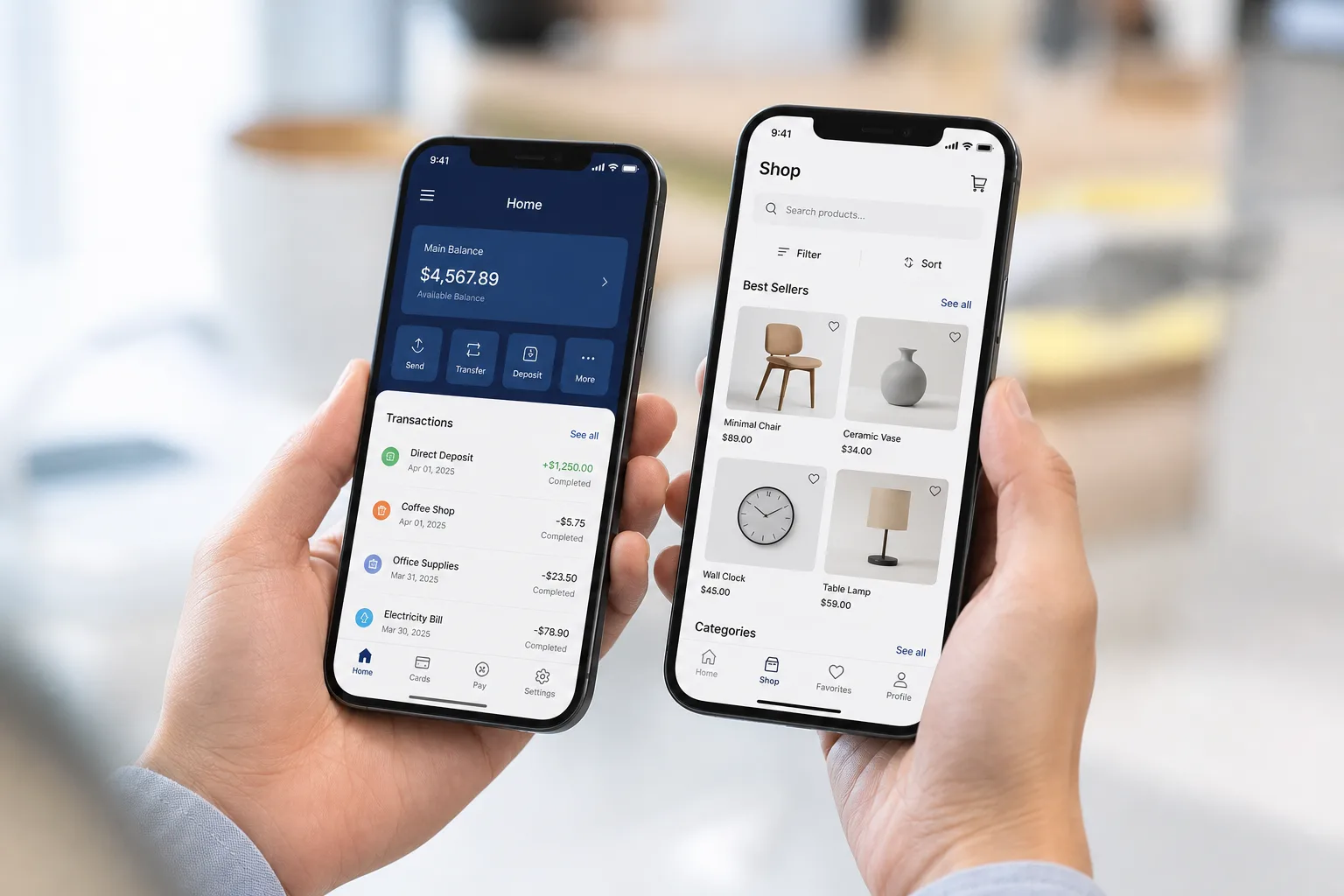

How much money do you really need to build a healthcare app in South Africa?
It sounds like a simple question. But the wrong estimate can put an entire project under pressure.
The healthcare app development cost can start near ZAR 50,000 for a small product and rise above ZAR 1,500,000 for a large healthcare system. The final price depends on features, app type, patient data, security, testing, medical system links, and the size of the development team.
In this guide, we will break down the real costs, common price factors, POPIA needs, hidden expenses, development options, and ways to control your budget.

What Exactly Is a Healthcare App? A Complete Market Overview
A healthcare app is a mobile or web app that helps people receive, manage, or support health services.
Patients may use it to book a doctor, join a video call, check a report, track medicine, or view health data. Doctors and clinics may use the same app to manage patients, appointments, records, and care plans.
Healthcare apps can include telemedicine apps, patient portals, fitness apps, hospital apps, mental health apps, medicine apps, and remote patient monitoring tools.
The market around these products is growing fast.
Grand View Research says the global healthcare mobile application market was worth $114.2 billion in 2024. It expects the market to reach $1,070.6 billion by 2030, with a CAGR of 45.2% from 2025 to 2030.
Fortune Business Insights gives a narrower view of the mHealth app market. It valued that market at $40.65 billion in 2025 and expects it to reach $113.2 billion by 2034, with growth of 11.8% from 2026 to 2034.
A specialist healthcare app development company in South Africa can help you decide whether you need a lean care MVP or a full multi-role clinical platform.
Reasons to Build a Healthcare App for Your Business
A healthcare app can make care easier for patients while helping a health business manage its daily work better.
- Better patient access: Patients can reach services, doctors, and health information from one place.
- Faster booking: Users can book, change, or cancel appointments without long phone calls.
- Easy communication: Secure chat and video calls can connect patients with care teams.
- Better patient records: Digital data can make health information easier to manage and access.
- Remote care: Wearables and connected devices can send health readings from home.
- Lower manual work: Smart tools can reduce repeated admin tasks for staff.
How Much Does It Cost to Build a Healthcare App in South Africa in 2026?
The mobile app development cost in South Africa rises as your healthcare app adds more users, systems, security, and care features.
| App scope | Estimated cost | Usual timeline | Best for |
|---|---|---|---|
| Basic prototype | ZAR 50,000 to ZAR 100,000 | 1 to 2 months | Testing an idea and user flow |
| Small MVP | ZAR 100,000 to ZAR 300,000 | 2 to 4 months | Startups testing one main healthcare service |
| Medium healthcare app | ZAR 300,000 to ZAR 650,000 | 4 to 7 months | Growing clinics and digital health firms |
| Advanced healthcare app | ZAR 650,000 to ZAR 1,000,000 | 6 to 10 months | Apps with many users, roles, and system links |
| Enterprise healthcare platform | ZAR 1,000,000 to ZAR 1,500,000+ | 9 to 15 months or more | Hospitals, health groups, and large care networks |
Average Healthcare Application Development Cost by App Type
Different healthcare apps solve different problems. That means they need different features, data flows, and levels of security.
| Healthcare app type | Estimated cost | What usually affects the cost |
|---|---|---|
| Appointment booking app | ZAR 80,000 to ZAR 250,000 | Doctor profiles, booking, reminders, and calendar links |
| Fitness and wellness app | ZAR 100,000 to ZAR 350,000 | Goals, activity tracking, plans, and wearable links |
| Medicine reminder app | ZAR 100,000 to ZAR 300,000 | Medicine plans, alerts, profiles, and health records |
| Mental health app | ZAR 150,000 to ZAR 500,000 | Sessions, secure chat, journals, video, and user privacy |
| Telemedicine app | ZAR 250,000 to ZAR 750,000 | Video calls, booking, chat, payment, and patient records |
| Patient portal | ZAR 300,000 to ZAR 750,000 | Reports, records, messages, roles, and health system links |
| EHR or EMR connected app | ZAR 400,000 to ZAR 1,000,000 | Medical data links, user roles, records, and data mapping |
| Remote patient monitoring app | ZAR 500,000 to ZAR 1,200,000 | Devices, live health readings, alerts, and doctor dashboards |
| Hospital management app | ZAR 700,000 to ZAR 1,500,000+ | Departments, staff, patients, billing, and old system links |
| AI healthcare app | ZAR 500,000 to ZAR 1,500,000+ | Health data, model checks, safety rules, and human review |
Related builds such as a doctor on demand app or a fitness app development cost guide often sit in similar ranges when security and integrations stay light.
Must Have Features That Affect Healthcare App Development Budget
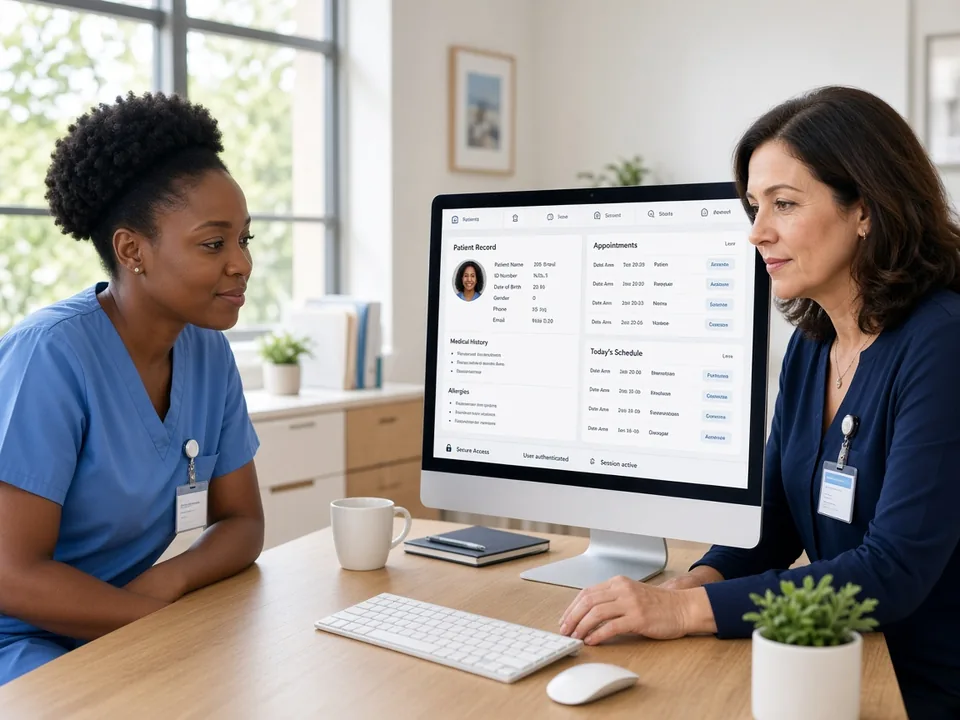
Every feature adds design, coding, testing, and data work. Some simple looking features can also need large systems behind them.
| Feature | Estimated cost impact | Why it costs money |
|---|---|---|
| User sign up and login | ZAR 20,000 to ZAR 50,000 | Secure accounts, passwords, and user checks |
| Doctor profiles | ZAR 20,000 to ZAR 60,000 | Profiles, skills, time slots, and care details |
| Appointment booking | ZAR 30,000 to ZAR 80,000 | Calendar rules, time slots, reminders, and changes |
| Secure chat | ZAR 40,000 to ZAR 100,000 | Private messages, file sharing, storage, and alerts |
| Video consultation | ZAR 60,000 to ZAR 150,000 | Live video, call quality, privacy, and session handling |
| Online payments | ZAR 30,000 to ZAR 80,000 | Payment flow, receipts, errors, and payment service links |
| EHR or EMR link | ZAR 80,000 to ZAR 250,000+ | Health data must move safely between different systems |
| Medical device link | ZAR 100,000 to ZAR 300,000+ | Device data needs pairing, checks, storage, and testing |
| AI health feature | ZAR 150,000 to ZAR 400,000+ | Data, model setup, testing, review, and safe output |
| Admin dashboard | ZAR 50,000 to ZAR 150,000 | Staff need tools to manage users, reports, and app activity |
Healthcare Mobile App Development Price by Tech Stack
The tech stack can change the build cost, speed, app performance, security work, and long term support needs.
| Tech stack area | Common technologies | Cost impact | Why it affects cost |
|---|---|---|---|
| Android development | Kotlin, Java | Medium | Native Android work needs platform specific coding, testing, and updates |
| iOS development | Swift, Objective C | Medium to high | Native iOS apps need separate development, testing, and Apple device support |
| Cross platform development | Flutter, React Native | Medium | One shared code base can reduce repeated work for Android and iOS |
| Web frontend | React, Angular, Vue.js | Medium | Cost changes with dashboard size, user roles, and screen complexity |
| Backend development | Node.js, Python, Java, PHP, .NET | Medium to high | Backend handles users, health data, payments, APIs, and business rules |
| Database | PostgreSQL, MySQL, MongoDB | Medium | Cost depends on data size, speed, backup needs, and health record structure |
| Cloud infrastructure | AWS, Microsoft Azure, Google Cloud | Medium to high | Secure hosting, backups, logs, storage, and app traffic add setup work |
| Healthcare integrations | HL7, FHIR, EHR, EMR APIs | High | Medical data links need mapping, testing, access rules, and safe data flow |
| Video consultation | WebRTC, Twilio, Agora | Medium to high | Live calls need stable video, secure sessions, and strong network handling |
| Medical device integration | Bluetooth Low Energy, device SDKs, APIs | High | Each device may need separate setup, testing, and health data checks |
| AI and machine learning | Python, TensorFlow, PyTorch, AI APIs | High | AI needs data work, testing, safety checks, and ongoing monitoring |
| Security stack | OAuth, MFA, encryption tools, access control | High | Healthcare apps need stronger login, privacy, audit logs, and data protection |
| Testing tools | Selenium, Appium, Postman, JMeter | Medium | More devices, APIs, and user roles increase testing time and QA work |
| DevOps and monitoring | Docker, Kubernetes, CI/CD, monitoring tools | Medium to high | Helps with stable releases, scaling, uptime, and fast issue tracking |

Compliance and Regulatory Work That May Affect the Budget of Healthcare App Development
Healthcare apps often handle private health data and clinical workflows. This can add extra work for privacy, security, documentation, testing, and legal review.
The cost is not fixed. It depends on the app's purpose, the data it handles, the people using it, and whether the software may fall under health or medical device rules.
| Compliance or regulatory area | What may be required | How it can affect the budget |
|---|---|---|
| POPIA and privacy assessment | Review how personal and health data is collected, stored, used, and shared | May add planning, legal review, and development work |
| Information security controls | Encryption, secure storage, login protection, and safe data transfer | Adds backend, cloud, and security work |
| Consent and privacy workflows | Clear consent, privacy notices, and user choices | Adds design, frontend, and backend logic |
| Access control and audit trails | Control who can view data and record important system actions | Adds role based access and logging work |
| Data retention and deletion | Rules for keeping, deleting, or anonymising data | May require added database and admin features |
| Cross border data transfer review | Check how health data moves outside South Africa | May affect hosting, vendors, and legal review |
| Security and penetration testing | Test the app for weak points before launch | Adds specialist testing and review cost |
| Professional or legal advice | Expert review where the product has complex health or privacy risks | Cost depends on the scope and advice needed |
| HPCSA considerations | May apply when registered healthcare professionals provide care through the platform | Can affect consent, records, care workflows, and operating rules |
| SAHPRA assessment | May be needed if the software could qualify as a medical device | Can add classification, documentation, testing, and validation work |
The Information Regulator publishes official POPIA guidance, and the government sets out the Protection of Personal Information Act itself. This is not legal advice. Speak to a lawyer for your specific setup.
Factors That Increase Your Healthcare App Development Price in South Africa
The final budget depends on much more than the number of screens. These areas usually make the biggest difference.
1. App Size and Scope
A small app with one main task costs less. A larger platform may serve patients, doctors, staff, and admins at the same time. More users and flows mean more design, backend work, and testing.
Cost: ZAR 50,000 to ZAR 1,500,000+
2. Number of Features
Basic login and booking are easier to build than video care, medical device links, live alerts, or AI. A long wish list can quickly push a small product into a much larger build.
Cost impact: ZAR 20,000 to ZAR 400,000+
3. Healthcare System Links
Connecting an app to an EHR, EMR, lab system, insurer, pharmacy, or hospital system takes extra work. Data fields must match. Access must also stay safe.
Cost impact: ZAR 80,000 to ZAR 300,000+
This is also why we often suggest testing one core flow first. A focused MVP mobile app development in South Africa project can help prove the idea before adding every system at once.
4. Security and Privacy
Health information needs strong protection. Secure login, access rules, encryption, backups, logs, and data controls can raise the first build cost but reduce bigger risks later.
Cost impact: ZAR 50,000 to ZAR 200,000+
5. Design and User Experience
Patients may include children, older people, or users with limited tech skills. The app should be clear. Larger text, simple steps, useful alerts, and easy forms need careful design and testing.
Cost impact: ZAR 30,000 to ZAR 150,000+
6. Mobile Platform Choice
| Platform choice | Estimated cost |
|---|---|
| Android app | ZAR 80,000 to ZAR 350,000 |
| iOS app | ZAR 100,000 to ZAR 400,000 |
| Android and iOS native apps | ZAR 250,000 to ZAR 700,000+ |
| Cross platform app | ZAR 150,000 to ZAR 500,000 |
| Mobile app plus web dashboard | ZAR 300,000 to ZAR 850,000+ |
| Multi platform healthcare system | ZAR 600,000 to ZAR 1,500,000+ |
7. AI and Medical Device Use
AI and connected devices sound exciting. They also add data work, safety checks, real device testing, and ongoing support. This part of the budget is easy to underestimate.
Cost impact: ZAR 100,000 to ZAR 400,000+. Wearable-heavy products also benefit from reviewing wearable app development costs in South Africa.
8. Cost By Popular City
| City | Cost difference |
|---|---|
| Johannesburg | Higher |
| Cape Town | Higher |
| Pretoria | Medium to high |
| Durban | Medium |
| Gqeberha | Lower to medium |
| Bloemfontein | Lower to medium |
Freelancers vs. Agencies vs. In House Developers: Cost and Quality Trade Offs
Who builds your healthcare app changes the price, speed, control, and level of support you can expect.
| Development option | Planning cost | Best fit |
|---|---|---|
| Freelancer | ZAR 50,000 to ZAR 250,000 | Small proof of idea or simple app |
| Small development team | ZAR 150,000 to ZAR 600,000 | MVP and medium products |
| Development company | ZAR 250,000 to ZAR 1,500,000+ | Full healthcare products |
| In house team | ZAR 600,000 to ZAR 1,500,000+ yearly | Firms with constant product work |
Hidden Cost to Develop a Healthcare App in South Africa Most Founders Forget
A launch budget often looks complete until the app goes live. Then the small monthly and yearly costs begin to show up.
Cloud Hosting
Patient records, reports, files, backups, video, and app traffic use server space. Costs can rise as more people use the product.
Third Party Services
Video tools, SMS, email, maps, payment systems, and health APIs may charge monthly fees or charge for each use.
App Maintenance
A healthcare app still needs care after launch. Fixes, security updates, and new phone support all add up, so the mobile app maintenance and support cost in South Africa should be part of your budget from day one.
Security Reviews
New updates can create new risks. Regular security checks help find weak areas before they become a larger problem.
Data Backup and Recovery
Patient information should not disappear after a server problem. Safe backup and recovery systems add ongoing storage and setup costs.
Compliance Updates
Privacy and health rules can change. Your app may need new controls, documents, or technical changes to stay ready.
App Growth
More patients can mean more servers, database work, support staff, alerts, and system links. Growth itself has a cost.
How to Get an Accurate Quote for Your Healthcare App?
A useful quote starts with a clear project. Saying, “I want a doctor app,” is not enough for a reliable price.
Step 1: Define the Main Problem
Write down the one health problem the app must solve. Is it booking, remote care, patient tracking, records, or medicine use? This keeps the first estimate focused.
Step 2: List Your Users
Name every user group. Patients, doctors, nurses, admins, clinic teams, and support staff may all need different screens, access rules, and actions.
Step 3: Define Your Core Features
Split features into “needed now” and “can wait.” Booking, video calls, patient records, payments, EHR links, and medical device data should not all enter the first version without a reason.
Step 4: Map Your Data and System Links
Ask what data the app collects and where it moves. List any EHR, EMR, lab, pharmacy, payment, wearable, or hospital system that must connect with it.
Step 5: Include Testing and Support
Testing and support should be added to the quote from the start. The cost of software testing in South Africa can change with app size, security needs, devices, and the number of features.
How to Build a High Quality Healthcare App That Maximizes ROI
A good healthcare app does not need every possible feature. It needs the right features, built around a real patient or business problem.
Start With One Useful Care Flow
Choose one job the user truly needs. It might be booking a doctor, joining a video visit, or sending home health readings. Get that flow right before adding more.
Plan Data Safety From Day One
Decide what data you collect, who may see it, how long you keep it, and where it is stored. POPIA, user access, consent, logs, and encryption should enter the plan early.
Build Connections Only When They Add Value
An EHR, EMR, wearable, lab, or pharmacy link can be useful. It can also add a lot of cost. Connect systems only when the link helps the main user journey.
Test With Real User Needs
A screen can look beautiful and still confuse a patient. Test common tasks with clear words, simple buttons, useful errors, and easy steps.
Watch the Cost After Launch
ROI does not stop when the app reaches the store. Track hosting, API use, support, user growth, bug fixes, and feature use. Remove work that users do not value.
Real World Cost Example: PharmaDirect
One example from our work is PharmaDirect.
The main lesson from a healthcare project like this is simple. A good app does not become affordable by cutting every feature. It becomes affordable when the first release stays focused.
For a project in the PharmaDirect category, we would first protect the parts users need most. That may include secure accounts, medicine access, useful search, order flow, alerts, payment, and an admin system.
Features that do not support the main user journey can move to a later release.
This can keep an early healthcare product closer to a practical budget while still leaving room to grow.
A project of this type may sit around ZAR 250,000 to ZAR 600,000 when the scope stays focused. Larger medicine, prescription, insurer, delivery, or medical system links can push the cost much higher.
That is also how a healthcare app development company in South Africa approach looks at a project. We estimate the user flow, data needs, system links, security, testing, and future growth before deciding how much development work is truly needed.
Conclusion
So, what should you budget?
The healthcare app development cost in South Africa can start around ZAR 50,000 and go beyond ZAR 1,500,000 for a large health platform.
The number alone does not tell the full story.
App type, patient data, EHR or EMR links, POPIA needs, security, video care, medical devices, testing, AI, and maintenance can all change the final price.
Start with the health problem. Define the users. Choose the first useful features. Then map the data and system links.
A clear scope gives you a better quote. More importantly, it gives you a much better app.
Ready to scope the build? Explore healthcare app development services in South Africa.
Frequently Asked Questions
How much does healthcare app development cost in South Africa?
Healthcare app development may cost from ZAR 50,000 to ZAR 1,500,000+. Features, app type, security, data, and system links shape the final price.
How much does a healthcare MVP cost in South Africa?
A focused healthcare MVP may cost around ZAR 100,000 to ZAR 300,000. The price rises when you add video care, EHR links, AI, or devices.
How much does a telemedicine app cost in South Africa?
A telemedicine app may cost around ZAR 250,000 to ZAR 750,000. Video calls, booking, secure chat, payments, and health records affect the price.
Does POPIA increase healthcare app development cost?
Yes. POPIA related work can add costs for safe data handling, user access, consent, encryption, logs, storage, and privacy controls.
How much does an EHR integration cost?
A healthcare app with EHR or EMR links may need ZAR 80,000 to ZAR 250,000+ for integration work, depending on the system and data flow.
Is a healthcare app more expensive than a normal mobile app?
It can be. Healthcare apps often need stronger security, private data controls, system links, deeper testing, and rules that normal apps may not need.
How long does it take to build a healthcare app?
A small MVP may take 2 to 4 months. A large healthcare platform may need 9 to 15 months or more, based on scope and integration work.
What is the best way to reduce healthcare app development cost?
Start with one useful care flow. Keep the first release small. Limit early integrations. Plan security before coding and move lower value features to later releases.