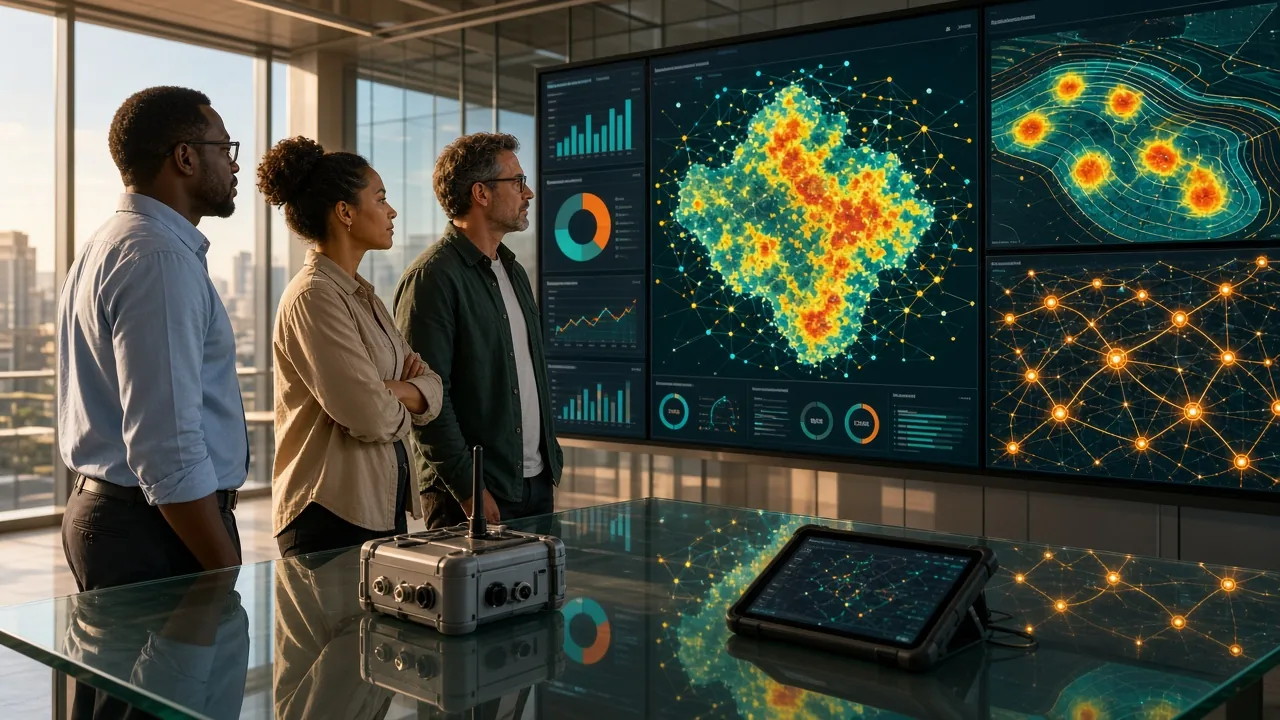
Your machines collect thousands of data points every single day. But most of that data just sits there. Nobody looks at it. Nobody uses it.
That is the real problem. Not a lack of data. A lack of understanding.
This is where AI and IoT convergence come in. IoT devices collect the raw signals. AI reads those signals and finds meaning in them. Together, they help a business act faster and smarter.
South African companies in mining, farming, logistics, and retail are already exploring this shift. In this guide, you will learn what this AI IoT integration actually means, where it works best, what it costs, and how to start without wasting money on the wrong pilot project.
What Is AI and IoT Convergence?
AI and IoT Convergence is simple once you strip away the jargon. It means connected devices gather real-world data. Then AI systems study that data. They find patterns. They predict outcomes. Sometimes they trigger an action on their own.
South Africa's AIoT market was valued at USD 203.2 million in 2025. According to MarketsandMarkets, it could reach USD 655.8 million by 2030, growing at a CAGR of 26.4% during the 2025–2030 period.
South Africa's IoT market is $4.3B (2025), reaching $8.86B by 2031 at 12.8% CAGR; hardware leads with 42.5%, while 4G/5G holds a 45.4% share.
Think of it like this. A sensor is a pair of eyes. AI is the brain that decides what those eyes are actually seeing.
IoT Collects the Data
Sensors sit on machines, vehicles, farms, and buildings. They record temperature, movement, pressure, location, and dozens of other signals. This raw information is often called machine data or sensor data.
AI Understands the Data
Once the data lands somewhere useful, machine learning models start working. They look for anomaly detection, unusual spikes, or slow patterns building over weeks. This is predictive analytics in action.
Together They Create Intelligent Action
Here is the part most articles skip. Data alone does nothing. Prediction alone does nothing either. The value only shows up when the system acts or when a person gets a clear alert that leads to a decision.
The flow looks like this.
Sensors → connectivity → data → AI or machine learning → insight → decision → action.
AI vs IoT vs AI IoT Convergence: What Is the Difference
People mix these terms up constantly. Here is the short version.
| Technology | Main job | Example |
|---|---|---|
| AI | Understands and predicts | Predicts a machine failure |
| IoT | Collects and transfers data | A sensor measures temperature |
| AI plus IoT | Collects, analyses, and acts | Sensor data triggers a maintenance alert |
Why This AI IoT Integration Matters for South African Businesses in 2026?
Here is an important point, though. AI plus IoT does not automatically create these benefits. Results depend on data quality, integration, implementation, and the actual business problem being solved.
I have seen companies buy expensive sensors and never connect them to anything meaningful. The tech was not the problem. The plan was.
- Predictive Maintenance: Catching a failing part weeks before it breaks saves both money and downtime.
- Faster Decision Making: A manager does not have to wait for a weekly report anymore. The data is right there, live.
- Real-Time Visibility: You can see what is happening across a site, a fleet, or a warehouse without physically walking through it.
- Operational Automation: Repetitive tasks like adjusting temperature or triggering restocking can run without a person pressing a button every time.
- Resource Optimisation: Energy, water, and fuel usage all become easier to manage when you can actually see where they are being wasted.
- Better Customer Experiences: Retailers using demand forecasting keep shelves stocked with what customers actually want.
- Improved Safety: Gas sensors in a mine or fatigue detection in a truck driver can genuinely save a life.
| Traditional approach | AI plus IoT approach |
|---|---|
| Manual monitoring | Real-time monitoring |
| Reactive maintenance | Predictive maintenance |
| Historical reports | Live insights |
| Human-only decisions | AI-assisted decisions |
Where Can South African Businesses Use AI and IoT Together?
This is where things get practical. Let us walk through the industries where this actually pays off, not just where it sounds nice on a slide deck.
South African government material has highlighted opportunities for industrial IoT across mining, manufacturing, and agriculture. More recent government statements have also pointed to AI applications across areas such as the national energy grid, farming, healthcare, transportation, and public infrastructure.
Mining
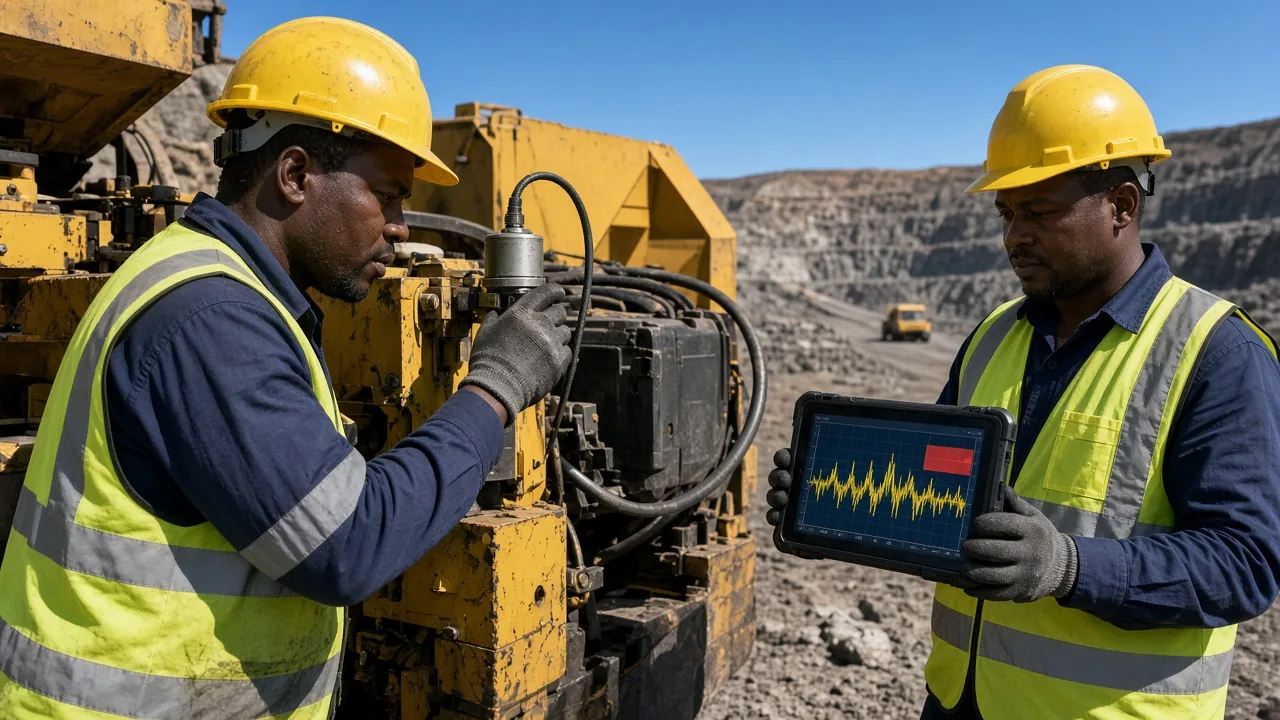
Mining is probably the strongest fit in the whole country. Equipment sensors track vibration and heat. Worker safety systems flag dangerous gas levels. Environmental sensors watch dust and water levels around remote sites.
South African government investment material has specifically called out industrial IoT opportunities inside mining operations. That is not a small claim. Mining is one of the most data-heavy industries there is.
Agriculture
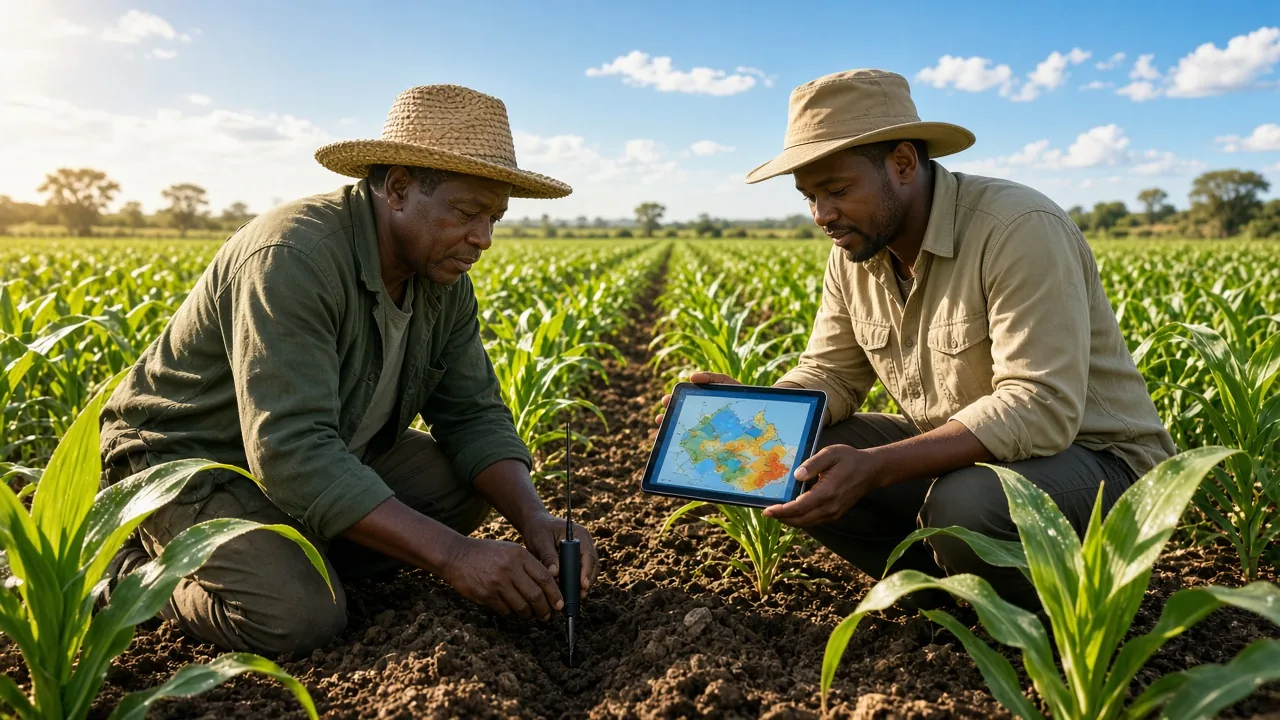
Farms across South Africa deal with unpredictable weather and tight margins. Soil sensors measure moisture. Weather stations feed live data into irrigation decisions. Livestock trackers flag a sick animal before it spreads illness to the herd.
The Department of Science, Technology and Innovation has specifically named sensors, remote sensing, precision agriculture, smart farming, and machine learning as important technologies for the sector going forward.
Manufacturing
On a factory floor, small delays add up fast. Machine monitoring catches a failing motor early. Computer vision checks products for defects faster than a tired human eye. Energy monitoring keeps power bills from creeping up quietly.
Logistics and Fleet Operations
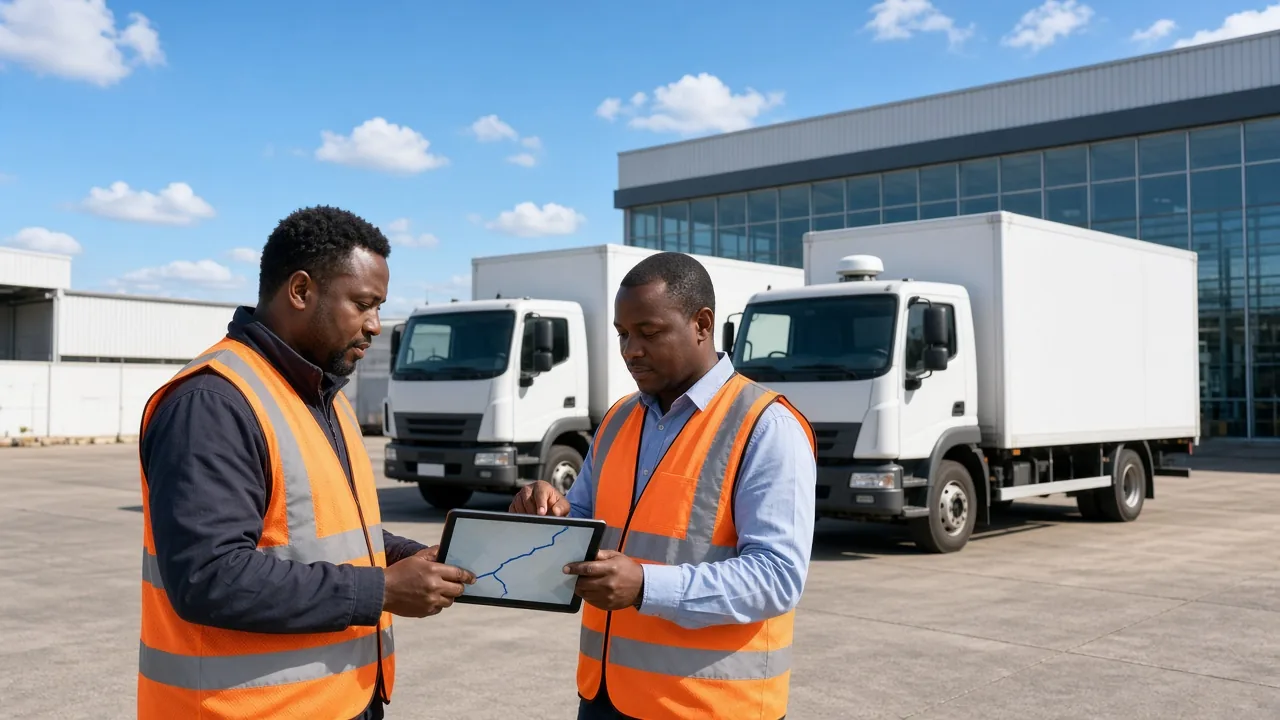
A delivery truck sitting in traffic is losing money every minute. GPS and vehicle sensors feed route optimisation tools. Fuel monitoring catches waste. Vehicle health alerts prevent a breakdown on a remote road.
Energy
Smart meters track consumption in real time. Grid monitoring spots faults before they cause an outage. President Ramaphosa's remarks in mid 2026 specifically mentioned using artificial intelligence to help manage the national energy grid.
Healthcare
Wearable devices track vital signs outside the hospital. Remote monitoring lets a nurse spot a problem early instead of waiting for the next appointment.
Retail
Smart shelves track stock levels automatically. Customer behaviour data feeds demand forecasting so shelves are never empty or overstocked.
| Industry | IoT collects | AI does | Business outcome |
|---|---|---|---|
| Mining | Machine data | Detects anomalies | Maintenance insight |
| Agriculture | Soil and weather data | Predicts conditions | Smarter irrigation |
| Manufacturing | Equipment data | Predicts faults | Less downtime |
| Logistics | Vehicle data | Optimises routes | Better fleet visibility |
| Energy | Grid and meter data | Detects faults | Fewer outages |
| Healthcare | Patient vitals | Flags risk early | Faster response |
| Retail | Inventory data | Forecasts demand | Fewer stockouts |
How Does This AI IoT Integration Work?
The physical world produces signals. Sensors and devices pick those up. Connectivity, things like 5G, WiFi, or LPWAN, carries the data. An IoT gateway or platform organises it. Cloud or edge computing processes it. An AI or machine learning model studies it. Analytics turns it into something readable. A business application shows it to a person. Then a decision gets made, sometimes by a human and sometimes by the system itself.
Data Collection
Sensors and connected devices generate a steady stream of telemetry, machine data, and real-time signals.
Connectivity
The data needs a path to travel. That could be 5G, WiFi, or a low-power wide-area network built for remote sites.
Data Processing
This is where a data pipeline sorts, cleans, and stores information so it is actually usable.
Businesses building connected applications may need IoT app development that can talk to sensors, APIs, and cloud platforms without breaking every time something updates.
AI Analysis
Machine learning models look at patterns across huge volumes of data. This is where anomaly detection and predictive analytics do their real work.
Decision and Automation
The final step. A dashboard shows a warning. Or the system triggers an automated response on its own, like shutting off a valve before damage occurs.
What Does an AI Plus IoT Architecture Look Like?
This section is useful whether you are a business owner or the person actually building the system.
| Layer | Technology | Purpose |
|---|---|---|
| Device | Sensors, cameras, meters | Collect data |
| Connectivity | 5G, WiFi, LPWAN | Transfer data |
| Edge | Edge computing | Process local data |
| Platform | IoT platform | Manage devices and data |
| AI | Machine learning models | Find patterns |
| Application | Dashboard, API, app | Deliver insights |
The AI layer may require AI development services to build models that can process incoming sensor data and turn it into predictions a business can actually trust.
AI Plus IoT Security and Data Privacy in South Africa
The Information Regulator has explained that POPIA sets out conditions for the lawful processing of personal information. Current regulatory material also recognises emerging technologies such as IoT and automated decision-making as relevant factors in high-risk data processing.
That means a wearable device or a smart camera collecting personal information is not just a technical choice. It is a compliance matter too.

Practical steps that help include data minimisation, meaning you collect only what you truly need. Strong access control so only the right people can view sensitive data. Encryption for data both in transit and at rest. Device-level authentication so a stolen sensor cannot be used to breach your network. And clear data governance policies that spell out who owns what data and for how long.
A 2026 Reality Check on South Africa's AI Policy
South Africa's draft AI policy, which was published for public comment in March 2026, was withdrawn by Cabinet in June 2026 to allow the policy to be reworked.
The government said the rework is intended to ensure that the policy achieves its goals and establishes national standards for the ethical use of AI.
Businesses should therefore monitor subsequent official government and regulatory developments rather than relying on the withdrawn draft as the current policy position.
How to Build an AI Plus IoT Strategy for Your Business
Here is a simple seven-step framework that actually works in practice.
- Start with a real business problem, not a technology you think sounds cool.
- Identify the exact data you need to solve that problem.
- Choose IoT devices that match your environment, not just the cheapest option online.
- Decide between edge and cloud processing based on your connectivity situation.
- Select an AI model that fits the actual complexity of the problem.
- Integrate the new system with what you already have running.
- Measure business results, not just technical performance.
What I Have Learned From Working on Technology-Focused Projects
Clients often focus on features before the actual problem gets nailed down. That is backwards, and it usually shows up later as a wasted budget.
I have seen businesses underestimate integration work more times than I can count. It always takes longer than the first estimate suggests.
Data quality gets ignored until the model starts giving strange results. By then, fixing it costs far more than fixing it early would have.
Some people think AI alone solves everything. It does not. It only works as well as the data feeding it.
MVP scope tends to balloon. What starts as a small pilot suddenly includes five extra features nobody asked for.
And security, more often than not, gets bolted on right at the end instead of being part of the plan from the beginning.
Companies that need a local development partner can also evaluate IoT app development services in South Africa based on their industry experience, integration skills, and security practices.
When Should a Business Not Use AI Plus IoT
Most articles only talk about the upside. Here is the honest other side.
- Do not pursue this if there is no clear business problem behind it.
- Do not pursue it if you do not actually need real-time data.
- Do not pursue it if there is not enough useful data to work with in the first place.
- Skip it if a simpler automation would solve the same issue for less money.
- Skip it if device maintenance would cost more than the benefit it delivers.
- Skip it if your security requirements cannot realistically be met.
- And skip it if you cannot measure the return on investment at all.
Saying no to a shiny technology is sometimes the smartest business decision you can make.
What Are the Main Challenges of AI and IoT Convergence?
AI and IoT convergence can improve business operations, but poor data, security gaps, and integration issues can limit its value. South African businesses can reduce these risks with the right planning, technology, and oversight.
1. Poor Data Quality and AI Model Accuracy
Challenge: Inaccurate IoT sensor data can lead to unreliable AI predictions. Models trained on one site may also struggle elsewhere.
Solution: Calibrate sensors, validate data, and monitor model accuracy. Retrain machine learning models when conditions or data change.
2. Legacy System Integration and Device Compatibility
Challenge: Older equipment and incompatible IoT platforms can make system integration difficult, delaying automation and data sharing.
Solution: Use compatible APIs, gateways, and middleware to connect legacy systems gradually. Test interoperability before scaling.
3. Cybersecurity and Data Privacy Risks
Challenge: Connected devices can expose business systems to cyberattacks. Personal data must also be protected under South Africa's POPIA.
Solution: Apply device authentication, encryption, access controls, and network segmentation. Follow POPIA when processing personal information.
4. Connectivity Limitations and Skills Shortages
Challenge: Unreliable connectivity at remote South African sites can disrupt real-time monitoring. AIoT projects also need specialised skills.
Solution: Use edge computing to process data locally. Train existing teams and involve IoT and AI specialists where needed.
5. Implementation Costs and Poor Project Planning
Challenge: Uncontrolled project scope, unnecessary data collection, and complex AI models can increase costs without clear business value.
Solution: Start with a small pilot, define measurable ROI, and use AI only when needed. Scale after proving business benefits.
The Future of AIoT and Intelligent IoT Systems in South Africa
Looking ahead, a few trends stand out. Edge AI will keep growing as connectivity in remote areas slowly improves. Digital twins will let businesses simulate a factory or a farm before making expensive changes. Smart factories and connected mining sites will keep expanding as costs come down. Intelligent agriculture will lean more on precision tools as water and land pressures increase. And as 5G rolls out further, real-time analytics will become more practical outside of major cities.
South African government sources have already connected digital transformation to sectors like agriculture, mining, logistics, energy, and manufacturing. The direction is fairly clear, even if the exact pace is not.
Conclusion
AI and IoT convergence is not just about adding more sensors or bolting AI onto an old system. For South African businesses, the real value comes from connecting real-world data with useful intelligence and decisions you can actually measure.
Remember the simple flow. IoT collects. AI analyses. The business decides. Systems act.
Start small. Pick one real problem. Prove it works. Then scale it. That is a far better path than trying to build the perfect system on day one.
FAQs
What is AI IoT integration?
It is the combination of connected devices that collect real-world data with AI systems that study that data, find patterns, and support or automate decisions.
What is AIoT?
AIoT is short for Artificial Intelligence of Things. It describes the same idea: connected devices working together with intelligent software.
How does AI work with IoT?
IoT sensors collect raw data from machines or environments. AI models then analyse that data to find patterns, predict problems, and sometimes trigger automatic responses.
Why is this AI IoT integration important for South African businesses?
It helps reduce downtime, cut waste, and support faster decisions in industries like mining, agriculture, manufacturing, and logistics, all of which are central to the local economy.
Which South African industries can use AI and IoT?
Mining, agriculture, manufacturing, logistics, energy, healthcare, and retail all have strong practical use cases right now.
Is AI plus IoT expensive to implement?
Cost depends on the number of devices, connectivity needs, AI model complexity, and integration work. A small pilot project usually costs far less than a full-scale rollout.
What are the biggest AI IoT security risks?
Weak device authentication, poor network security, and unencrypted data are among the most common risks businesses face.
How does POPIA affect AI and IoT?
POPIA sets rules for how personal information must be processed lawfully, which applies directly to devices like wearables or smart cameras that collect personal data.
Should businesses use edge AI or cloud AI?
It depends on connectivity. Remote sites with weak networks often benefit from edge AI, while businesses needing centralised visibility may prefer cloud AI.
How can a business start an AI plus IoT project?
Start with one clear business problem, run a small pilot, measure the results, and only scale once you see real value.