
Laravel has become a popular PHP framework for building modern web applications, custom business platforms, SaaS products, and enterprise solutions. Its clean architecture, reusable components, built-in security features, and extensive development ecosystem make it a practical choice for businesses in South Africa looking to build scalable digital products.
However, the cost of Laravel development can vary significantly depending on application complexity, feature requirements, developer experience, integrations, and project timelines. A basic business application may require a smaller investment, while a large-scale platform with advanced functionality, multiple user roles, and complex backend operations can demand a considerably higher budget.
Understanding developer hourly rates, project-based pricing, and the factors influencing development expenses helps businesses plan their investments more effectively. This guide explores Laravel development costs in South Africa, compares different hiring models, explains pricing structures, and highlights practical ways to manage your development budget without compromising quality.
- Project complexity determines pricing: Basic Laravel applications require a smaller investment, while SaaS and enterprise platforms involve higher development costs.
- Developer experience affects hourly rates: Senior developers and technical architects generally charge more because of their specialised skills and experience.
- Hiring models offer different advantages: Freelancers suit smaller tasks, in-house teams support continuous development, and agencies provide end-to-end expertise.
- Additional expenses require planning: Hosting, API subscriptions, security, maintenance, and infrastructure contribute to the overall investment.
- Clear requirements help control budgets: Starting with an MVP, prioritising features, and conducting regular testing can reduce unnecessary development expenses.
Understanding Laravel and Its Role in Modern Web Application Development
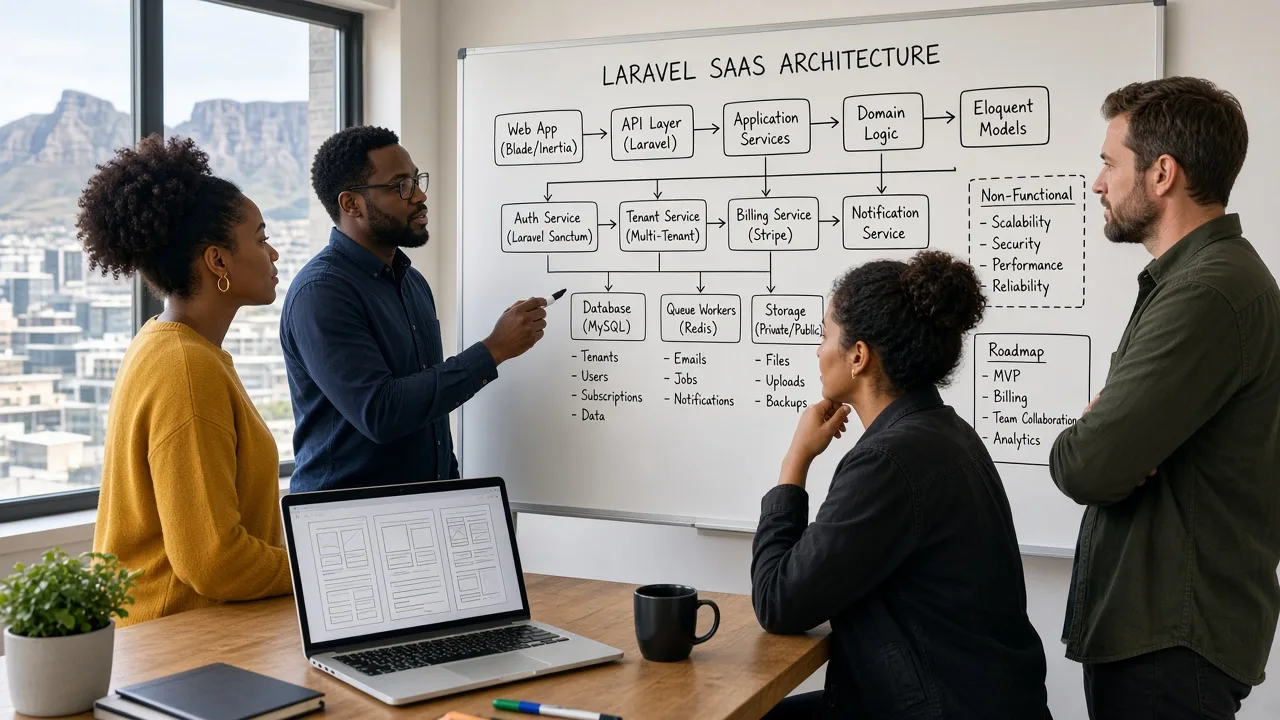
Laravel is an open-source PHP framework designed to simplify the development of secure, scalable, and feature-rich web applications. It follows the Model-View-Controller (MVC) architecture, which separates application logic, data handling, and presentation. This structure makes projects easier to develop, test, maintain, and expand as business requirements change.
Businesses in South Africa use Laravel for various digital solutions, including:
- Business management systems: Applications for handling employees, inventory, customer records, and daily operations.
- Ecommerce platforms: Online stores with product catalogues, payment gateways, order management, and customer accounts.
- SaaS applications: Subscription-based platforms with user dashboards, billing systems, and role-based access.
- Customer portals: Secure platforms where customers can access services, track requests, and manage their accounts.
- API-driven applications: Backend systems that connect websites, mobile applications, and third-party services.
Laravel also provides built-in tools for authentication, database management, routing, caching, and security. These features can reduce the amount of custom coding required, helping development teams work more efficiently.
However, choosing Laravel does not automatically make a project inexpensive. The final investment depends on the functionality, integrations, design requirements, and technical complexity involved. Businesses planning Laravel development in South Africa should evaluate these requirements before estimating the overall project budget.
Laravel Developer Hourly Rates in South Africa: Costs by Experience and Skill Level
Developer hourly rates are one of the main components influencing the total cost of a Laravel project. These rates vary according to technical experience, project complexity, location, and hiring model. Developers with expertise in backend architecture, API development, database optimisation, and security generally charge more than those handling basic Laravel tasks.
The following table provides indicative hourly rates for Laravel developers in South Africa:
| Developer Experience | Estimated Hourly Rate (ZAR) |
|---|---|
| Junior Laravel Developer | R300–R500 |
| Mid-Level Laravel Developer | R500–R800 |
| Senior Laravel Developer | R850–R1,300 |
| Laravel Technical Architect | R1,200–R1,600+ |
These are indicative budgeting ranges rather than fixed industry rates. Actual quotes may differ depending on the developer's specialisation, portfolio, and engagement terms.
Similarly, the full-stack development cost in South Africa can vary depending on whether a project requires dedicated frontend and backend developers or a team handling both responsibilities.
What Do Different Experience Levels Offer?
Junior developers: Suitable for basic CRUD operations, minor bug fixes, simple integrations, and routine maintenance under supervision.
Mid-level developers: Can independently build application modules, integrate APIs, manage databases, and implement standard business functionality.
Senior developers: Handle complex backend logic, performance optimisation, security improvements, and scalable application architecture.
Technical architects: Plan the overall system structure, select suitable technologies, review technical decisions, and manage complex integrations.
For businesses with limited budgets, hiring a junior developer may seem cost-effective. However, projects involving sensitive information, payment processing, or complex workflows often benefit from experienced professionals. Choosing developers based only on their hourly rates can lead to additional expenses if the application requires extensive corrections or redevelopment later.
Laravel Development Pricing: Freelancers vs In-House Teams vs Agencies
The hiring model directly affects the overall Laravel development budget. Businesses can work with independent freelancers, build an internal development team, or partner with a software development agency. Each option offers different levels of cost control, technical expertise, project management, and long-term support.
Here is how these hiring models compare:
| Hiring Model | Indicative Hourly Cost (ZAR) | Best Suited For |
|---|---|---|
| Freelance Laravel Developers | R350–R700 | Small projects and specific development tasks |
| In-House Developers | R300–R900+ equivalent | Long-term development and continuous maintenance |
| Development Agencies | R750–R1,200+ | Complex applications and end-to-end project delivery |
1. Hiring Freelance Laravel Developers
Freelancers are often a practical choice for startups and businesses with limited development requirements. They can handle individual modules, API integrations, bug fixes, and smaller applications without requiring a long-term employment commitment.
However, businesses may need to coordinate different specialists for design, testing, and deployment. Availability and ongoing support can also vary.
2. Building an In-House Development Team
An in-house team provides direct control over development priorities, communication, and product updates. This model works well for businesses that regularly improve their applications or manage multiple software products.
However, the total expense includes more than developer salaries. Recruitment, training, employee benefits, software licences, and infrastructure also contribute to the budget.
3. Partnering with a Laravel Development Agency
A Laravel development agency generally provides access to developers, UI/UX designers, testers, project managers, and technical specialists under one arrangement. This reduces the need to recruit and coordinate separate professionals.
Businesses can also access broader expertise for complex applications, security requirements, and third-party integrations. Although agency rates may be higher, the structured delivery process and post-launch support can provide better value for projects requiring multiple technical skills.
Laravel Development Cost by Project Type in South Africa
The total cost of Laravel development in South Africa depends largely on the type of application being built and the functionality it requires. A basic business tool with limited user access needs less development effort than a large SaaS platform with subscription management, advanced reporting, and multiple integrations.
Here are estimated Laravel development costs for different project categories in South Africa:
| Project Type | Estimated Cost (ZAR) | Approximate Timeline |
|---|---|---|
| Basic Business Website with Laravel Backend | R10,000–R30,000 | 3–5 weeks |
| Custom Business Management System | R30,000–R60,000 | 5–8 weeks |
| Customer or Employee Portal | R80,000–R100,000 | 6–10 weeks |
| Ecommerce Application | R120,000–R160,000 | 8–12 weeks |
| Booking and Appointment Platform | R80,000–R120,000 | 6–10 weeks |
| SaaS Application | R120,000–R180,000+ | 10–16 weeks |
| Enterprise Laravel Platform | R180,000–R230,000+ | 16–24+ weeks |

What Influences Pricing Across Project Categories?
Basic applications: Usually require standard authentication, database operations, contact forms, and simple admin functionality.
Business systems: Need additional modules for employee management, inventory, reporting, permissions, and operational workflows.
Customer portals: Include secure accounts, personalised dashboards, document access, notifications, and request tracking.
Ecommerce platforms: Require product management, shopping carts, payment gateways, order processing, and inventory synchronisation.
SaaS products: Often involve subscription billing, multi-tenant architecture, user permissions, analytics, and automated workflows.
Enterprise platforms: Demand advanced security, system integrations, high-performance architecture, and extensive quality assurance.
For a more accurate estimate, businesses should define their essential features before requesting a quote. Starting with a minimum viable product (MVP) and adding advanced functionality in later phases can also help control the initial investment.
Common Pricing Models for Laravel Development Projects
Apart from developer rates and hiring arrangements, the pricing model also determines how businesses pay for Laravel development. The right structure depends on how clearly the project requirements are defined, how frequently changes are expected, and how much flexibility the development team needs.
Here are three common pricing models used for Laravel projects:
1. Fixed-Price Model
Under this model, the development team agrees on a total project cost before work begins. The price is based on predefined features, deliverables, and timelines.
Best suited for: Small to medium-sized projects with clearly documented requirements.
Cost advantage: Businesses know the expected development investment in advance, making budget planning easier.
However, additional features or changes outside the agreed scope may require separate payments.
2. Hourly or Time-and-Material Model
Businesses pay developers according to the actual hours worked. This approach offers flexibility when requirements are likely to evolve during development.
Best suited for: Projects involving ongoing improvements, complex integrations, or uncertain technical requirements.
Cost advantage: Businesses can prioritise features and adjust development tasks without renegotiating an entirely new project contract.
The main challenge is that the final cost may increase if development takes longer than expected. Regular progress reports and time tracking help maintain budget control.
3. Dedicated Development Team Model
In this arrangement, businesses hire a team of Laravel specialists for a specific period. The team may include backend developers, frontend developers, designers, and quality assurance professionals.
Best suited for: Long-term projects, SaaS platforms, and applications requiring continuous development.
Cost advantage: Businesses receive consistent technical support and can manage priorities as the product evolves.
The monthly investment depends on team size, experience levels, and engagement duration.
Ultimately, a fixed-price model works well when the scope is stable, hourly pricing suits projects requiring flexibility, and a dedicated team is useful for continuous product development. Comparing these structures before signing an agreement helps businesses select a payment arrangement that matches their project goals and budget.
Key Factors That Influence Laravel Development Costs
Even when two applications use the same Laravel framework, their development budgets can differ considerably. The difference usually comes from the features, technical requirements, integrations, and resources needed to complete each project.
Understanding these cost factors helps businesses estimate expenses more accurately and avoid unexpected budget increases.
1. Application Complexity and Feature Requirements
The number and complexity of features directly affect development time. A basic application with user registration, dashboards, and standard database operations requires less effort than a platform with advanced analytics, automated workflows, and multiple user roles.
2. UI/UX Design and Customisation
A ready-made interface generally costs less to implement than a completely customised design. Custom layouts, interactive dashboards, responsive components, and detailed user journeys require additional design and frontend development work.
3. Third-Party Integrations
Connecting a Laravel application with payment gateways, CRM platforms, accounting software, shipping services, or external APIs increases development effort. Costs also depend on API documentation, authentication requirements, and the complexity of data synchronisation.
4. Database Structure and Backend Architecture
Applications handling large datasets or multiple business operations need carefully planned database structures. Complex relationships, data migration, reporting, and performance optimisation can increase backend development expenses.
5. Security and Compliance Requirements
Security features such as multi-factor authentication, role-based access control, encryption, audit logs, and secure payment processing require additional implementation and testing. Applications handling sensitive business or customer information may need further compliance-related work.
6. Testing and Quality Assurance
Testing ensures that application features work correctly across browsers, devices, and different usage conditions. Functional testing, security checks, performance testing, and bug fixing all contribute to the final development budget.
7. Scalability and Future Expansion
An application designed for a small user base may need fewer infrastructure and architecture considerations. However, platforms expected to support growing traffic, multiple locations, or expanding business operations require more careful planning and optimisation.
8. Developer Experience and Team Composition
Experienced Laravel specialists may charge higher rates, but they can often handle complex requirements more efficiently. Projects requiring additional professionals, such as UI/UX designers, frontend developers, DevOps engineers, and testers, will also have higher overall costs.
Laravel Development Process and Its Impact on Project Costs
A structured development process helps businesses manage Laravel project expenses while maintaining application quality. Each stage requires specific resources, and the time spent on planning, design, coding, testing, and deployment contributes to the overall budget.
Here are the major stages involved in building a Laravel application:
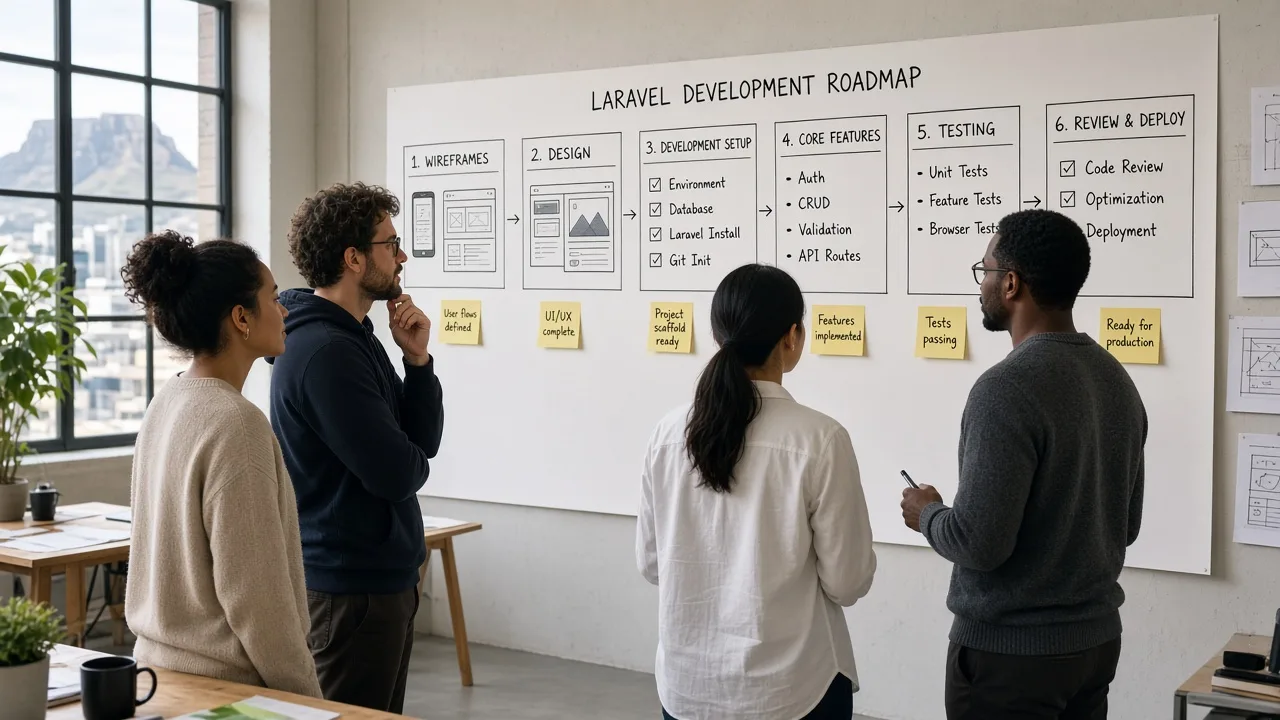
1. Requirement Gathering and Project Research
The process begins with understanding business objectives, target users, core features, and technical expectations. Developers research competitors, identify potential challenges, and prepare a clear project scope. Proper research helps prevent unnecessary features and costly changes later.
2. Technical Planning and Architecture Design
The development team selects the application architecture, database structure, Laravel packages, and integration requirements. Planning for scalability, security, and performance at this stage helps reduce future redevelopment expenses.
3. UI/UX Design and Prototyping
Designers create wireframes, user journeys, dashboards, and interface prototypes. The objective is to establish a user-friendly experience before development begins. More customised interfaces may require additional design time and investment.
4. Backend Development with Laravel
Developers build the application's core functionality, including authentication, business logic, database operations, APIs, and admin controls. The complexity of these modules has a major influence on development time and cost.
5. Frontend Development
The frontend team converts approved designs into responsive interfaces. This stage includes interactive components, forms, navigation, dashboards, and connections with Laravel's backend services.
6. Third-Party API and Service Integration
The team connects external services such as payment gateways, email platforms, CRM systems, mapping tools, and analytics solutions. Integration costs depend on the number of services and the complexity of their configurations.
7. Quality Assurance and Testing
Testers check functionality, usability, security, browser compatibility, and application performance. Identifying issues before launch reduces the likelihood of expensive fixes after deployment.
8. Deployment and Launch
Once testing is complete, developers configure the production environment, hosting, domain settings, database, and security measures. The application is then deployed and checked to ensure that all essential features work correctly.
9. Maintenance and Ongoing Improvements
After launch, the team handles bug fixes, framework updates, security patches, performance monitoring, and feature enhancements. Regular maintenance helps keep the application secure and reliable as business requirements evolve.
Each stage contributes differently to the final budget. Investing in research, architecture, and testing may increase initial development expenses, but it can reduce rework and unexpected costs over the application's lifecycle.
Additional Expenses to Consider Beyond Laravel Development
The initial development quote does not always represent the complete cost of owning a Laravel application. Businesses must also account for infrastructure, software services, maintenance, and other operational expenses after launch.
Considering these additional costs during budgeting helps prevent unexpected financial commitments.
| Additional Expense | Estimated Cost (ZAR) | Purpose |
|---|---|---|
| Web Hosting or Cloud Infrastructure | R500–R5,000+ per month | Application hosting and server resources |
| Domain and SSL Certificate | R200–R2,000+ per year | Website identity and secure connections |
| Third-Party API Services | R500–R5,000+ per month | Payment, communication, and external service integrations |
| Application Maintenance | 15–20% of initial development cost annually | Updates, bug fixes, and technical support |
| Security Monitoring and Backups | R500–R3,000+ per month | Data protection and recovery planning |
| Performance Optimisation | R3,000–R15,000+ as needed | Improving application speed and reliability |
Important Ongoing Costs
1. Hosting and Server Infrastructure
Laravel applications need suitable hosting environments to manage databases, application files, traffic, and background processes. Small applications may operate on basic cloud hosting, while high-traffic platforms may require dedicated resources and load balancing.
2. Maintenance and Framework Updates
Regular maintenance includes Laravel version updates, dependency management, bug fixes, database optimisation, and compatibility checks. Businesses should allocate an annual maintenance budget rather than treating development as a one-time expense.
3. Third-Party Software and API Subscriptions
Payment gateways, email services, SMS notifications, analytics tools, and CRM integrations may involve monthly subscriptions or usage-based charges. These costs can increase as the application's user base grows.
4. Security, Monitoring, and Data Backups
Businesses should invest in regular backups, vulnerability monitoring, access controls, and security updates. These measures help protect application data and reduce the risk of service disruptions.
Planning for these expenses alongside the initial custom software development budget gives businesses a more realistic view of the total investment required to operate and maintain a Laravel application.

Practical Strategies to Reduce Laravel Development Costs While Maintaining Quality
Managing a Laravel development budget does not mean compromising application quality or removing essential features. Businesses can control expenses by making informed technical decisions, prioritising requirements, and choosing an appropriate development approach.
Here are some practical ways to keep project costs manageable:
1. Start with a Minimum Viable Product (MVP)
Instead of developing every planned feature at once, begin with an MVP that includes only the essential functionality. This allows businesses to launch sooner, collect user feedback, and invest in additional features based on actual requirements.
2. Define Project Requirements Clearly
Prepare a detailed list of features, user roles, integrations, and technical expectations before development begins. Clear requirements reduce misunderstandings, scope changes, and unnecessary redevelopment.
3. Use Laravel's Built-In Features and Packages
Laravel offers built-in tools for authentication, routing, database management, caching, and security. Using suitable framework capabilities and reliable packages can reduce the need to develop common functionality from scratch.
4. Choose the Right Development Team
Compare developers and agencies based on their Laravel experience, technical expertise, previous projects, and support capabilities. The lowest hourly rate may not always result in the lowest overall project cost.
5. Prioritise Essential Integrations
Integrate only the third-party services required for the initial launch. Additional tools and advanced integrations can be introduced later when they provide clear business value.
6. Invest in Testing During Development
Regular testing helps identify bugs and performance issues before they become expensive problems. Fixing issues during development is generally more manageable than correcting major failures after launch.
7. Plan for Scalability from the Beginning
Choose an architecture that supports expected business growth without overengineering the initial application. A well-planned structure makes future upgrades easier and reduces the possibility of costly redevelopment.
8. Compare Long-Term Development and Maintenance Costs
Evaluate the complete engagement, including development, hosting, updates, technical support, and future enhancements. Businesses working with a mobile app development company or software development partner should also clarify how ongoing support and additional feature requests will be priced.
Conclusion
Laravel offers businesses in South Africa a flexible framework for building secure, scalable, and customised web applications. However, the overall development cost depends on several factors, including project complexity, feature requirements, developer experience, integrations, and ongoing maintenance.
Understanding hourly developer rates, project-based pricing, and different hiring models helps businesses make informed investment decisions. Starting with essential features, defining a clear project scope, and choosing an experienced Laravel development partner can also prevent unnecessary expenses.
Before beginning development, businesses should evaluate both initial and long-term costs to ensure their Laravel application meets current operational needs while supporting future growth.
FAQ
1. How much does Laravel development cost in South Africa?
Laravel development can cost approximately R10,000 to R230,000+, depending on application complexity, features, integrations, and development requirements.
2. What is the hourly rate of a Laravel developer in South Africa?
Hourly rates generally range from R300 to R1,300+, depending on the developer's experience, technical expertise, and project requirements.
3. How long does it take to develop a Laravel application?
A basic application may take 3–5 weeks, while complex business platforms and enterprise solutions can require several months.
4. Is Laravel suitable for enterprise application development?
Yes. Laravel supports scalable architecture, database management, authentication, APIs, and integrations, making it suitable for many enterprise applications.
5. Is hiring a freelance Laravel developer cheaper than an agency?
Freelancers may have lower hourly rates, while agencies offer broader expertise, project management, testing, and ongoing support.
6. What factors increase Laravel development costs?
Application complexity, custom design, third-party integrations, security requirements, database architecture, and testing can increase development expenses.
7. Does Laravel require regular maintenance?
Yes. Regular maintenance includes security updates, bug fixes, dependency upgrades, performance optimisation, and compatibility checks.
8. How can businesses reduce Laravel development costs?
Businesses can start with an MVP, define requirements clearly, use suitable Laravel packages, prioritise essential features, and select an experienced development team.