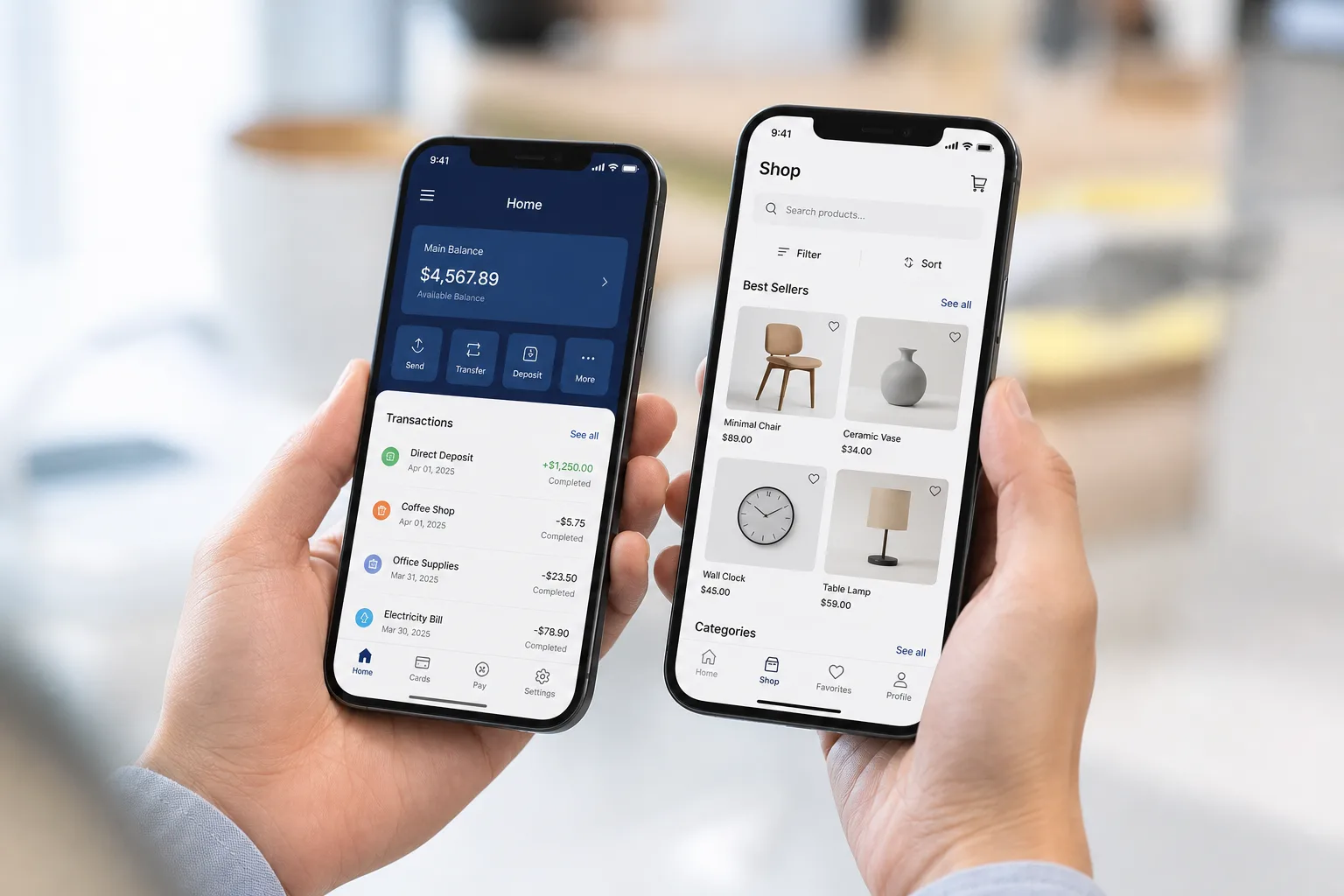

You know that moment when a customer closes your website halfway through checkout and just... leaves? No warning, no complaint, they just vanish. That happens more than most business owners want to admit. And honestly, it usually has nothing to do with the product. It's the store itself letting them down.
eCommerce development for South African businesses has become less of a nice to have and more of a survival skill.
Shoppers in Johannesburg want fast checkouts. Shoppers in Cape Town want a smooth mobile experience.
If your online store cannot deliver that, someone else will.
This blog walks through what eCommerce development actually means, why it matters here in South Africa, what it costs, and how to build a store that people actually finish buying from.
- South African ecommerce retail income rose from R37.4 billion (2018) to R86.8 billion (2022).
- Essential store features include local payments, secure checkout, inventory, shipping, and mobile-first UX.
- Typical website builds range from ZAR 50,000 for small stores to ZAR 1,500,000+ for enterprise platforms.
- PayFast, Ozow, Yoco, and BNPL options matter as much as product pages.
- Planning, testing, and ongoing maintenance decide whether a store converts or loses carts.

What Is eCommerce Development for South African Businesses?
At its core, eCommerce development is the process of building an online store where people can browse products, add them to a cart, and complete a purchase.
It covers the frontend, which is what a customer sees and clicks on, and the backend, which handles inventory, orders, and payment processing.
A good online store isn't just a digital storefront sitting there looking nice. It's a working system.
Product pages need to load fast.
The shopping cart needs to remember what someone added, even if they left the page and came back later.
The checkout flow should feel almost invisible, like it's not even there.
Platforms like WooCommerce, Shopify, Magento, and BigCommerce give businesses a starting point.
Some stores are built custom instead, especially when a business has needs that off the shelf platforms cannot handle. Either way, the goal is the same: a shopping experience that works, without making the customer think too hard.
South African stores also need to plug into local tools. Payment gateways like PayFast, Ozow, and Yoco are common choices because they support local banks and EFT options that international gateways often skip.
Why South African Businesses Need eCommerce Development
Here's the honest truth. Online shopping in South Africa isn't a side trend anymore — it's where a big part of retail spending is heading.
Stats SA data shows income from ecommerce sales in the retail trade sector jumped from R37.4 billion in 2018 to R86.8 billion in 2022, a rise of about 23.4 percent a year, pushing ecommerce's share of total retail sales from 3.9 percent to 7.7 percent.
That's not a small shift. That's a business landscape changing under everyone's feet. Retailers in Johannesburg often need scalable online stores to handle volume, while businesses in Cape Town lean more into mobile first shopping experiences because their customers are glued to their phones.
In our experience, businesses usually see better customer engagement once they simplify the buying journey instead of adding more steps to it. It sounds backwards, but less clicking often means more buying.
We believe user experience often matters more than stacking on a dozen extra features nobody asked for. A store with three great features that work beautifully will outperform a store with fifteen features that half work, every single time.
And the bigger picture backs this up too. According to Mordor Intelligence, the South Africa ecommerce market was worth USD 38.13 billion in 2025 and is expected to reach USD 63.06 billion by 2031, growing at a rate of 8.54 percent a year.
For local businesses, this growth means opportunity, but also more competition. Customers in Durban, Pretoria, Port Elizabeth, and Bloemfontein now expect the same online experience they'd get from a big national retailer, even if the business is small.
Types of eCommerce Websites South African Businesses Can Build
Not every online store looks the same, and honestly, they shouldn't. The type of store you build depends on who you're selling to and how.
| Type of Store | Best For |
|---|---|
| Retail Store | Selling directly to everyday shoppers |
| Wholesale Store | Selling bulk products to other businesses |
| Marketplace | Multiple sellers offering products in one place |
| Subscription Commerce | Recurring orders like beauty boxes or meal kits |
| B2B Portal | Business clients placing structured, repeat orders |
| Multi Vendor Platform | Several brands operating under one storefront |
Industries across manufacturing, healthcare, fashion, electronics, furniture, food, and beauty all use different flavors of these models. A furniture brand might lean retail with a strong visual catalog. A food supplier might run more of a wholesale or subscription setup.
Essential Features Every South African Business eCommerce Website Needs
The right features improve customer experience, increase conversions, and support long term business growth. Every ecommerce website should balance usability, security, and performance while meeting the needs of South African shoppers.

- Product Catalog: A well organised product catalog with categories, filters, and detailed product pages helps customers find products faster and improves online shopping experiences.
- Secure Checkout: A simple and secure checkout with SSL certificates, encrypted payment processing, and fewer steps increases trust and improves conversion rates.
- Local Payment Gateway Integration: Support PayFast, Ozow, Yoco, Apple Pay, and Google Pay to provide secure, fast, and trusted checkout options for South African customers.
- Inventory Management: Real time inventory management synchronises stock levels, prevents overselling, and keeps product availability accurate across the ecommerce platform.
- Shipping Integration: Connect with The Courier Guy, Bob Go, or Aramex to automate shipping rates, order tracking, and delivery updates for customers.
- Customer Accounts: A user dashboard lets customers manage orders, addresses, saved payments, and purchase history, creating a better customer experience.
- Verified Customer Reviews: Authentic product reviews build trust, improve purchase confidence, and help increase conversions through social proof.
- Analytics and Reporting: Google Analytics and conversion tracking help businesses monitor customer behaviour, sales performance, and marketing results for data driven decisions.
- Order Tracking: Real time order tracking keeps customers informed after checkout, reduces support requests, and improves overall shopping satisfaction.
- Mobile Responsive Design: A responsive ecommerce website delivers a consistent shopping experience across smartphones, tablets, and desktops while supporting mobile commerce.
- API Integration: API integration connects your ecommerce website with CRM, ERP, inventory, payment gateways, and shipping systems for seamless business automation.
- Scalable Cloud Hosting: Cloud infrastructure with CDN, caching, and automatic backups keeps your ecommerce website secure, fast, and ready for business growth.
eCommerce Website Development Process for South African Businesses
Understand each stage of the ecommerce development process, from planning and design to launch and maintenance, to build a scalable online store.
Planning
Every good store starts before a single line of code gets written.
Business goals, target audience, competitor research, budget, and timeline all need to be mapped out early.
Skip this step and you end up rebuilding things later, which costs more time and money than getting it right the first time.
Research
This stage looks closely at customer behavior, the South African market specifically, keyword research, and what competitors are already doing well or badly.
Sometimes the best insight comes from studying a competitor's failed checkout flow, not their success.
UI Design
Design isn't just about making things pretty. It's about reducing friction.
If you're planning a custom interface, understanding the UI UX design cost in South Africa early helps you set a realistic design budget before development even starts.
Development
This is where the tech stack comes in. Frontend frameworks like React, Vue, or Angular.
Backend options like Laravel, Node.js, PHP, or Python. Databases such as MySQL, PostgreSQL, or MongoDB. Hosting through AWS, Azure, or Google Cloud, often paired with Cloudflare for speed and security.
| Layer | Common Technologies |
|---|---|
| Frontend | React, Vue, Angular |
| Backend | Laravel, Node.js, PHP, Python, ASP.NET |
| Database | MySQL, PostgreSQL, MongoDB |
| Cloud and CDN | AWS, Azure, Google Cloud, Cloudflare |
| APIs | REST API, GraphQL |

Payment Integration
Local gateways matter here. PayFast, Ozow, Yoco, and Peach Payments cover most South African banking needs, while PayPal, Stripe, Apple Pay, and Google Pay handle broader or international customers.
Mordor Intelligence data shows credit and debit cards still lead South African ecommerce payments with a 44.68 percent share, but buy now pay later options are growing fastest at an 11.23 percent yearly rate.
That shift matters. Younger shoppers, especially, are choosing installment payments over cards, which means stores that skip BNPL integration might be quietly losing sales without even realizing it.
Testing
Before launch, everything gets tested. Performance under load, security gaps, cross browser behavior, responsiveness on smaller screens, checkout flow, and payment processing. Skipping this step is how businesses end up with a broken cart on launch day.
Launch
Hosting needs to be locked in, SSL active, analytics connected, Search Console set up, sitemap submitted, and CDN configured. It's a lot of small boxes to tick, but each one matters more than it seems.
Maintenance
A store isn't finished the day it launches. Updates, security patches, and performance checks need to continue long after. Many businesses partner with a website development company South Africa for this ongoing support instead of trying to manage it internally.
Best eCommerce Platforms for South African Businesses
Discover the top eCommerce platforms for South African businesses, comparing features, pricing, local payment support, and scalability to help you choose the right solution.
| Factor | Hosted Platforms (Shopify, BigCommerce) | Open Source (WooCommerce, Magento) |
|---|---|---|
| Setup Speed | Fast | Slower, more configuration |
| Customization | Limited to app ecosystem | Highly flexible |
| Hosting | Included | Self managed or third party |
| Ongoing Costs | Monthly subscription | Development and hosting costs |
| Best For | Small to mid size stores | Businesses needing custom features |
Some businesses eventually outgrow hosted platforms and move toward headless commerce setups, which separate the frontend from the backend for more flexibility. It's not a move every business needs, but for scaling enterprise stores, it's worth exploring.
What Is eCommerce Development Cost for South African Businesses?
Businesses planning both a website and a mobile app should also look into ecommerce app development cost in South Africa, since running both platforms together changes the budget conversation quite a bit.
| Business Size | Estimated Cost | Timeline | Best For |
|---|---|---|---|
| Small Business Store | ZAR 50,000 to ZAR 150,000 | 4 to 8 Weeks | Startups and local retailers |
| Growing Business Store | ZAR 150,000 to ZAR 350,000 | 8 to 12 Weeks | SMEs needing custom features |
| Medium Business Store | ZAR 350,000 to ZAR 700,000 | 3 to 5 Months | Businesses with payment, shipping, and CRM integrations |
| Large Business Store | ZAR 700,000 to ZAR 1,000,000 | 5 to 7 Months | High traffic ecommerce businesses with advanced automation |
| Enterprise Ecommerce Platform | ZAR 1,000,000 to ZAR 1,500,000+ | 6 to 12 Months | Large enterprises requiring custom architecture, ERP, CRM, API integrations, and scalable cloud infrastructure |
For a broader website budget view, also see our guide on website development cost South Africa.

Common Challenges Businesses Face During eCommerce Development
Many of these challenges also affect the overall website development cost South Africa, as fixing problems after launch is usually more expensive than building them correctly from the start.
Payment Security
Weak payment security increases fraud risks and reduces customer trust during checkout.
Solution: Use SSL, PCI compliant payment gateways, fraud detection, and secure payment authentication.
Inventory Management
Outdated stock data leads to overselling, cancelled orders, and unhappy customers.
Solution: Connect real time inventory management to keep stock levels accurate across every sales channel.
Courier Integration
Manual shipping creates delivery delays and inconsistent tracking updates for customers.
Solution: Integrate The Courier Guy, Bob Go, or Aramex to automate shipping and order tracking.
Slow Website Performance
Slow loading pages increase bounce rates and reduce conversions, especially on mobile devices.
Solution: Optimise Core Web Vitals, use CDN, caching, image optimisation, and scalable cloud hosting.
Poor Mobile Experience
A difficult mobile shopping experience causes visitors to leave before completing a purchase.
Solution: Build a responsive ecommerce website with fast navigation and mobile friendly checkout.
Best Practices for Successful eCommerce Development in South Africa
Small improvements made early often save months of rework later. These best practices help build a secure, scalable, and customer focused ecommerce website that supports long term growth.
- Customer First Design: We always start with the customer journey, not features. A clean user experience, simple product catalog, and intuitive checkout usually increase conversions more than adding extra functionality.
- Mobile First Development: Most South African shoppers browse on mobile devices. Build a responsive ecommerce website with touch friendly navigation, fast loading pages, and a smooth mobile commerce experience.
- Fast Loading Performance: Every second matters. Optimise Core Web Vitals with image optimisation, caching, CDN, and cloud infrastructure to improve website performance and reduce bounce rates.
- SEO Ready Structure: Build with search engines in mind. Clean URLs, schema markup, category pages, product pages, internal linking, and structured data help improve long term organic visibility.
- Secure Checkout: Customers notice security, even if they never mention it. Protect every transaction with SSL, encrypted payment processing, trusted payment gateways, and secure customer accounts.
- Local Payment Support: Offer payment methods customers already trust, including PayFast, Ozow, Yoco, Apple Pay, and Google Pay, to create a faster checkout and improve purchase confidence.
- Simple Navigation: If customers cannot find products quickly, they rarely stay. Smart search, filters, clear categories, and logical menus create a better shopping experience and support higher sales.
- Track Performance with Analytics: We never launch an ecommerce website without analytics. Google Analytics, Google Search Console, and conversion tracking reveal customer behaviour and support smarter business decisions.
If you want a team that already understands local payments, POPIA, and mobile-first retail, explore our ecommerce app development company in South Africa.
Wrapping It Up
Building a strong online store isn't about chasing every trend or adding every feature available.
It's about getting the basics right, testing them properly, and improving as you go.
eCommerce development for South African businesses works best when it's treated as an ongoing process, not a one time project you finish and forget about.
Start with a clear plan, choose the right platform for your business, and keep refining based on what your customers actually do, not just what you assume they want.