
What if your SaaS idea solves a real problem, but you're unsure how to turn it into a product people will pay for?
Building software takes more than coding. You need to validate demand, choose the right tech stack, protect customer data, and plan for steady growth.
In South Africa, local payment options, POPIA compliance, and connectivity challenges also matter.
This guide covers the full journey, from idea validation and MVP development to launch, pricing, funding, and scaling, so you can make smarter decisions about SaaS development in South Africa.
What Is SaaS Development, and How Does It Work?
SaaS development is the process of building, launching, and maintaining software that users access online, usually through a web browser or app. Instead of installing software on their own computers, customers pay a subscription to use the service.
How does SaaS development work?
- Identify a problem: Find a real need among South African businesses or customers, such as invoicing, payments, or stock management.
- Build the software: Developers choose a tech stack, create the user interface, and build the backend, database, and core features.
- Host it in the cloud: Cloud hosting keeps the software online, so users can access it through an internet connection.
- Manage users and payments: Add secure user accounts, subscription plans, recurring billing, and access controls for each customer.
- Maintain and improve: Monitor performance, fix bugs, protect customer data, and release updates as customer needs change.
SaaS Development Market Statistics Overview
- South Africa's SaaS market generated US$ 4.2 billion in 2025 and is projected to reach US$ 11.7 billion by 2033, growing at a CAGR of 13.2% from 2026 to 2033.
- South Africa's SaaS market stood at USD 2.20 Bn in 2025 and is projected to reach USD 7.45 Bn by 2032, growing at a CAGR of 19.0% during 2026–2032.
These estimates come from different research firms that define and measure the market in different ways, so treat them as directional rather than exact.
Why Build a SaaS Product in South Africa?
South Africa offers growing software opportunities, skilled developers, and access to African markets, but founders must plan for power cuts, currency shifts, and funding challenges.
A Growing Local Software Market
South African businesses need digital tools for payments, accounting, stock control, and daily operations. This creates opportunities for SaaS products that solve real problems for local SMEs.
Gateway to Africa and Emerging Markets
South Africa can serve as a base for reaching customers in other African markets. Founders can expand into nearby regions by adapting pricing, payment methods, and features to local needs.
Strong Developer Talent at Competitive Costs
South Africa has skilled software developers and technology teams. Working with local experts in custom software development in South Africa can help businesses build cloud-based products while managing development costs.
Challenges to Plan For
Currency changes can affect cloud and software costs, while load shedding may disrupt operations. Limited funding can also slow growth, so plan for reliable hosting, backup power, and realistic budgets.
Step 1: Validate Your SaaS Idea
Before investing in SaaS development, confirm that people will pay to solve the problem. Research South African SMEs, test demand, study competitors, and define a focused minimum viable product (MVP).
- Find a real problem: Explore gaps in payments, logistics, compliance, or SME tools.
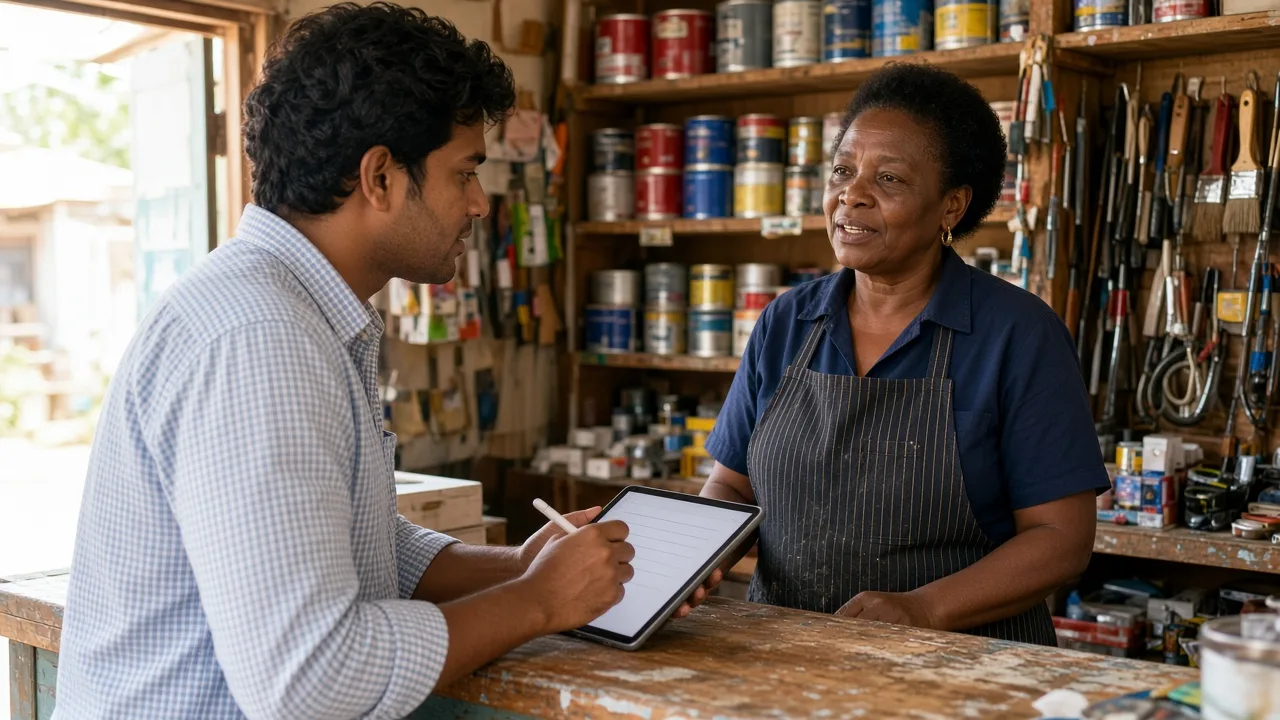
- Interview customers: Ask potential users about their needs, frustrations, and current solutions.
- Analyse competitors: Compare features, pricing, customer reviews, and market gaps.
- Define your MVP: Choose only the core features needed to test demand and collect feedback.
Step 2: Choose Your Tech Stack and Architecture
Your tech stack is the set of tools used to build your SaaS product. Your architecture defines how its parts work together, from user accounts and databases to payments and cloud hosting.
Choose tools that fit your product, budget, and growth plans. A skilled SaaS development company can help you make these choices without adding costly features you do not need.
Choose the Right SaaS Tech Stack
| Layer | Common options | What it does |
|---|---|---|
| Frontend | React, Next.js, Vue.js | Builds the screens users interact with. |
| Backend | Node.js, Python, Java | Handles business rules, accounts, and requests. |
| Database | PostgreSQL, MySQL | Stores users, subscriptions, and business data. |
| Cloud hosting | AWS, Microsoft Azure, Google Cloud | Runs your app and supports growth. |
| Payments | PayFast, Peach Payments | Processes payments and subscriptions, subject to provider support and terms. |
| Security | OAuth, multi-factor authentication, encryption | Helps protect accounts and customer data. |
Multi-Tenant vs. Single-Tenant Architecture
Your SaaS architecture decides how customer data and software resources are managed. Two common models are multi-tenant and single-tenant.
| Feature | Multi-Tenant | Single-Tenant |
|---|---|---|
| Setup | Multiple customers share one application. | Each customer has a separate environment. |
| Cost | Usually lower | Usually higher |
| Maintenance | Updates can serve many customers. | Separate environments may need separate updates. |
| Data isolation | Requires strong access controls | Easier to separate environments, but security is still essential. |
| Best for | Most standard SaaS products | Customers needing greater control or isolation |
Choose Cloud Hosting in South Africa
Local cloud regions can help reduce network delays for South African users. Compare service availability, reliability, data location, backup options, and costs before choosing a provider.
- AWS Cape Town: AWS has an Africa (Cape Town) region.
- Azure: Microsoft lists South Africa North in Johannesburg and South Africa West in Cape Town.
- Google Cloud Johannesburg: Google Cloud lists Johannesburg as the Africa-South1 region.
Check that the specific services your app needs are available in your chosen region. A local data centre alone does not guarantee fast performance or uninterrupted service.
Plan Your Architecture for Growth
Keep the first version simple, but leave room to expand.
- Build secure APIs: Let your frontend, backend, payment gateway, and other services exchange data safely.
- Protect customer data: Use encryption, access controls, regular backups, and security testing.
- Plan for weak connectivity: Keep pages lightweight and handle interrupted requests without losing user data.
- Prepare for outages: Use monitoring, backup systems, and a recovery plan for power or service disruptions.
A good architecture is not the most complex one. It is one your team can maintain, secure, and improve as more customers join.

Step 3: Build Your MVP
Your minimum viable product (MVP) is the first working version of your SaaS product. It includes the core features needed to solve a real customer problem. Start small, test with real users, and improve the product based on their feedback.
What to Focus on When Building Your MVP
- Choose your development team: Build in-house, hire freelancers, or work with a software agency. Compare costs, skills, communication, and ongoing support before deciding.
- Work in short sprints: Break development into small tasks. Build key features first, test them, and review progress every one or two weeks.
- Design for mobile users: Many customers access online services on their phones. For MVP mobile app development in South Africa, focus on simple screens, fast loading, low data use, and easy navigation.
- Add security from day one: Protect user accounts and personal information with encryption, access controls, secure authentication, and regular backups. Consider POPIA requirements when handling personal data.
- Test before release: Run functional, usability, performance, and security tests. Check payment flows, account registration, password recovery, and how the product behaves on slower connections.
- Collect early feedback: Invite a small group of target customers to use the MVP. Track bugs, confusing steps, and feature requests before investing in major upgrades.

Legal, POPIA, and Tax Essentials
Your SaaS product is built. Before launch, take time to sort out legal duties, customer data, and tax rules. These steps can help protect your business, build customer trust, and prevent costly problems later.
POPIA and Data Protection
South Africa's Protection of Personal Information Act (POPIA) sets rules for handling personal data. Collect only what you need, protect customer records, control access, and explain how you use and store information.
Company Registration (CIPC) and IP Ownership
Register your business with the Companies and Intellectual Property Commission (CIPC) if required for your chosen business structure. Put developer contracts in writing and clarify who owns the source code, software design, and other intellectual property.
VAT on Digital Services
SaaS income may trigger VAT duties. SARS lists a compulsory VAT registration threshold of R2.3 million in taxable supplies per year and a standard rate of 15%. Cross-border sales may have extra rules.
Terms of Service, Privacy Policy, and SLA
Publish clear Terms of Service, a Privacy Policy, and a Service Level Agreement (SLA). Explain subscription fees, renewals, cancellations, uptime targets, support, refunds, and how customer data is handled.
Step 4: Launch Your SaaS Product
Launching your SaaS product is more than making it live. You need early users, clear pricing, and a simple way to accept payments. Start small, listen to feedback, and fix problems before spending heavily on marketing.
Beta Testing and Early Adopters
- Invite a small group of South African businesses to test your product.
- Collect feedback on usability, speed, bugs, and missing features.
- Fix major issues before opening the product to more customers.
Set Up Payments and Billing
Choose a payment provider that supports your business model, target market, and recurring billing needs.
- PayFast and Peach Payments: Consider these for online payments in South Africa.
- Yoco: Explore its online payment options for your target customers.
- Stripe and Paystack: Check their current country availability, supported business types, and subscription features before choosing.
Build a Simple Go-to-Market Plan
- Publish helpful SEO content that answers your target customers' questions.
- Use LinkedIn, email outreach, and local business partnerships to reach early buyers.
- Work with a web app development company if you need help improving performance, fixing launch issues, or preparing for more users.
Step 5: Scale Your SaaS Business
As your SaaS grows, focus on keeping customers happy, controlling costs, and building reliable systems. Track performance and scale at a pace your business can support.
- Track key metrics: Monitor MRR, churn rate, customer acquisition cost (CAC), and customer lifetime value (LTV).
- Improve retention: Simplify onboarding, offer helpful support, and act on customer feedback.
- Scale infrastructure: Use cloud hosting, automated testing, and DevOps tools to handle more users.
- Expand your market: Build local partnerships and adapt pricing and payments for other African markets.
How Much Does SaaS Development Cost in South Africa?
SaaS development costs in South Africa range from R40,000 to R1,000,000, depending on features, security, and project complexity.
| SaaS Package | Estimated Cost (ZAR) | Estimated Timeline |
|---|---|---|
| Starter SaaS | R40,000–R100,000 | 4–8 weeks |
| Growth SaaS | R100,000–R400,000 | 2–5 months |
| Enterprise SaaS | R400,000–R1,000,000 | 4–9+ months |
How to Fund Your SaaS Startup in South Africa
Explore funding options like bootstrapping, angel investors, venture capital, grants, and tax incentives to grow your SaaS startup.
- Bootstrapping: Use personal savings or early customer revenue to fund SaaS development while keeping ownership and controlling expenses.
- Angels, VCs, and accelerators: Seek angel investors, venture capital firms, or startup accelerators for funding, mentorship, and business connections.
- Grants and incentives: Explore Technology Innovation Agency (TIA) funding, SEDA support, and SARS research and development tax incentives. Check eligibility before applying.
- Prepare for investors: Build a clear business plan, MVP demo, financial forecasts, customer traction data, and a pitch deck showing market demand and growth potential.

7 Common SaaS Development Mistakes to Avoid
Avoid costly mistakes by validating demand, protecting customer data, and planning for steady growth from the start.
1. Building Too Many Features
Mistake: Adding too many features increases SaaS development costs and delays your MVP launch.
Solution: Start with core features, test user demand, and improve your product using customer feedback.
2. Ignoring POPIA Compliance
Mistake: Poor data protection can expose customer information and create legal risks under South Africa's POPIA.
Solution: Use access controls, encryption, clear privacy policies, and secure data-handling practices.
3. Setting Prices Too Low
Mistake: Low subscription fees may not cover hosting, maintenance, payment processing, and customer support costs.
Solution: Calculate operating costs, research competitors, and set pricing that supports healthy profit margins.
4. Overlooking Customer Churn
Mistake: Losing subscribers reduces monthly recurring revenue (MRR) and makes long-term SaaS growth harder.
Solution: Improve onboarding, track churn rates, respond to complaints, and give customers clear reasons to stay.
5. Skipping Technical Documentation
Mistake: Missing API documentation and code records make bug fixes, team changes, and software updates harder.
Solution: Document your code, system architecture, APIs, and deployment steps from the beginning.
6. Ignoring Scalability
Mistake: Poor database design and weak cloud infrastructure can cause slow performance as user numbers grow.
Solution: Plan for increased traffic, monitor performance, and test database capacity before scaling your SaaS platform.
7. Neglecting Customer Feedback
Mistake: Building features without user input can waste development time and leave real customer problems unsolved.
Solution: Run user interviews, review support requests, and use product analytics to guide future improvements.
Conclusion
Building a SaaS product takes more than a good idea. You need to test demand, build a focused MVP, protect customer data, and plan for growth.
With the right approach to SaaS development in South Africa, you can turn a real business problem into software customers will pay for.
Start small, learn from your first users, and improve as you go. Have a SaaS idea in mind? Take the first step today and turn it into a product worth using.
FAQs About SaaS Development in South Africa
How much does SaaS development cost in South Africa?
SaaS development can cost between R40,000 and R1,000,000, depending on features, security needs, integrations, and project complexity.
How long does it take to build a SaaS product?
A basic SaaS MVP may take 4–8 weeks. Larger platforms can take several months, depending on features and testing needs.
What is the first step in SaaS development?
Start by validating your idea. Interview potential customers, research competitors, and confirm that people will pay to solve the problem.
Which tech stack is best for SaaS development?
React or Next.js, Node.js or Python, and PostgreSQL are common choices. The best stack depends on your product, budget, and team skills.
Is POPIA compliance required for SaaS businesses in South Africa?
If your SaaS processes personal information, POPIA may apply. Use proper security controls and seek legal advice to meet your obligations.
Which payment gateways can South African SaaS businesses use?
Options include PayFast, Peach Payments, and Yoco. Check current eligibility, transaction fees, and support for recurring billing before choosing.
Can I build a SaaS product with a small budget?
Yes. Start with an MVP that solves one clear problem. Add features after testing demand and collecting feedback from early users.
How can I grow my SaaS business in South Africa?
Improve onboarding, track churn and monthly recurring revenue, publish useful SEO content, and expand into new markets when your product is ready.