Is your online store attracting customers but struggling to deliver orders fast, affordably, and reliably? The problem may not be your products. It may be the final stage of fulfilment.
E-commerce logistics in South Africa is changing as customers expect faster delivery, accurate tracking, flexible collection options, and simpler returns. Retailers are responding with automation, smarter routing, parcel lockers, integrated courier systems, and more local fulfilment.
This guide explores the last-mile delivery trends reshaping South African online retail, the challenges behind them, and what businesses should consider as delivery becomes a bigger part of the customer experience.
What Is E-Commerce Logistics in South Africa? And Why the Last Mile Matters So Much
E-commerce logistics is the process of managing inventory, warehousing, order fulfilment, shipping, last-mile delivery, tracking, and returns so products purchased online move efficiently from the seller to the customer.
The e-commerce logistics market was valued at $597.65 billion in 2024 and is expected to grow from $660.4 billion in 2025 to $1,792.4 billion by 2035, registering a 10.5% CAGR from 2025 to 2035.
The typical journey looks like this:
Inventory → Warehouse → Order Processing → Picking and Packing → Courier → Last Mile → Customer → Returns
Why does the last mile matter?
- Customer experience: Delivery is often the customer's first physical interaction with an online brand.
- Delivery cost: Distance, route density, fuel, labour, and failed attempts can raise fulfilment costs.
- Order visibility: Live tracking and accurate ETAs reduce uncertainty after checkout.
- Delivery speed: Same-day and next-day options are raising expectations in major metros.
- First-attempt success: Better addresses and communication can reduce costly repeat deliveries.
- Returns: Reverse logistics affects how quickly customers can exchange or return purchases.
- Brand trust: Reliable delivery can influence reviews, repeat purchases, and customer loyalty.
Key Last-Mile Delivery Trends Reshaping E-Commerce in South Africa
South Africa's last-mile market is not changing because of one technology. Several shifts are happening together.
1. Same-Day and Next-Day Delivery Are Raising Customer Expectations
Waiting several days for every online order is becoming harder to accept, particularly for shoppers in Johannesburg, Cape Town, Pretoria, Durban, and other high-density markets.
Same-day and next-day services are therefore becoming important competitive options.
That does not mean every order needs instant delivery.
A customer buying an urgent gift may pay for same-day shipping, while someone buying household products might prefer a cheaper economy option.
The real trend is delivery choice.
Retailers increasingly need to offer combinations such as:
- Same-day: urgent purchases
- Next day: speed without premium same-day pricing
- Standard: economical everyday delivery
- Pickup: convenient collection at another location
This is also why businesses developing rapid commerce models are investing in technologies related to on-demand app development in South Africa. An on-demand system can connect ordering, inventory availability, dispatch, driver assignment, and delivery status within one workflow.
2. Real-Time Tracking Is Becoming a Basic Customer Expectation
The post-purchase experience used to be simple: customers received an order confirmation and waited.
That is changing.
Customers increasingly expect to know:
- Has my order left the warehouse?
- Which delivery stage is it at?
- When will the driver arrive?
- Was the parcel delivered successfully?
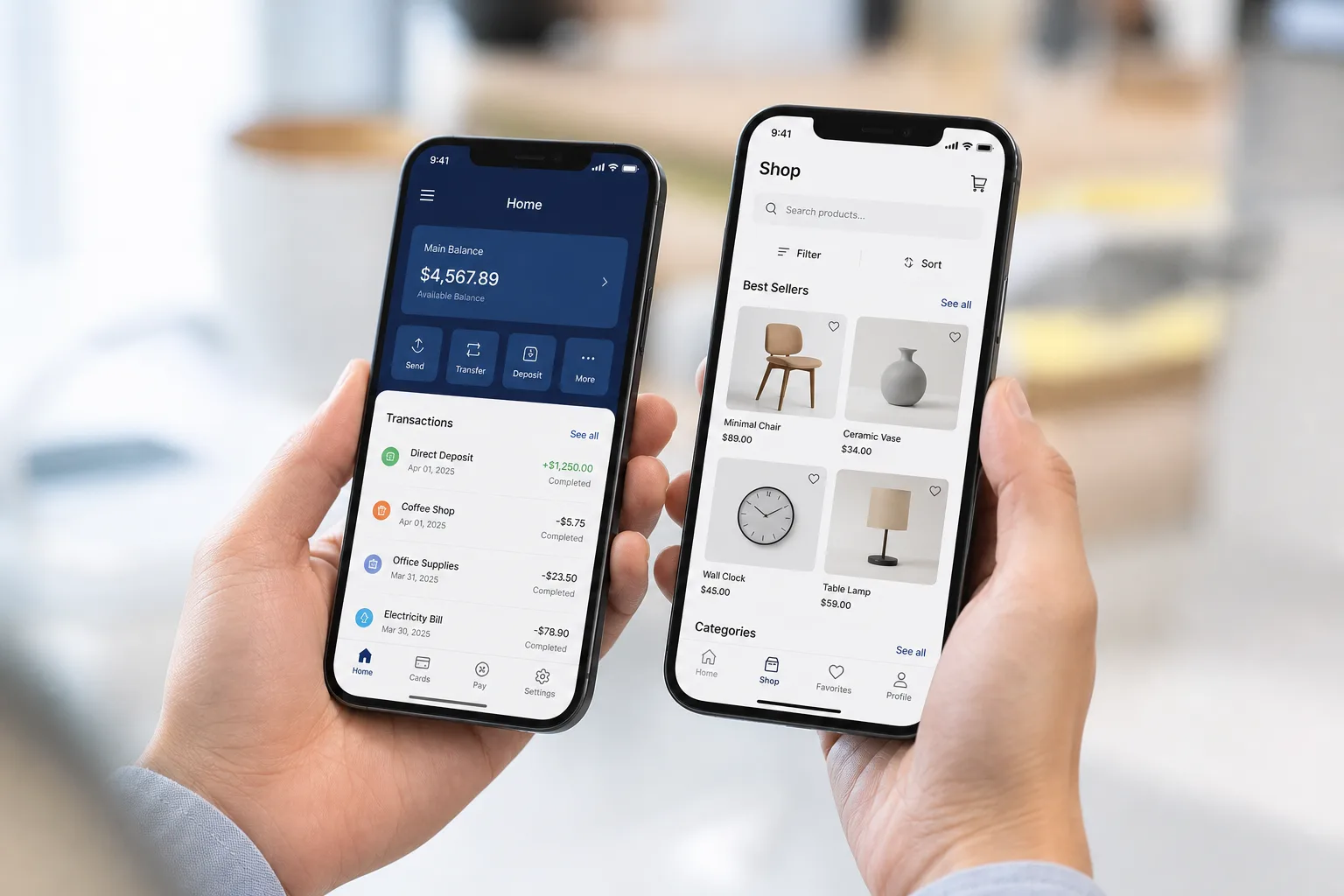
Modern last-mile systems can provide GPS tracking, estimated arrival times, order milestones, SMS updates, email notifications, WhatsApp communication, and digital proof of delivery.
The value is not only convenience.
Visibility reduces uncertainty.
A five-hour delivery window feels very different when the customer can see that the parcel is approaching.
For businesses building these experiences into customer-facing platforms, on-demand delivery app development can support driver tracking, delivery status updates, digital proof of delivery, customer notifications, and dispatch communication from a single interface.

3. AI and Route Optimisation Are Making Deliveries More Efficient
Faster delivery does not help a retailer if every delivery becomes too expensive.
That is where route optimisation is gaining importance.
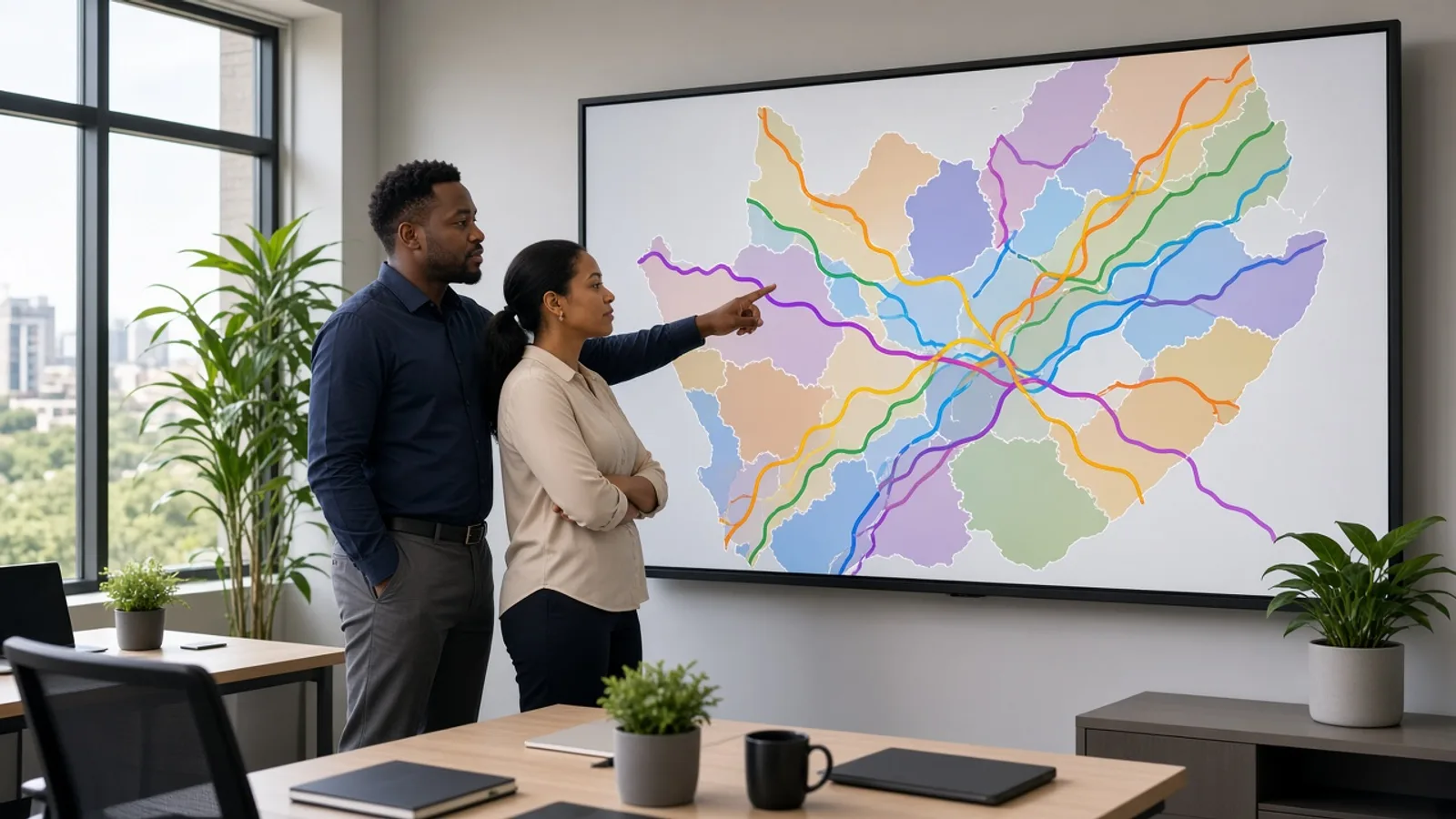
Modern delivery software can analyse:
- Customer locations
- Driver availability
- Traffic conditions
- Delivery priorities
- Vehicle capacity
- Route distance
- Delivery windows
The system can then determine a more efficient delivery sequence rather than relying on drivers to manually decide where to go next.
The objective is simple:
Fewer unnecessary kilometres + better vehicle utilisation + more successful deliveries = lower cost per order.
South African courier industry commentary identifies automation and route optimisation as important ways of controlling parcel costs without relying only on price cuts.
Predictive ETAs can add another layer. Instead of displaying a broad delivery window, platforms can update estimated arrival times as routes, traffic, and delivery progress change.
4. Automation Is Moving Deeper Into Fulfilment and Dispatch
Last-mile efficiency starts before the driver leaves the warehouse.
When order volumes increase, manual processes can become bottlenecks.
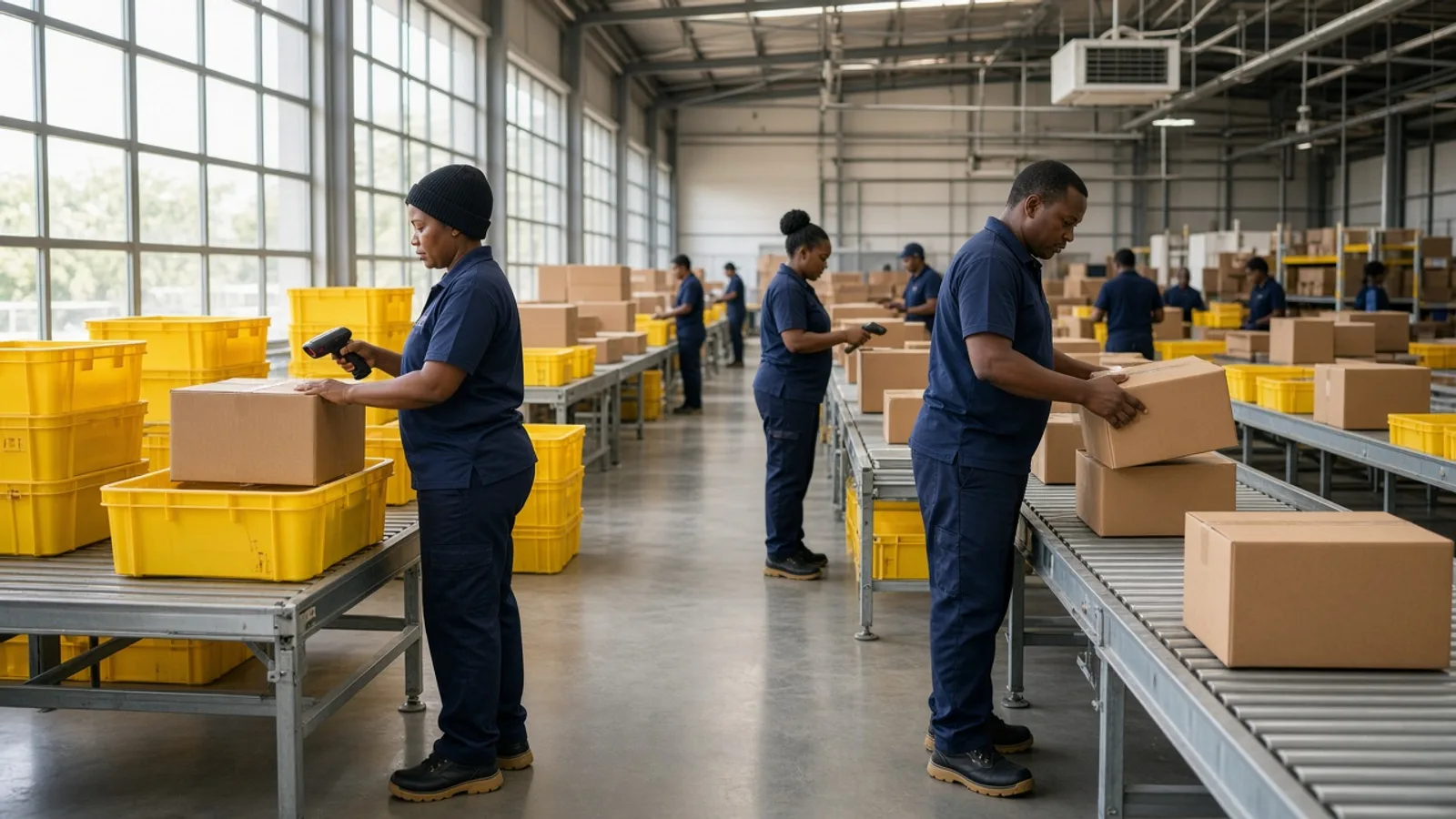
Automation is increasingly being applied to:
Order allocation → Barcode scanning → Sorting → Waybill creation → Courier assignment → Dispatch → Tracking
This matters most during peak periods such as Black Friday and holiday shopping, when fulfilment centres may need to process unusually high parcel volumes.
South African courier operators are already investing in automated infrastructure. Fastway, for example, has reported that its Johannesburg hub can process thousands of parcels per hour through automated operations.
Automation does not eliminate the need for people. It reduces repetitive work and allows teams to focus on exceptions such as incorrect addresses, damaged parcels, failed deliveries, and customer support.
5. Courier and E-Commerce Platform Integrations Are Becoming Standard
One of the biggest sources of inefficiency appears when the online store, warehouse, courier, and customer-support systems cannot communicate.
Imagine receiving an online order and then manually:
- Copying the customer's details.
- Opening a courier portal.
- Creating a shipment.
- Generating the label.
- Copying the tracking number.
- Updating the e-commerce order.
That might work for ten orders. It becomes difficult at hundreds or thousands.
APIs and platform integrations can connect Shopify, WooCommerce, marketplaces, custom stores, warehouse systems, and courier networks.
An integrated workflow might automatically:
Receive order → check shipping method → create shipment → generate label → update tracking → notify customer
This is where well-planned e-commerce app development can become part of the logistics strategy. The storefront should not operate separately from inventory, payment, order management, fulfilment, and delivery systems.
South African courier operators are also reporting growing demand from SMEs for logistics services that integrate directly into their technology stacks.
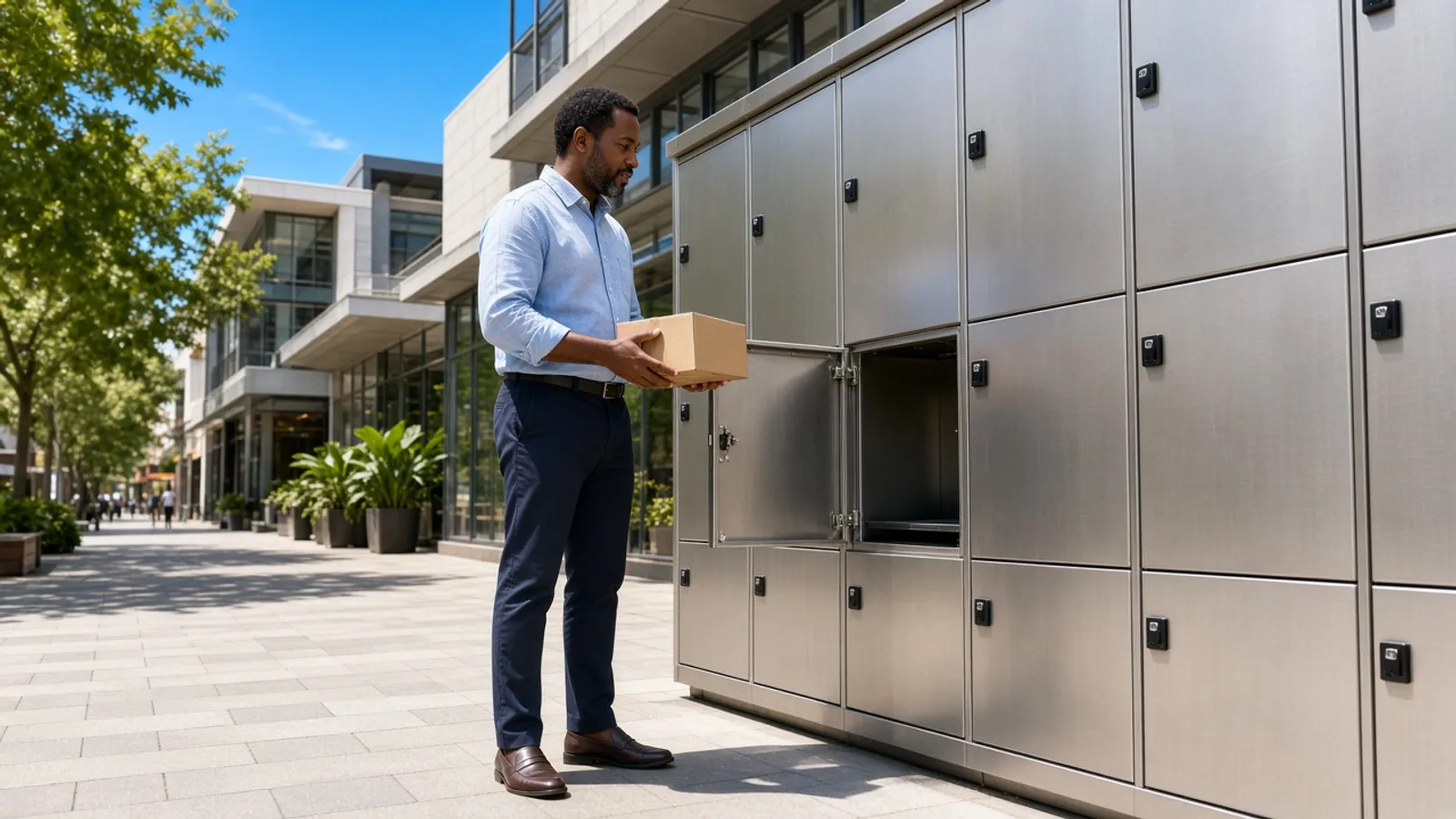
6. Parcel Lockers and Pickup Points Are Expanding Delivery Choice
Home delivery is convenient until nobody is home.
A failed delivery can mean:
Another driver trip + another delivery slot + higher courier cost + a frustrated customer.
Parcel lockers and pickup points offer an alternative.
The courier delivers multiple parcels to a secure location, and customers collect them when convenient.
This can work particularly well for:
- Customers working during delivery hours
- Apartment residents
- Students
- Commuters
- Customers who prefer not to share a home address
- Areas where repeated doorstep delivery is inefficient
South African logistics networks are expanding these options. On The Dot, for example, has integrated smart locker access and collection networks alongside home delivery and fulfilment services.
Pickup does not replace home delivery. It creates another delivery choice while potentially reducing repeat attempts.
7. Delivery Affordability Is Becoming as Important as Delivery Speed
Consumers may want faster delivery, but retailers still have to protect margins.
Several factors influence the final cost:
Fuel + labour + parcel size + distance + delivery density + failed attempts + warehouse location + service level
Sending ten parcels to addresses within a dense Johannesburg delivery zone is different from delivering ten parcels across widely separated regional destinations.
That makes efficiency critical.
Retailers can respond by offering several service levels instead of subsidising express delivery for every order.
For example:
| Delivery Option | Customer Priority | Business Benefit |
|---|---|---|
| Same day | Maximum speed | Premium delivery revenue |
| Next day | Speed and convenience | Balanced service |
| Economy | Lower cost | Better margin control |
| Pickup point | Flexibility | Fewer doorstep attempts |
Retailers planning the technology behind these choices should also consider the ecommerce app development cost in South Africa as part of the wider fulfilment investment. Delivery functionality may involve courier APIs, order management, live tracking, payment integration, notifications, and administrative dashboards.
8. Hyperlocal Fulfilment Is Moving Inventory Closer to Customers
A parcel cannot reach a customer in two hours if it begins hundreds of kilometres away.
That is why inventory location increasingly matters.
Instead of holding every product in one national warehouse, some retailers and logistics businesses can use:
- Regional fulfilment centres
- Urban warehouses
- Micro-fulfilment facilities
- Dark stores
- Local dispatch hubs
- Distributed inventory
Placing high-demand products closer to Johannesburg, Cape Town, Durban, Pretoria, or other concentrated markets can shorten the distance between inventory and customers.
9. Better Address Intelligence Is Improving Delivery Success
A perfectly optimised route is useless if the driver cannot find the destination.
Address quality can become a significant last-mile problem, particularly when written addresses do not accurately identify entrances, complexes, estates, informal locations, or difficult-to-map destinations.
Delivery platforms are increasingly able to supplement traditional addresses with:
- GPS coordinates
- Map pins
- Address autocomplete
- Landmark information
- Geolocation
- Delivery notes
- Customer-driver communication
Better address intelligence helps reduce phone calls, wrong turns, failed attempts, and wasted kilometres.
This is one area where strong e-commerce app development in South Africa can make a practical difference. Capturing accurate delivery information during checkout can improve the logistics process long before the parcel reaches a courier vehicle.
10. Reverse Logistics Is Becoming Part of the Last-Mile Strategy
Last-mile delivery does not always end at the customer's door.
Sometimes the journey reverses:
Customer → Collection → Courier → Fulfilment Centre → Restock, Exchange or Refund
That process is known as reverse logistics.
A customer may love a product but still need to return it because of sizing, damage, an incorrect item, or a changed purchasing decision.
A difficult return can undermine an otherwise excellent shopping experience.
Retailers therefore need to consider:
- Return requests
- Collection scheduling
- Pickup points
- Return labels
- Inspection
- Refund status
- Stock reconciliation
11. Delivery Security and Parcel Protection Are Receiving More Attention
E-commerce networks are carrying more electronics, premium fashion, devices, accessories, and other high-value products.
This increases the importance of:
- Chain-of-custody records
- Digital proof of delivery
- Recipient verification
- Parcel scanning
- Shipment visibility
- Declared value
- Appropriate liability or insurance protection
Industry commentary in South Africa has identified higher-value parcel volumes as one factor increasing interest in extended liability protection.
For retailers, security is not simply a courier issue. The order management system should be able to record when a shipment was handed over, where it is, who received it, and how delivery was confirmed.
12. Sustainable Last-Mile Delivery Is Entering Logistics Strategies
Sustainability is gradually becoming part of last-mile planning, especially for larger retailers and logistics networks.
The practical focus is not limited to electric vehicles.
Businesses can also reduce unnecessary logistics activity through:
- Better route planning
- Fewer failed deliveries
- Consolidated shipments
- Efficient packaging
- Closer inventory placement
- Pickup networks
- Higher vehicle utilisation
In many cases, reducing emissions and reducing cost can point in the same direction.
A vehicle that travels fewer unnecessary kilometres uses less fuel and costs less to operate.
The important point is not that every South African delivery fleet will become electric immediately. It is that environmental efficiency is increasingly being considered alongside speed, cost, and service quality.
Real-World Signs That the Shift Is Already Happening
These trends are not purely theoretical.
Fastway has reported using automation at its Johannesburg hub to increase parcel-processing capacity, while also identifying system integration, route optimisation, affordability, and parcel protection as major last-mile priorities.
The Biggest Last-Mile Delivery Challenges in South Africa
Technology can improve delivery, but it does not remove every operational challenge.
Delivery Costs
Fuel, labour, vehicles, warehousing, packaging, technology, and failed attempts all contribute to cost per parcel.
Long-Distance and Low-Density Routes
Deliveries become harder to consolidate when customers are spread across large geographic areas.
Rural and Regional Coverage
Delivery speeds available in Johannesburg or Cape Town may not be commercially practical in every smaller town or rural area.
Address Accuracy
Incomplete addresses and difficult-to-map locations can increase delivery time and failed attempts.
Infrastructure Constraints
Road conditions, traffic, access restrictions, and local infrastructure can affect delivery reliability.
Peak-Season Demand
Black Friday, Christmas, promotions, and major sales events can produce sudden parcel-volume spikes.
Returns
Every returned parcel adds another logistics movement that must be collected, tracked, inspected, and processed.
Customer Expectations
The biggest challenge may be balancing what customers want with what businesses can sustainably provide.
Metro vs Rural Last-Mile Delivery in South Africa
South Africa cannot be treated as one uniform delivery market.
| Factor | Major Metros | Rural and Outlying Areas |
|---|---|---|
| Delivery speed | More express options | Longer lead times |
| Parcel density | Higher | Lower |
| Cost per stop | Often lower | Often higher |
| Same-day delivery | More feasible | Limited |
| Locker availability | Growing | Depends on location |
| Route distance | More concentrated | Often greater |
| Address complexity | Varies | Can be higher |
What to Look for in an E-Commerce Logistics or Last-Mile Delivery Partner
Choosing a courier based only on the lowest quoted price can create problems later.
A better evaluation looks across the complete delivery experience.
| Area | What to Check |
|---|---|
| Coverage | Where can the provider reliably deliver? |
| Speed | Same-day, next-day, and economy availability |
| Integration | APIs and e-commerce platform compatibility |
| Tracking | Live status, ETAs and customer notifications |
| Delivery performance | On-time and first-attempt delivery capability |
| Returns | Collection and reverse-logistics support |
| Security | Proof of delivery and parcel protection |
| Scalability | Ability to manage seasonal volume spikes |
| Support | Access to help when exceptions occur |
| Reporting | Delivery, cost and performance analytics |
The Future of Last-Mile Delivery in South Africa
South African last-mile delivery is gradually moving from a standalone courier function toward a connected part of the digital retail experience.
Warehouse systems, e-commerce platforms, courier networks, drivers, customer notifications, tracking tools, pickup points, and return processes are becoming increasingly connected.
The strongest direction is therefore not simply faster delivery.
It is:
Automation + visibility + delivery choice + network efficiency + cost control
As online retail grows, retailers will need to decide which orders genuinely need speed, where inventory should be positioned, how much delivery should cost, and how customers should receive or return parcels.
Conclusion
E-commerce logistics in South Africa is becoming more connected, visible, and customer-focused.
Last-mile delivery now influences far more than the movement of a parcel; it affects fulfilment costs, convenience, customer trust, and repeat purchasing.
Same-day services, real-time tracking, automation, route optimisation, parcel lockers, distributed fulfilment, reverse logistics, and better delivery data are pushing the market forward.
The retailers that adapt effectively will be those that balance customer expectations with reliable operations and commercially sustainable delivery models.
Frequently Asked Questions
What is e-commerce logistics in South Africa?
E-commerce logistics manages inventory, warehousing, fulfilment, shipping, last-mile delivery, tracking, and returns for online orders.
What is last-mile delivery in e-commerce?
Last-mile delivery is the final stage of shipping, where an order moves from a local hub or fulfilment centre to the customer.
Why is last-mile delivery important in South Africa?
It directly affects delivery speed, shipping costs, customer satisfaction, failed deliveries, order visibility, and repeat purchases.
What are the main last-mile delivery trends in South Africa?
Key trends include same-day delivery, real-time tracking, AI routing, automation, parcel lockers, API integration, and reverse logistics.
How does real-time tracking improve e-commerce delivery?
Real-time tracking gives customers live order status, ETA updates, delivery notifications, and proof of delivery throughout the journey.
How does AI improve last-mile delivery?
AI helps optimise routes, assign drivers, predict delivery times, reduce unnecessary kilometres, and improve fleet utilisation.
Are parcel lockers useful for e-commerce businesses?
Yes. Parcel lockers offer flexible collection, reduce failed doorstep deliveries, and can lower repeat delivery costs.
What is reverse logistics in e-commerce?
Reverse logistics manages products moving back from customers to retailers for returns, exchanges, refunds, inspection, or restocking.